
A while back I saw the Tree of Life (directed by Terrence Malick). Malick is one of those directors who love to think, which probably explains why he has such few titles under his belt. I am not a big fan of his films, but I do admire his deep aesthetic approach to cinema. I was not aware of his latest film, the Tree of Life, until I first heard its very curious title. I was prepared for a two-hour long esoteric-spiritual type of journey, expecting nothing short of a well versed plot. But upon viewing, the exact opposite happened.

The Tree of Life is not a sermon, but an honest flow of memories, meshed with inventions and dreams. We follow the director and characters, in their distant memories of childhood and of lost innocence, reflected by someone who lives in the permanent present. Unlike a novel the film does not unfold, like revelation following revelation, culminating in a definable message or theme. There is no hero, no emotional epiphanies but a haunting vision of childhood, of how the things we love the most are as fragile as morning dew yet immensely powerful. The things that connect us, separate us, and bewilder us – again and again and again throughout our lives instill within us lessons to learn to love and lessons to learn to fear.

As great as the performances are, the real highlight of the film also lie in its masterful cinematography created by Emmanuel Lubezki. Making his second collaboration with Malick, Lubezki captures the film in a scope as grand as the director’s own vision. The film employs a broad spectrum of lenses and inventive angles: with such small focuses as on a microscopic nucleus to images of 1950’s suburbia and to the galactic mysteries of the cosmos and beyond. It’s as if Lubezki conveys each of the millions of perspectives from which one can view the world, he sweepingly captures the flowing grass and expansive vistas with just the single use of natural light. All in all, Tree of Life is one of those films, where it is more important to let one’s psyche wander around; considering nothing except the pure experience of wherever the film takes you. In fact, the film makes little sense during the initial viewing, but after reflecting on all that Malick offers, one can grasp the indefinable beauty of the film.
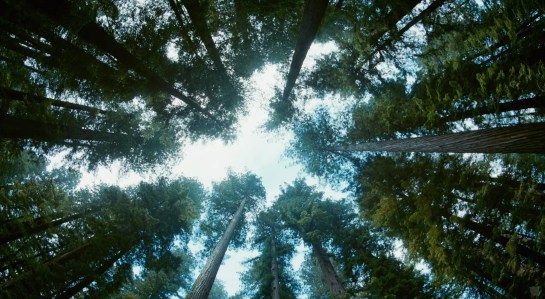
The Tree of Life fittingly begins with a quote:
“Where were you when I laid the foundation of the earth? When the morning stars sang together and all the sons of God shouted for joy?”
The reason for the quote becomes apparent within the opening minutes of the film which, like the Book of Job, presents itself as a meditation on, if not an answer to, the problem of evil, “one of the great paradoxes of theism: Given the existence of evil, how is it possible that God is great and God is good?” This is the perplexing question that haunts the film’s protagonist, Jack O’Brien (Sean Penn), a 21st-century corporate executive who is now disenchanted with his life. He remembers his relationship with his father (Brad Pitt), a staunch disciplinarian, and is haunted most by the tragic death of his younger brother, R.L., who appears to have died in the military service at the age of 19. The brother’s death causes Mrs. O’Brien (Jessica Chastain), the angelic mother, deep anguish. Anxious to reconcile his belief with God, Jack embarks on a personal, introspective quest for his/the ultimate meaning.
The Tree of Life is that quest, a spiritual journey through time which takes Jack from the present to the very origins of the universe, from his formative years growing up in the suburbs of Texas in the 50s to his ultimate destiny on the “shores of eternity.” At the moment of crisis, he is carried back to his childhood years, charting his development from the early years where he frolicked carelessly with his mother at side to his eventual loss of innocence in his teens. Malick’s elliptical style in this section suggests that he’s trying to capture the process of remembering, and of memory. The images, many of which are repeated, such as the recurring shot of his mother washing her feet off with a hose, are presented in fragments, like the fleeting remnants of some hazy, half-forgotten dream. What we see is a remembrance of the past occurring in the landscape of the ‘mind’s eye’, with flickering recollections from the deepest pits of consciousness. As the 50s section progresses you get a glimpse inside the mind of a man – whether it be it Jack or Malick, trying to reassemble the bits and pieces of his past in a way that might reveal the meaning of his existence.
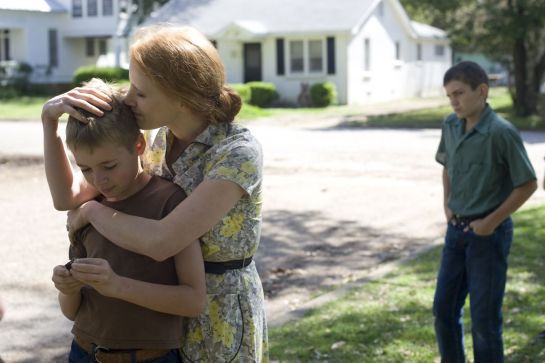
The story of a ‘lost paradise’ is universal and deeply personal to everyone. By fixing the camera at a child’s eye level, Malick invites us to render our own childhood through his. We suddenly become an intimate companion to the characters, especially Jack, not only seeing what he sees but feeling what he feels.
Malick writes in the preface of his script:
“The “I” who speaks in this story is not the author. Rather, he hopes that you might see yourself in this “I” and understand this story as your own.”
Jack realises that time, far from healing the wounds of loss, only makes them more painful. His dreams of childhood permits the extraordinary visions of geological time and the mysterious reaches of the universe. Brad Pitt dominates majority of the film as the God-fearing family man, who is in perfect harmony with his gentle, beautiful and profoundly religious wife. The mother has a voiceover at the beginning of the film asking her sons to prefer ‘God’s grace’ to the ‘beauties of nature’, as the truer path. While the father is projected as somewhat of a materialist, taking out patents in the aeronautics industry and spending the family’s finance in the process. He is angry with his boys and respectful to the traditional churchgoing beliefs. He challenges his boys to hit him, to toughen them up, and does not hesitate to hit them for disobedience. He plays the organ in church and is a disappointed musician, his frustration and rage simmer from every pore. His boys feel fear as well as love, Malick shows an interesting point of how the two emotions have fused into one. The boys feel alienated by their parents, encouraged to respect the fathers violence and secretly to feel contempt for their mother’s gentleness.
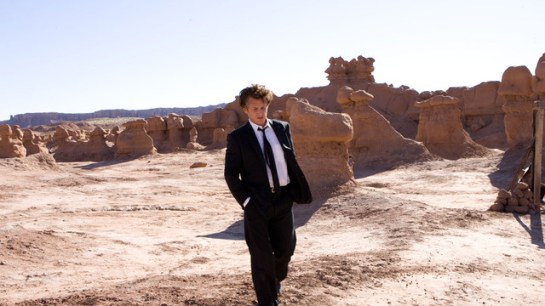
The film represents the crown and glory of creation through the glum and grown-up Jack, who recalls, “Father, Mother. Always you wrestle inside me. Always you will.” He is consumed by existential angst; haunted by past family trauma and suppressed issues.
According to Malick’s script:
The buildings hem him round like the trees of a wild forest. A false nature, a universe of death. A sightless world, roofed over, shut off from things above. A world that would exclude the transcendent, that says: I am, and there is nothing else. A world without love. This is a new death, death of spirit, extinction of the soul. Man has shut himself in. He must find a way out. He must journey through time, from the outward and external to the heart of creation.
The significance of the film is summoned in this key passage. It tells us that Man has lost his way. He has created an artificial world and sealed himself off from the truth. Although Jack has achieved material fame from his career, he is really spiritually empty, a lost soul adrift in an impersonal modern world, trapped by the stone cold walls of skyscrapers around him. Another poignant theme in the film is about the ‘loss of innocence’, a rather axiom of human experience – repeated in every generation and in the consciousness of every individual. Through the lives of the three boys, we are bought back to our childhood days and all the long-lost first moments, feelings, discoveries, and guilts.
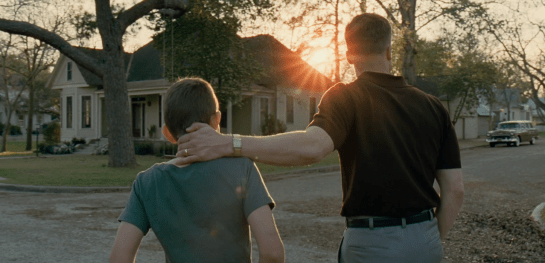
But the momentous breakthrough comes for Jack when he realizes that his father’s materialist ways are in fact not the way. Jack forgives his father internally and thus chooses the way of nature, of God, and of love from his mother. The final scene follows his religious epiphany to the shores of the paradise beach where he is joined by the entire family. He is now secure in knowing that, however soulless and impersonal the modern world may be, the eternal still shines through it all.
“The love of man is just one more stupidity and brutishness if there is no ulterior intent to sanctify it”
Friedrich Nietzsche
 hilitehead
elaborate?