
I recently started working for Hungarian American artist George Peck, a multidisciplinary artist with a constructivist background, who lives and works in between NYC and Buskirk, NY. Sharing a review I wrote for his upcoming solo art exhibition in Budapest + short interview.
Symbol, Fire, and Political Memory in the Landscape
George Peck returns to Hungary with a pop-up exhibition “From White to Black to White: An action etched in memory” opening Tuesday, May 12th, 2026 at the MissionArt Gallery in Budapest. The exhibition presents a body of work shaped by exile, historical memory, and the psychological terrain of return. The project emerged after Peck returned to Hungary following life living in New York. The city of his youth appeared altered in scale, atmosphere and symbolic density. History moved from distant background into immediate material. The work crystallizes into a decisive shift where political memory solidifies into form.
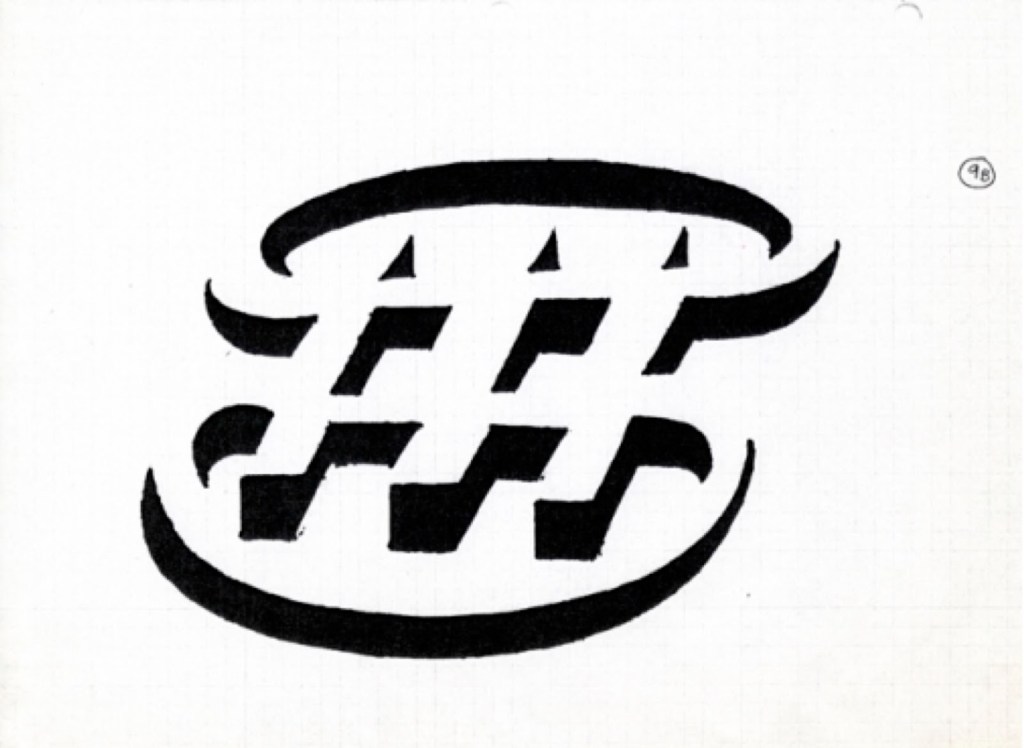
Peck left Hungary in 1956 during the violent uprising. The teenager came of age within the cultural momentum of New York. When he returned decades later, Budapest revealed a contrasting claustrophobia to the free spirit of the young artist. Gray, small, compressed public space, a subdued atmosphere, and the persistent symbolic authority of a landscape shaped by the Soviet state. This encounter provoked an emotional response comprised of an act of resistance where Peck developed a compact geometric emblem marked by severity and clarity. The emblem became a tool of inquiry, moving through stages of emergence. It illuminated dissolution, leaving behind a visual trace that persists in memory while confronting the mechanisms of power embedded in symbols.
History, Symbol, Resistance
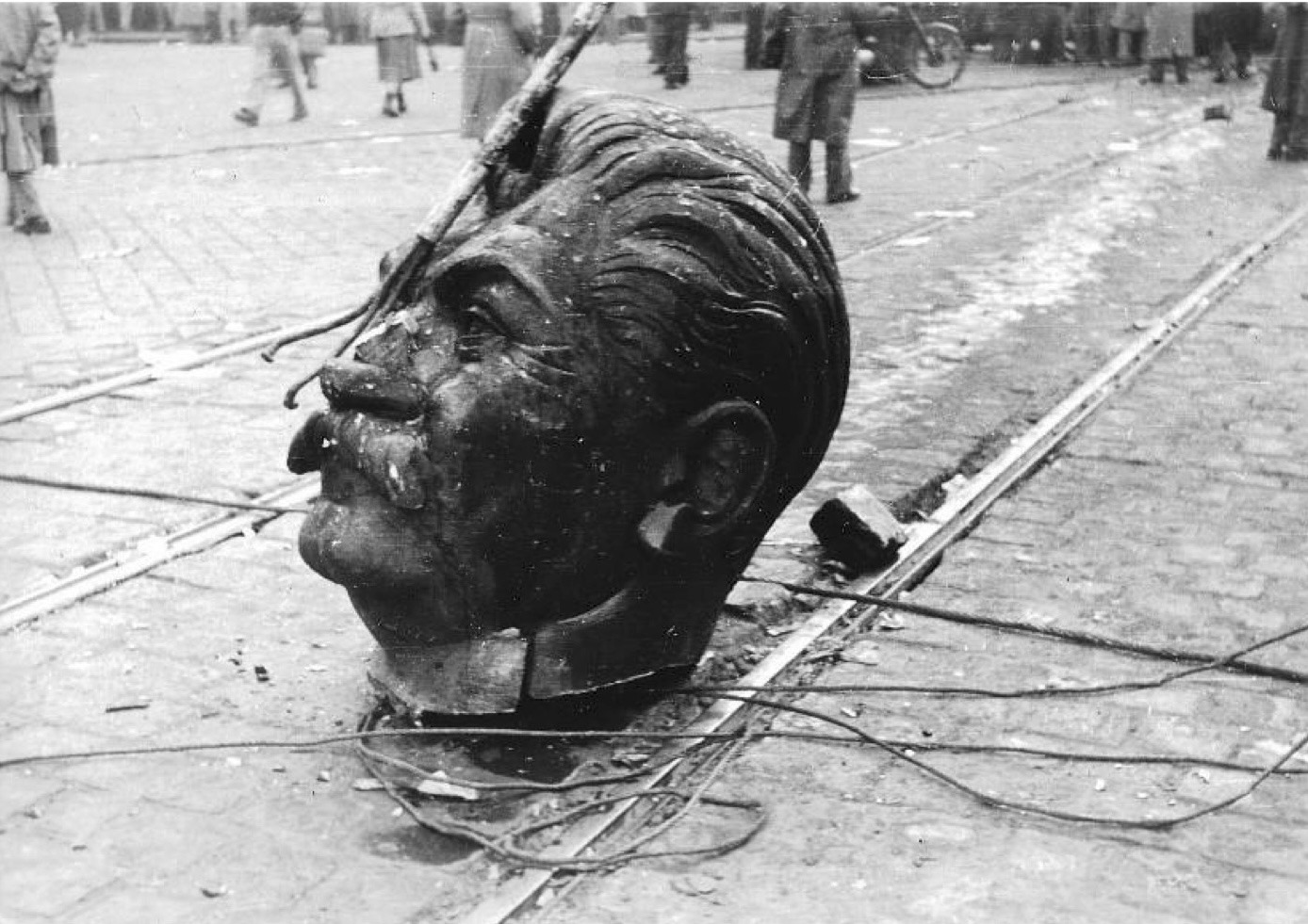
The historical memory of the 1956 Hungarian Revolution forms the conceptual ground of Peck’s project. Russians entered Budapest and the city’s streets became sites of revolt, the revolution started. Monuments representing state authority were attacked, dismantled, or defaced. These events revealed a durable insight that power depends upon images. Historically, emblems, insignia, monuments, and architectural signs exist to shape perception before political language to organize space, authority and collective behavior.
From White to Black to White transforms these historical insights into method through Peck’s construction of a counter symbol and its subjection to physical testing within the landscape. The emblem moves through a precise sequence of states where drawing becomes structure and the structure enters the terrain. The terrain hosts an action that ends in fire followed by covering up the entire action. Documentation preserves the passage. Documentation preserves the passage. The project unfolds as a controlled cycle of appearance, transformation and disappearance, leaving behind the material and archival traces through which memory continues to operate.
Within the exhibition, this process finds a second articulation in the monochromatic white painting, “Mask” (1977). The surface functions as a quiet field that both refers to and preserves the earlier action, carrying its residual form in another register. Subtle horizontal marks embedded within the white ground register as condensed traces of the performed event, translating the gesture into a new visual resolution. In this way the painting does not illustrate the action but extends it, allowing the symbolic passage from performance to archive to continue within the contemplative space of the monochrome surface.
The Action in the Landscape
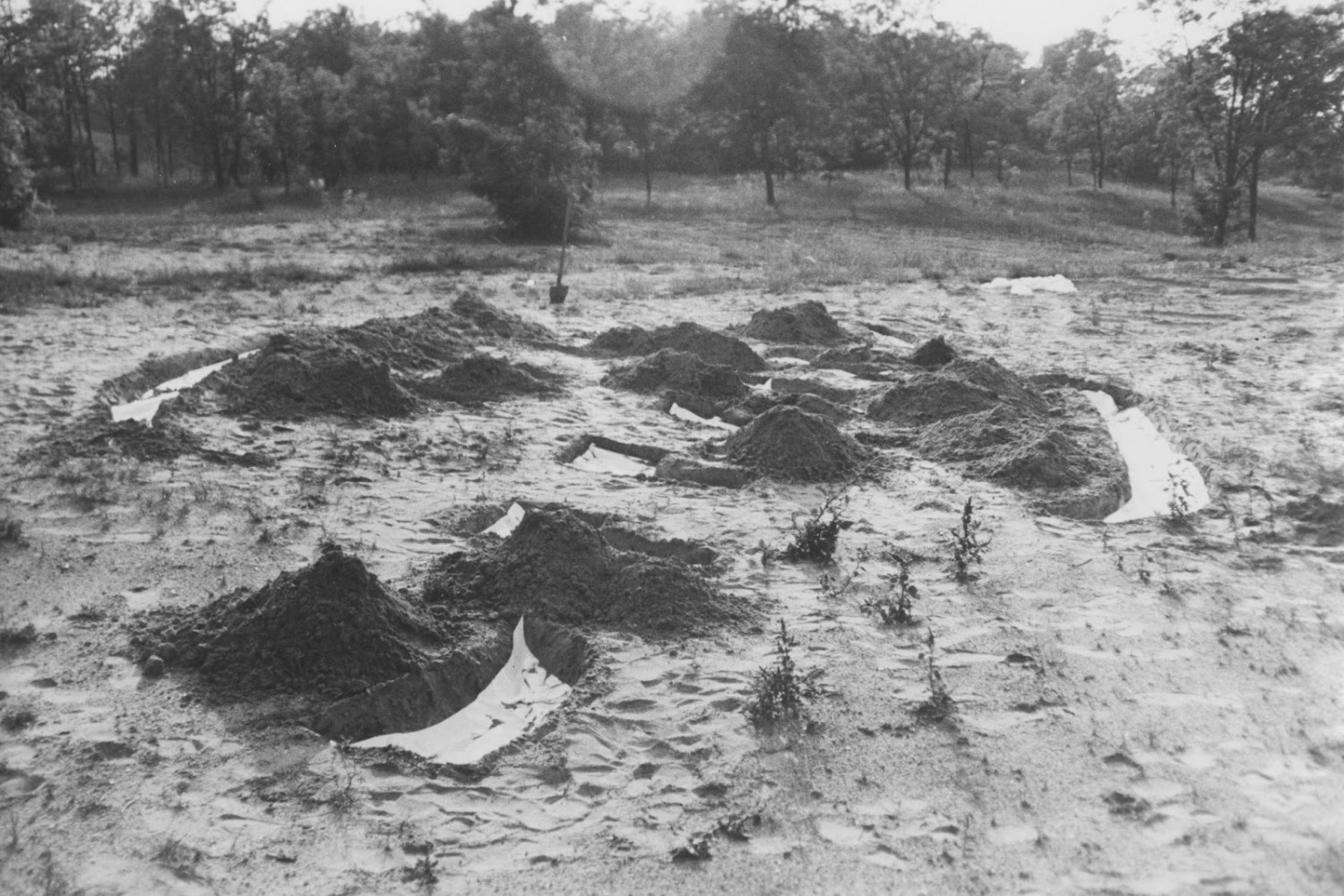
Peck selected a sandy field on Surány St Endise Island of the Danube. The location introduced distance, exposure and risk. The artist later learned that the site stood close to a Russian military base intensifying the symbolic tension embedded in the work. The emblem leaves the protected space of the studio and enters open ground where weather, gravity, combustion and time become collaborators in the process.
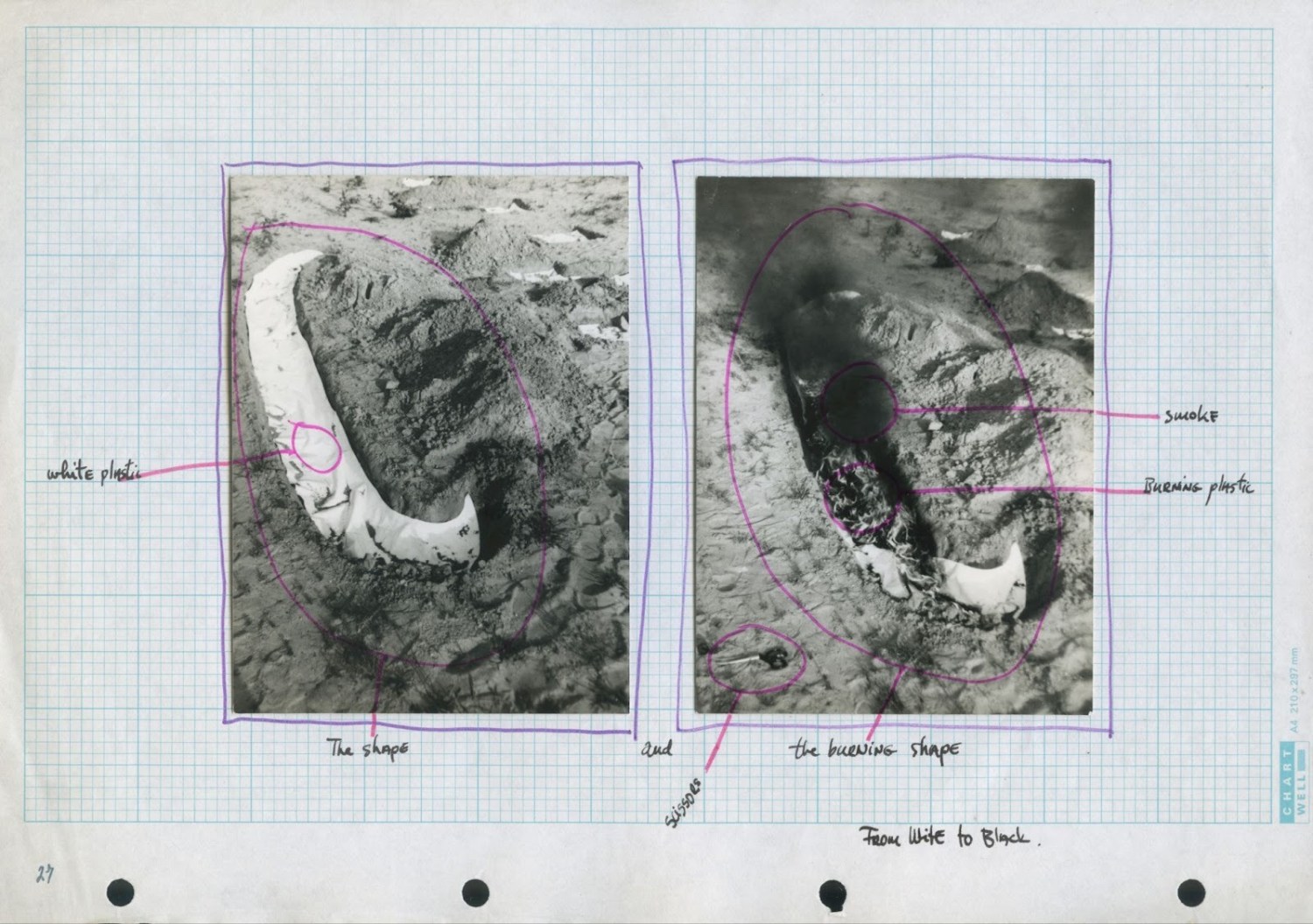
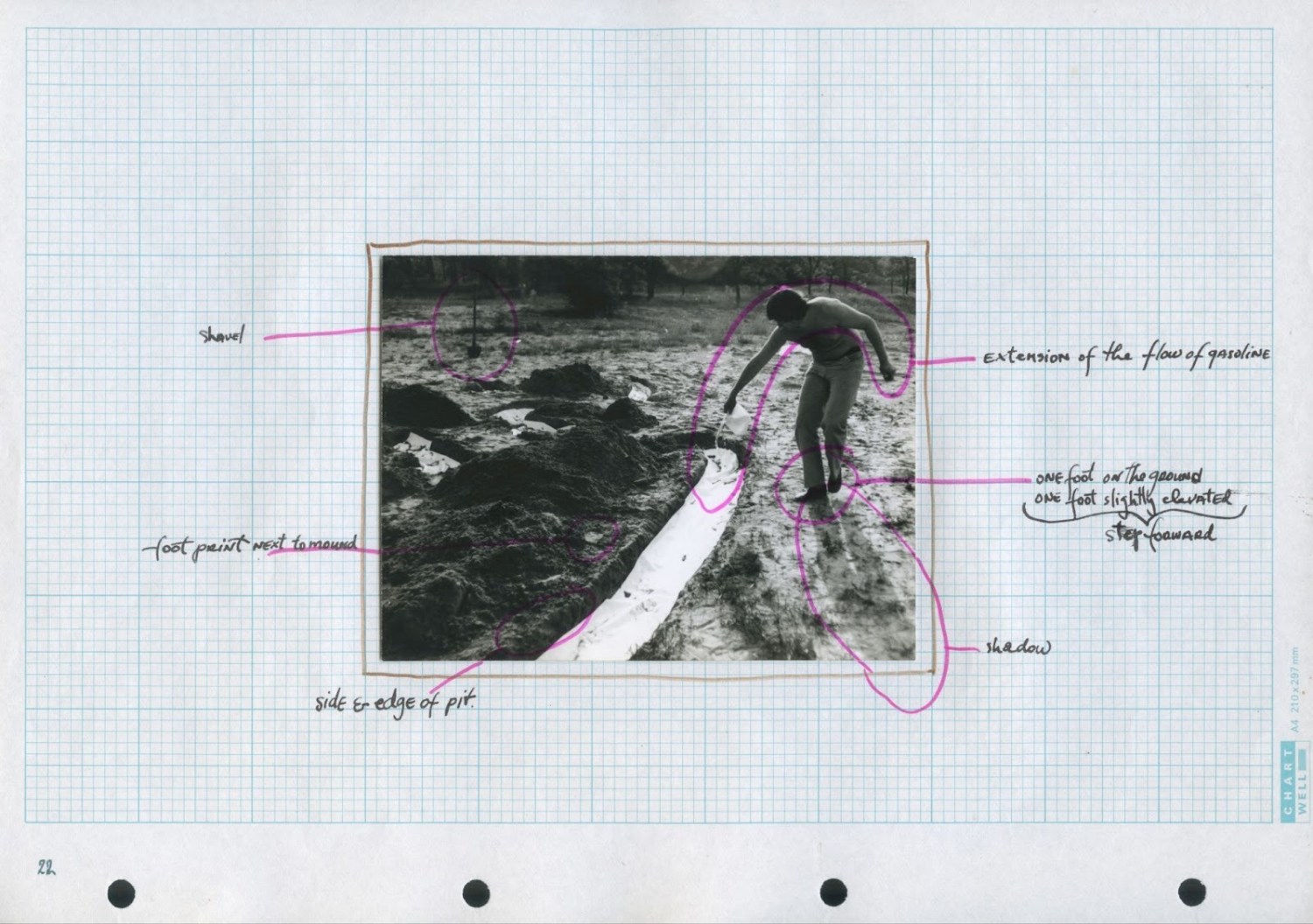
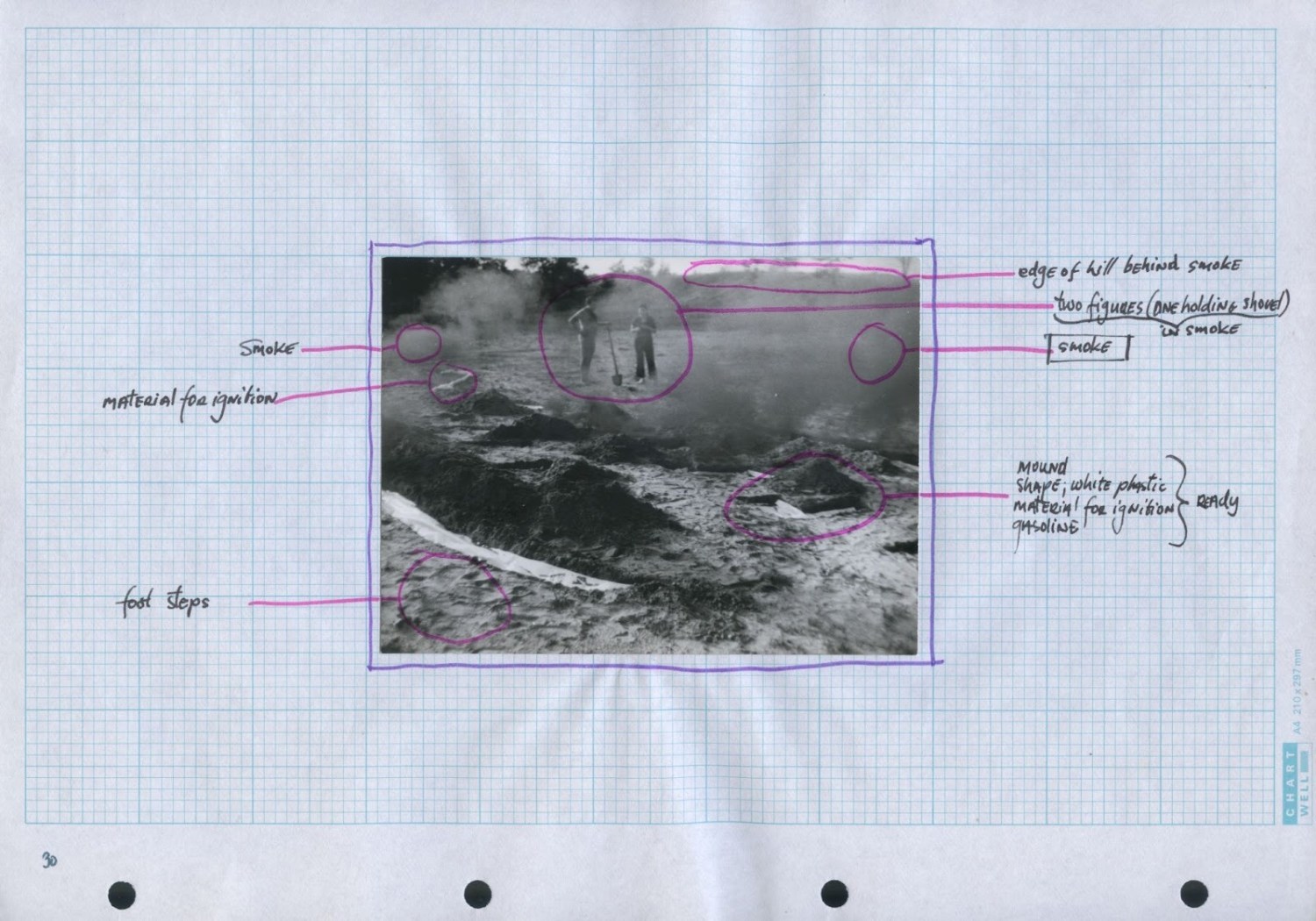
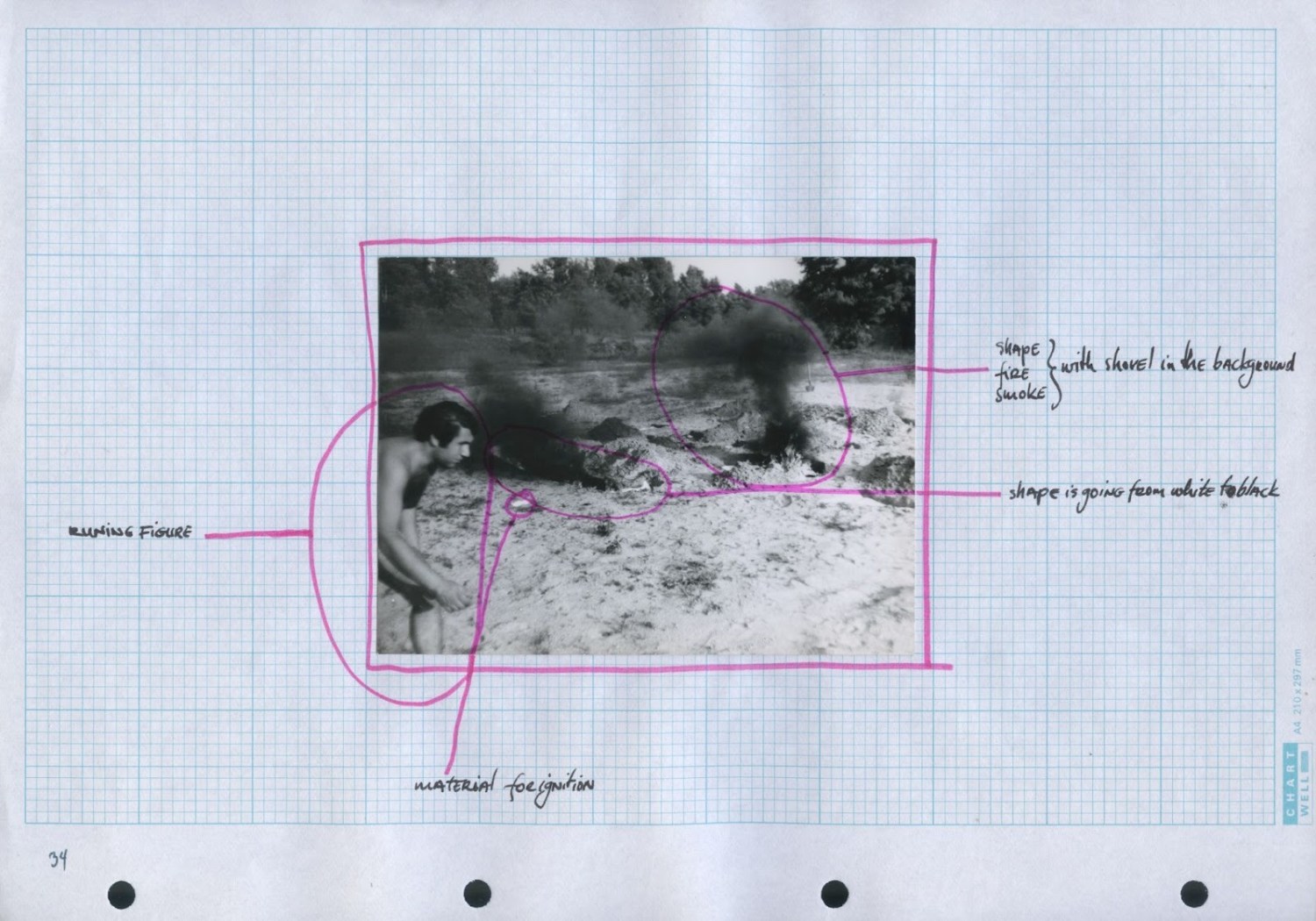
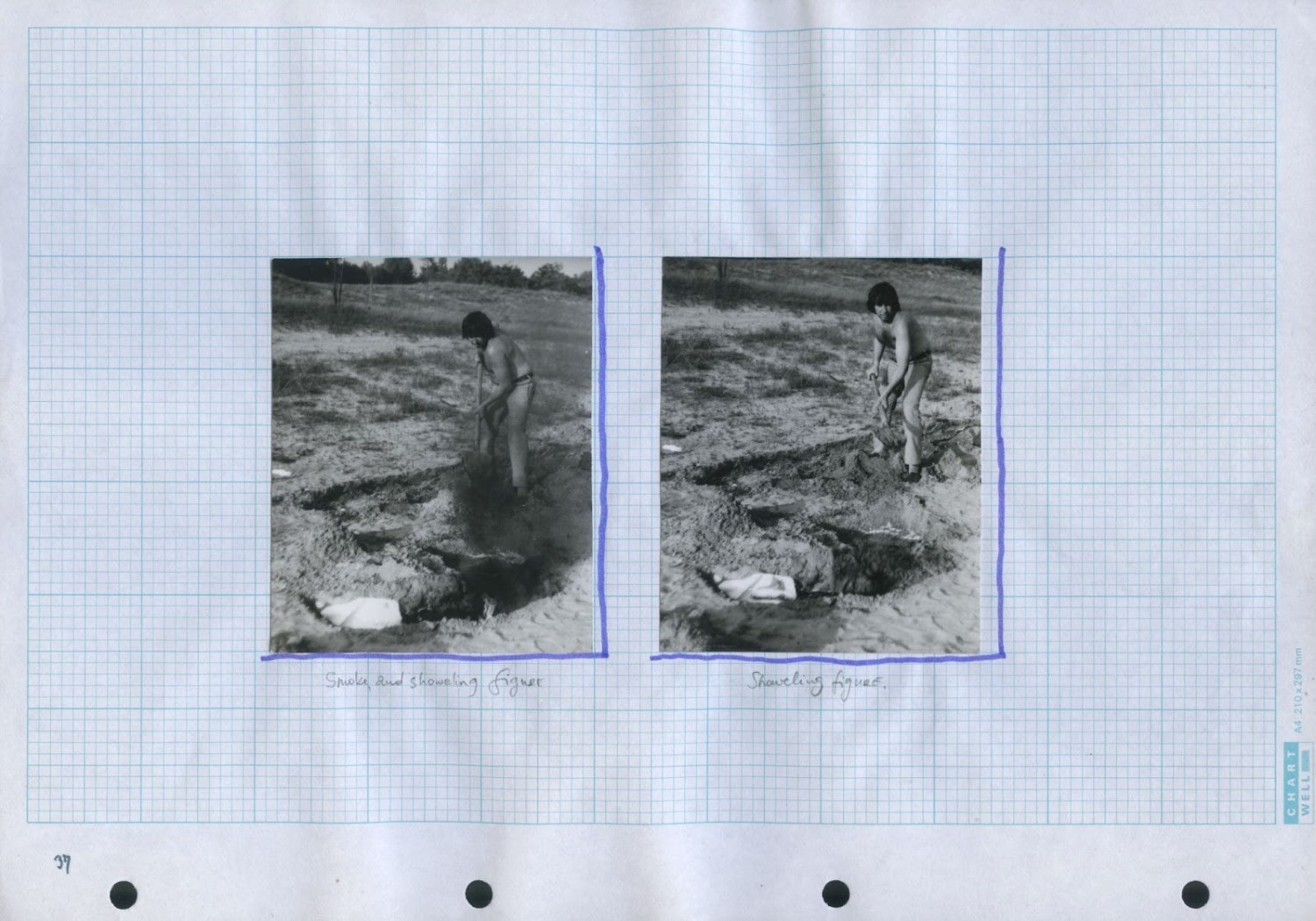
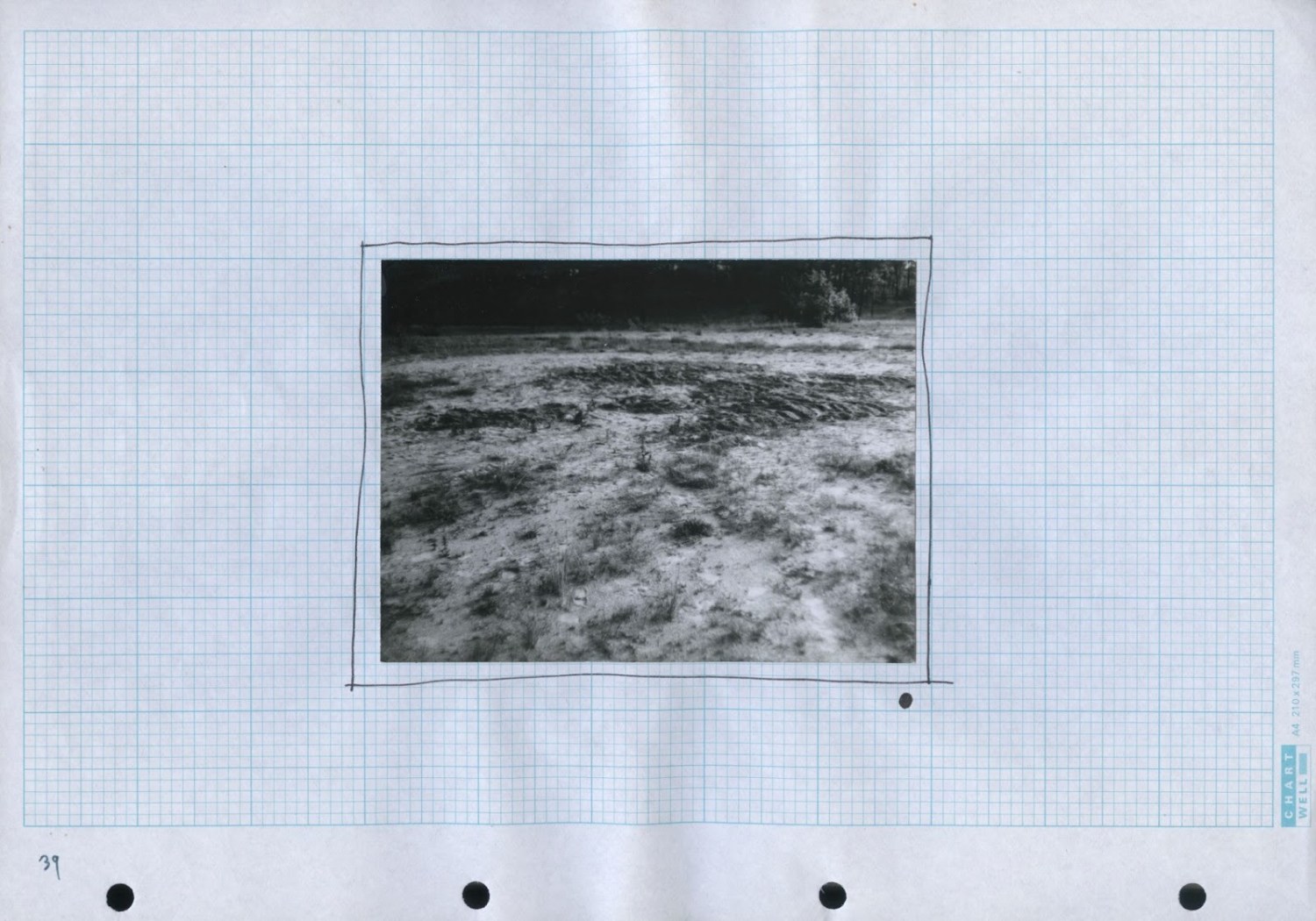
The project is conceptualized through annotated archival records, with the black and white photographic sequences forming the exhibition’s central body of work. These photographs document the emblem moving through stages from preliminary study, construction in white and white plastic, transfer to earth, preparation for ignition, combustion and the aftermath. Each image operates as evidence and together, they construct the visual architecture of the project.
The initial phase establishes the emblem as a designed structure. Peck studies proportion, curvature and scale. The symbol appears as a graphic proposition undergoing material translation.
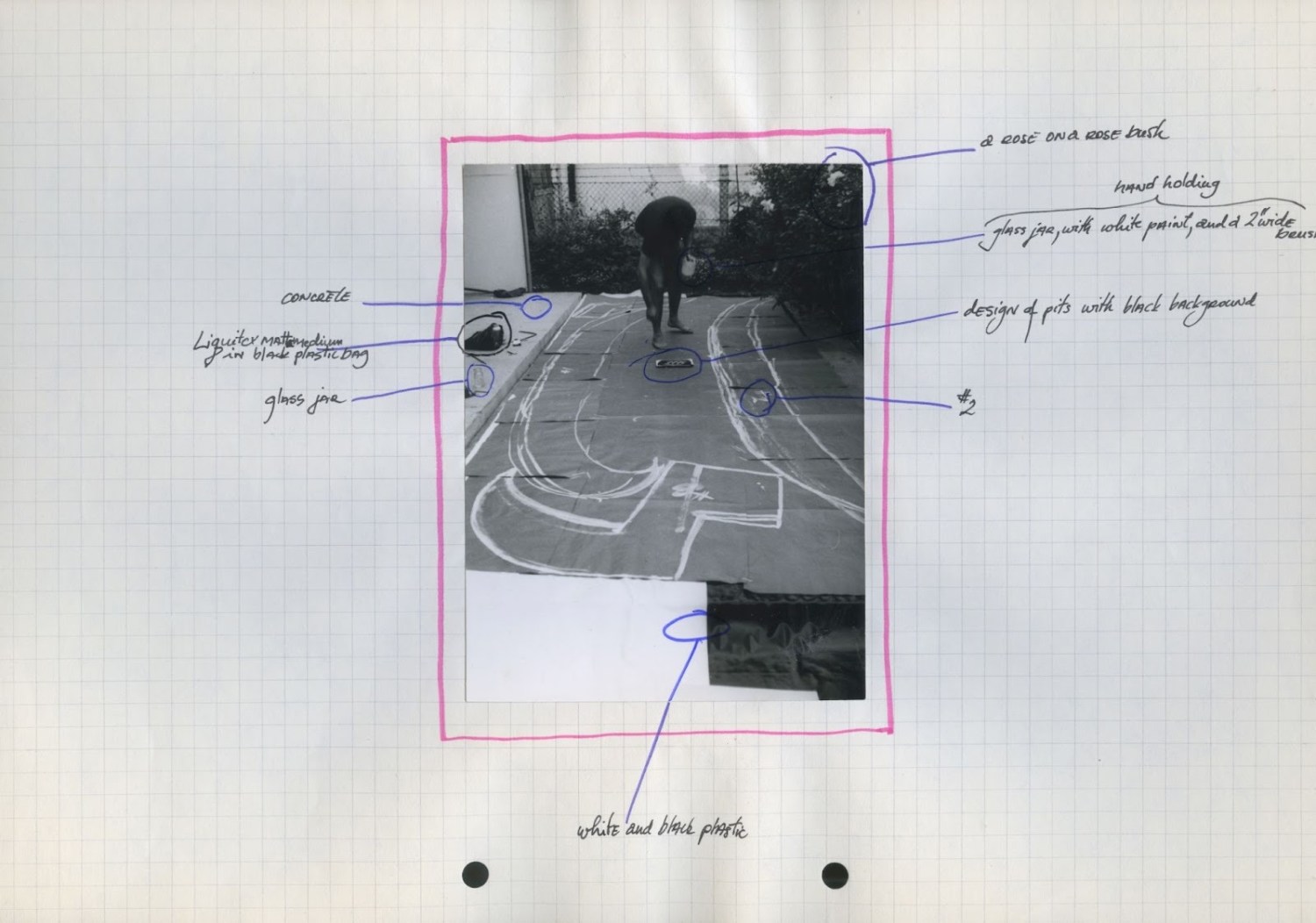
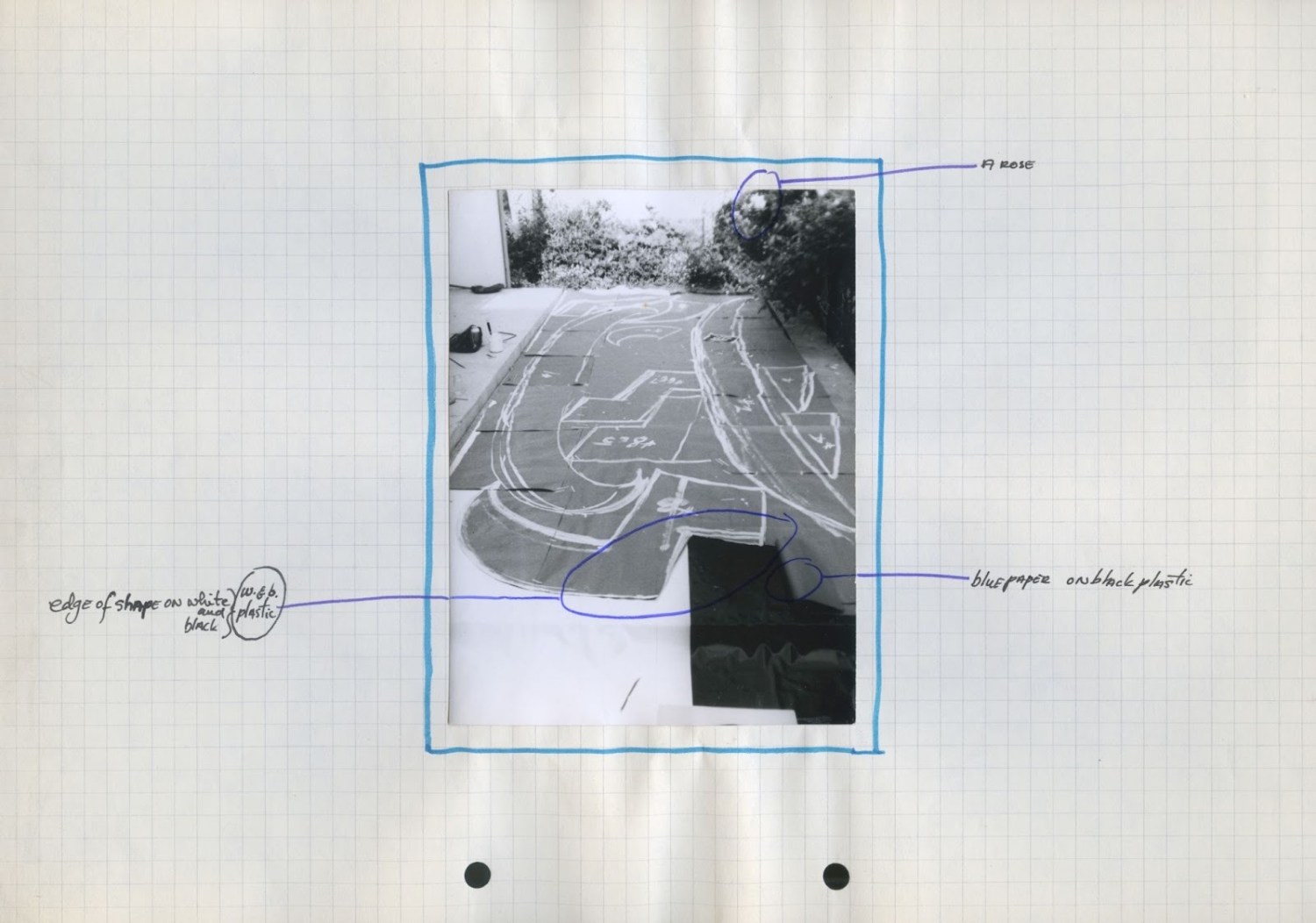
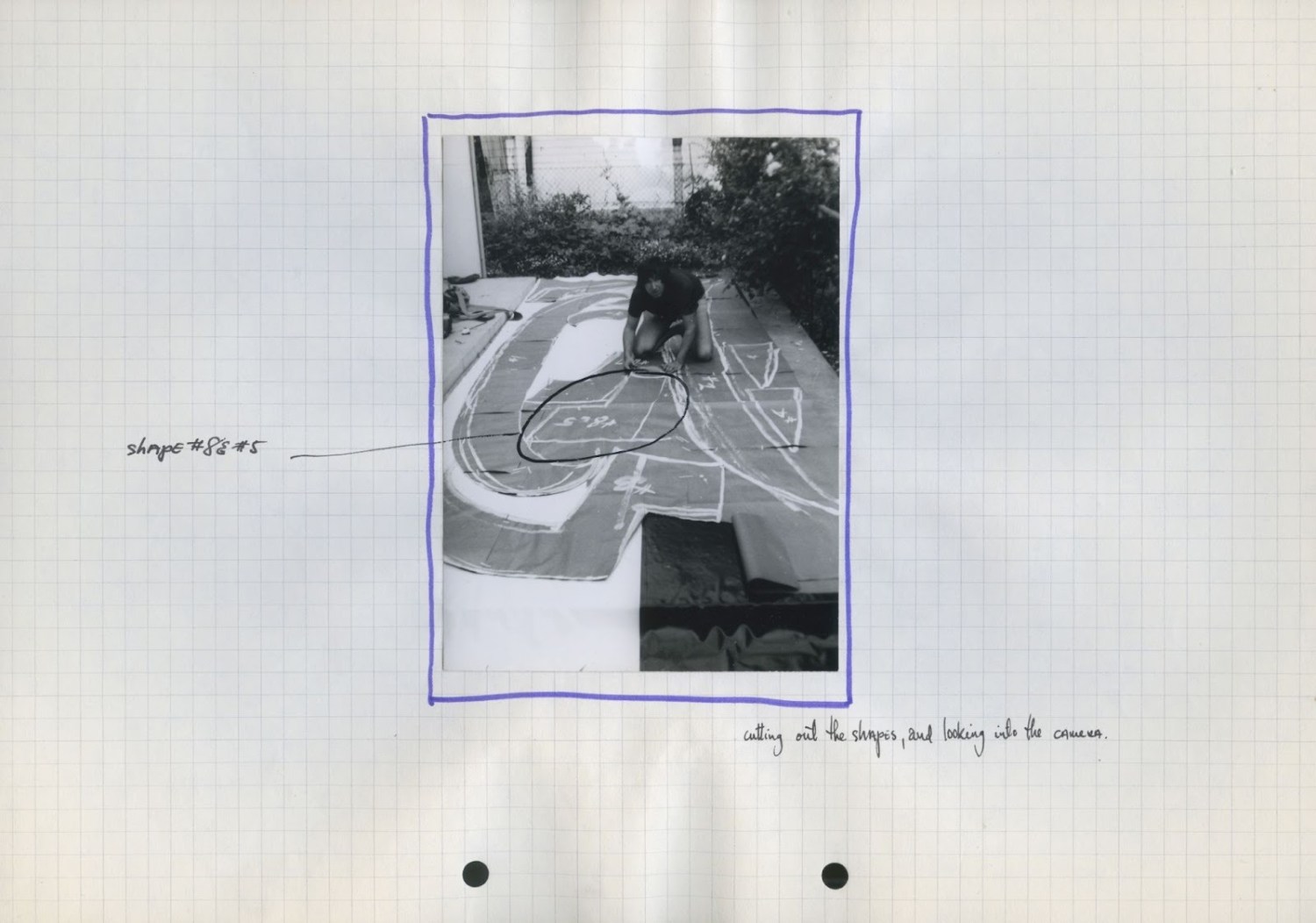
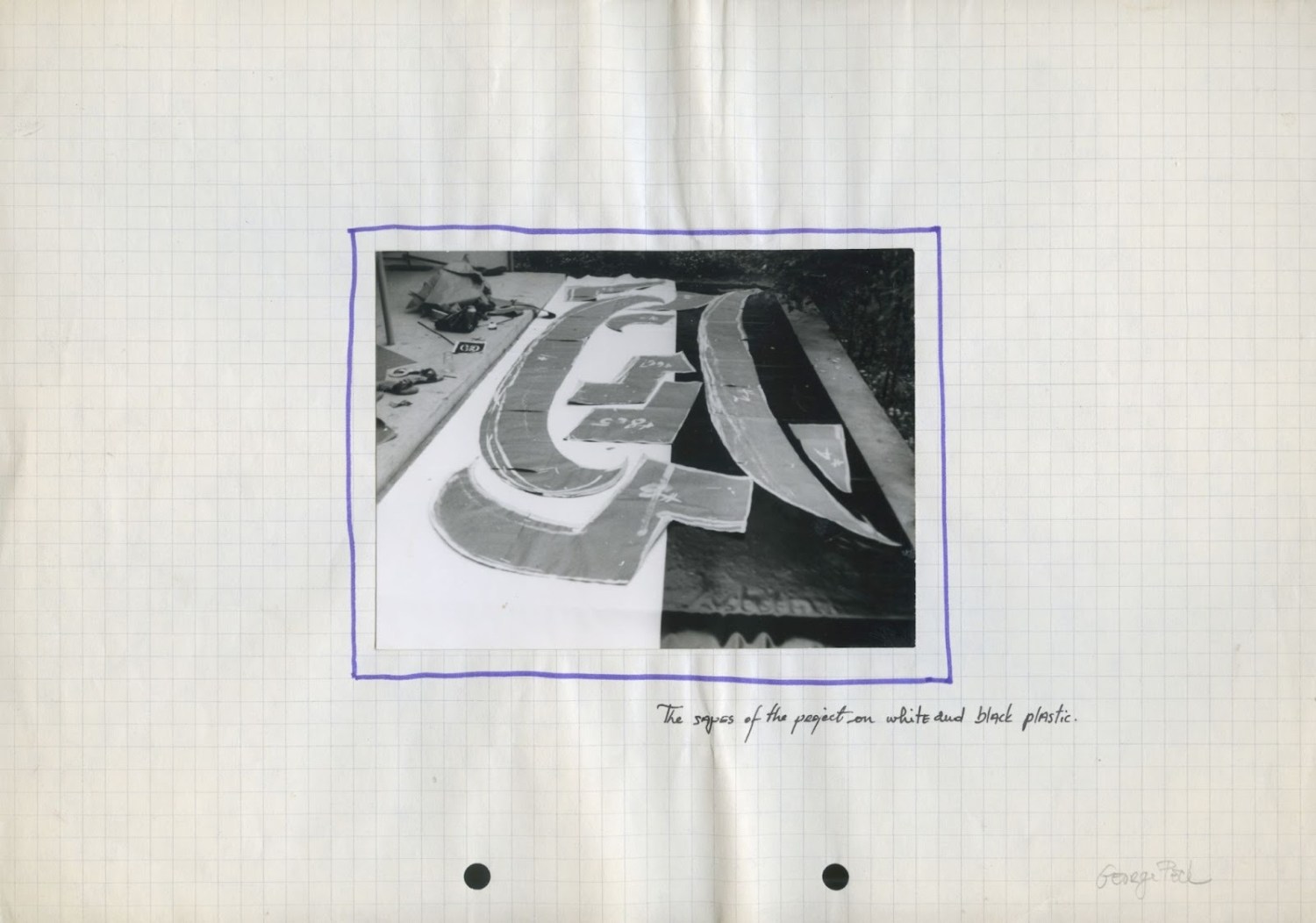
A second phase situates the emblem directly in the terrain. Excavation lines the symbol into the sandy field. The drawing expands into the environment where labor, duration and physical scale enter the work.
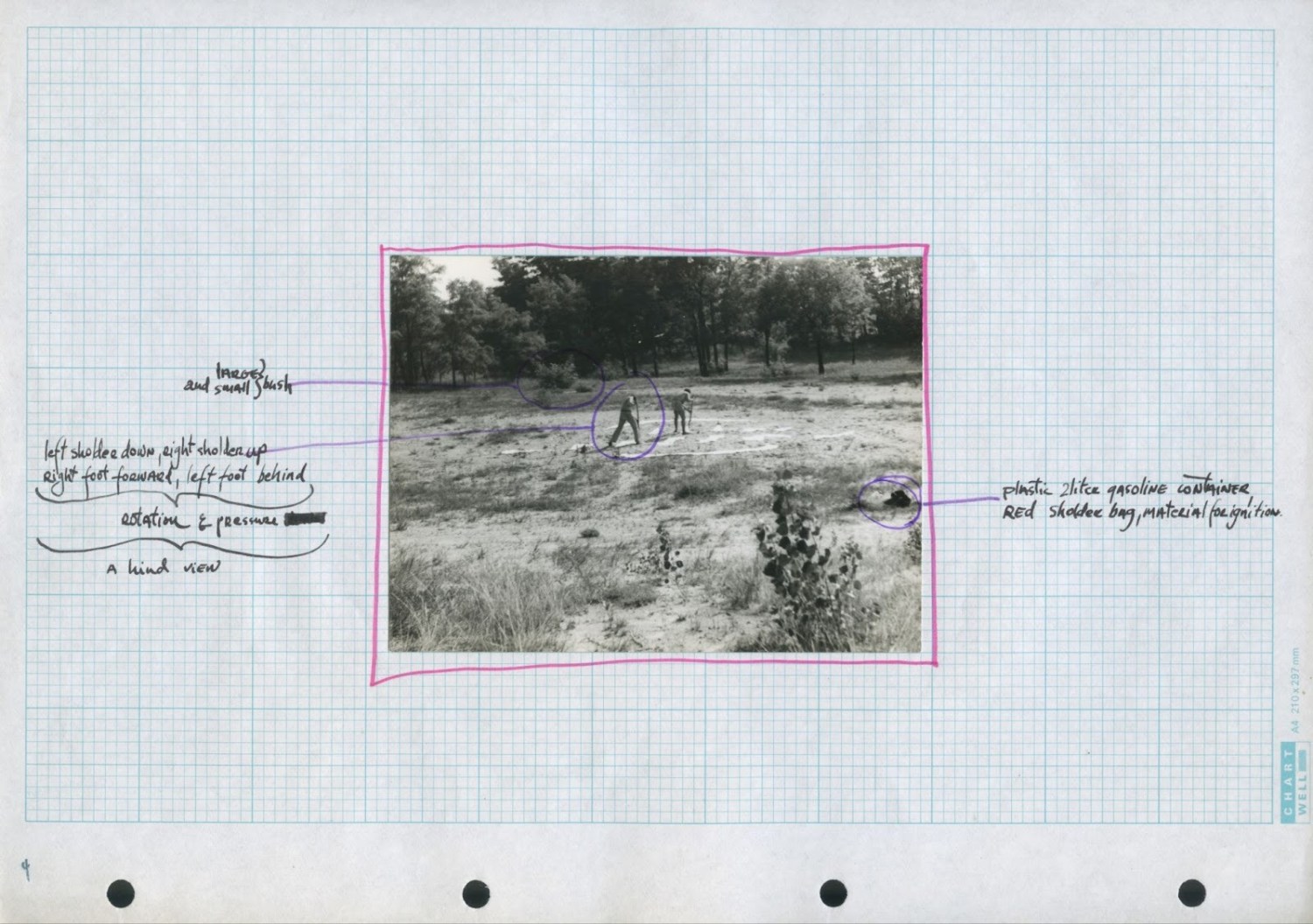
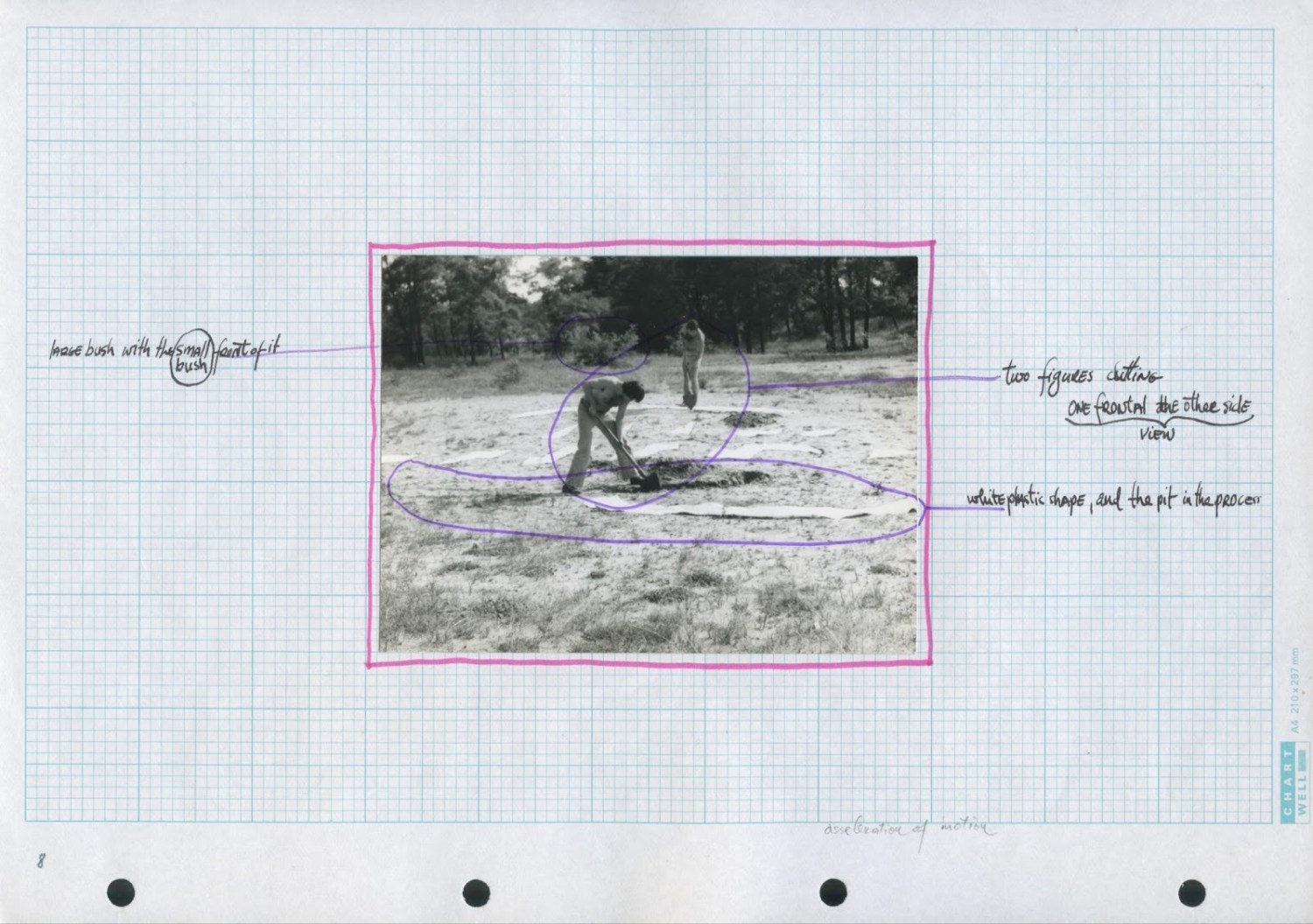
Figure 4. The emblem transferred into the landscape, its excavated contours fixing the sign in earth.
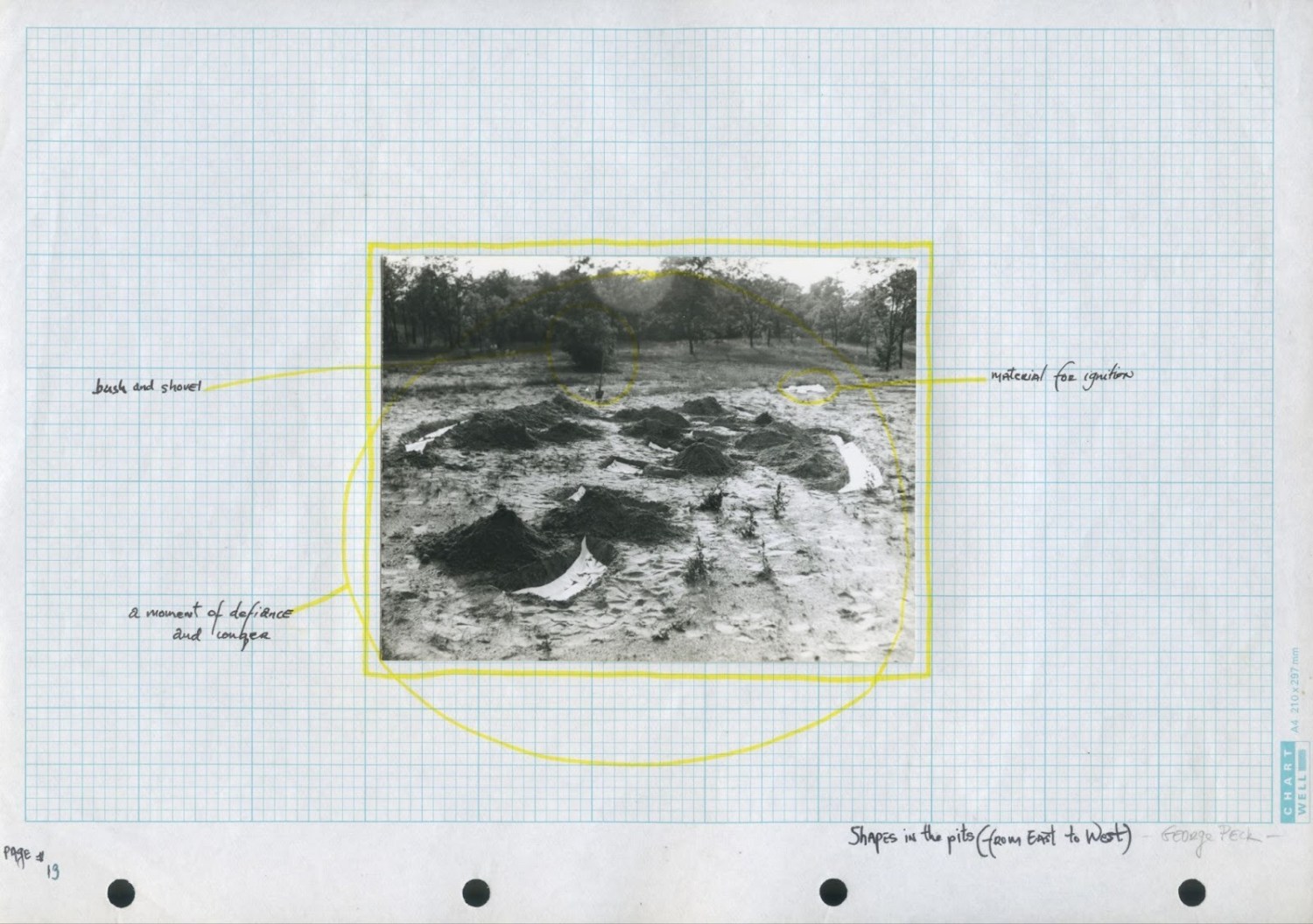
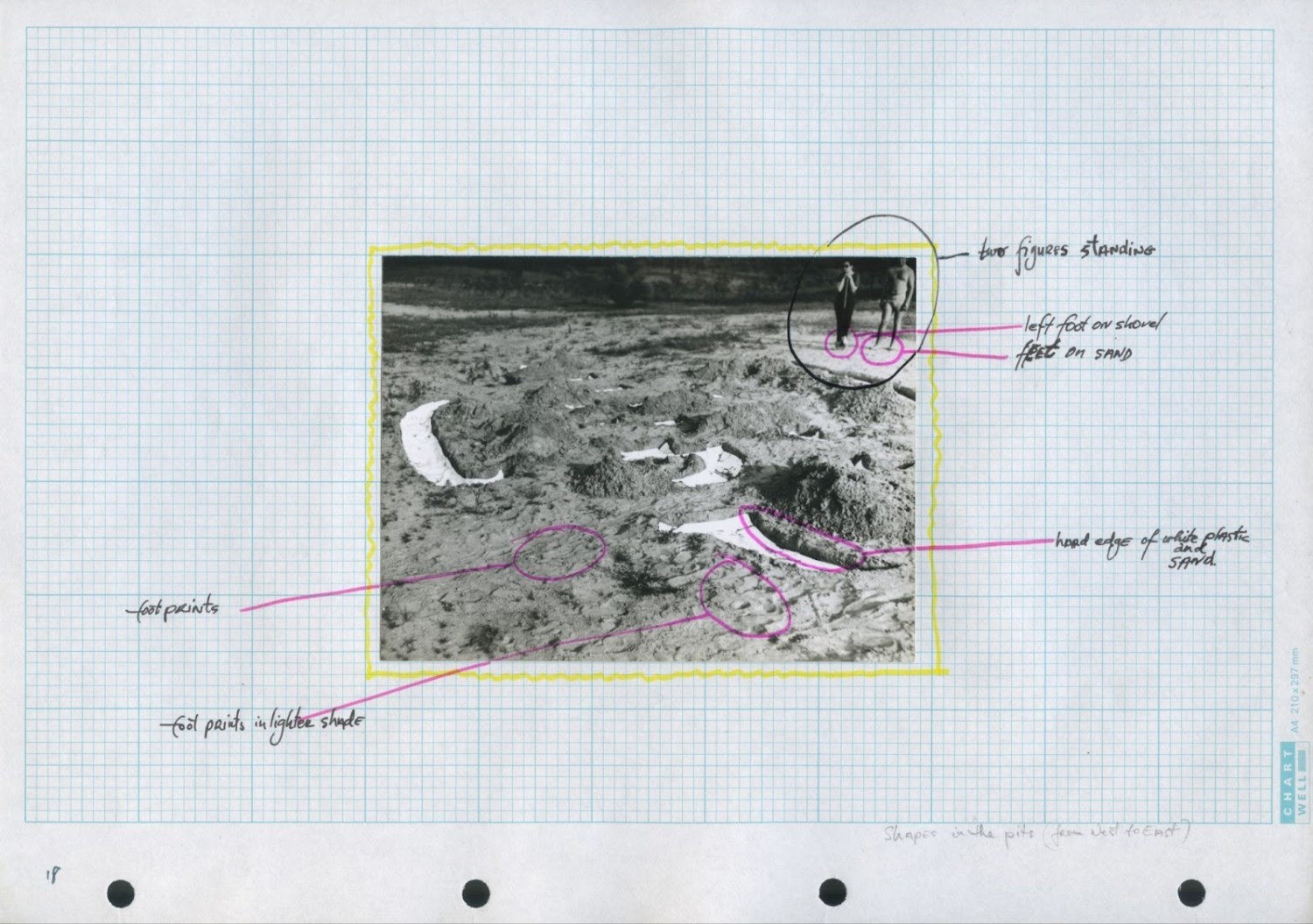
The final phase activates transformation. Combustible material traces the structure. Fire darkens the white form and destabilizes its clarity. The symbol loses graphic certainty and returns to matter. The passage from white to black registers as a visual, political and psychological movement.
Memory and Landscape
Memory forms the central material of the work. The sandy field on St Endre Island served as the first site of inscription, receiving the emblem as a physical mark. Fire altered that mark and returned it to elemental matter. The photographs preserved the passage. Through this progression the project reveals how images move across different layers of memory: the terrain remembers through trace, the archive remembers through record, and the viewer remembers through interpretation.
The action also resonates with a broader historical consciousness rooted in the political upheavals that shaped Hungary. Symbols played a decisive role in structuring public life during the Soviet dominated political order. Peck’s emblem addresses this history through direct engagement with the landscape itself. By constructing and dissolving the symbol in open ground, the work reflects on how images gain authority within collective memory and how that authority can shift, fracture, and transform over time.
The Archive as Artwork
Peck conceived the work with the understanding that the action required preservation. The photographic archive extends the life of the event through time, space and memory. Each frame holds a moment of transformation through preparation, ignition, dissolution and residue. The sequences stabilize a fleeting performance within durable visual memory. Annotated records of the action further reveal the material vocabulary that structured the event: gauze, a shovel, plastic sheeting, a glass jar, white paint, a gasoline container, a small brush, the white plastic emblem forms, and the drifting presence of smoke. These elements anchor the work in a physical process while the archive carries the gesture forward. Time, space, and gesture converge into a structured record.
Seen today, the black and white photographs maintain remarkable clarity. Grain, scale and order guide the viewer through the internal rhythm of the project. The archive operates as both witness and artwork. It preserves the disciplined progression through which the symbol emerges, transforms and disappears.
Photo Performance and Archive
The project is best understood as a photo performance in which the action was conceived from the outset to exist through its documentation. Rather than producing a permanent object, Peck staged a sequence of actions that would unfold in real time and be preserved through the photographic record. The landscape served as the temporary site of the event, while the camera became the instrument through which the work would ultimately endure.
The constructed emblem moves through a deliberate progression of stages: drawing, installation, ignition and residue. Each phase was performed for the lens, allowing the transformation of the image to be recorded with clarity and precision. The resulting black and white photographic sequence does not merely document the action; it constitutes the work itself. Through this process the ephemeral gesture becomes structured visual memory, where performance, symbol, and archive converge into a single conceptual form.
Memory Loop
More than half a century after its creation, “From White to Black to White: An action etched in memory” retains striking relevance. Contemporary political culture continues to organize authority through images, emblems, and visual codes that shape collective belief. Peck’s project exposes the fragile structure beneath these signs, revealing how symbols acquire power and how easily that power can dissolve.
From White to Black to White transforms a single gesture into a sustained meditation on the life of images. The emblem appears, occupies space, burns, and dissolves. What remains is not absence but inscription. The landscape retains a trace, the archive preserves the event, each stage carrying the intensity of the original gesture forward through time. “Mask” (1977) the monochrome painting in the exhibition functions as the final transformation of this passage, as the original action holds its residual presence within the meditative field of white. Memory becomes the final site of the work ensuring that the action continues long after the fire itself has faded and the image persists as a trace within collective recollection.
The Project White to Black has been previously exhibited at the Műcsarnok Kunsthalle, “Nature Art” exhibition curated by Dr. Katalin Keseru.
Exhibition Information
“From White to Black to White: An action etched in memory”
Curated by Katalin T. Nagy
Opening Reception: May 12th, 2026
Location: MissionArt Gallery
Address: Budapest, V Falk Miksa u. 30, 1055 Hungary
Hours: Monday – Friday 10am-6pm / Sat-Sun Closed
About the Artist
George Peck [b. Budapest, Hungary] is a New York-based painter and multidisciplinary artist who works with oil paint, acrylic, pastel, sculpture, video, and installation pieces. Peck’s works, rooted in the study of light, color, and materials, have been exhibited throughout the United States and Europe since 1975.
He has participated in solo and group exhibitions at institutions—The Museum of Jewish Heritage, Trans Hudson Gallery (NY + NJ), Kate Ganz Gallery, Leo Castelli Gallery, Bette Stoler Gallery, Susan Caldwell Inc.—in New York; The Birmingham Civil Rights Institute; The High Museum of Art in Georgia; G Karl Ernst Osthaus-Museums Hagen; The American Embassy, Germany; Baraz Gallery, Istanbul; National Fine Arts Museum of Hungary, Műcsarnok Kunsthalle, among many others. His work has been reviewed extensively in such publications as The New York Times, Art in America, ArtNews, Art Critical, Art on Paper, The Village Voice, Adobe, and Artforum, among others.
His paintings are represented in numerous private and public collections in both the United States and Europe, such as The Metropolitan Museum of Art, Brooklyn Museum of Art, and Grey Art Gallery, NY; High Museum of Art, Atlanta, GA; Museum of Modern Art, Stockholm, Sweden; Museum of Applied Arts, Kiscelli Museum, and Ernst Museum, Budapest, Hungary and numerous private collections. George Peck lives and maintains studios in New York City and Buskirk, NY.
 hilitehead
elaborate?