
Is the classic Mongolian script dead today?
Why do most Mongolians have traditional script tattoos?
and to this I answer…
I wish I knew how to write using classic Mongolian script, but I don’t. I only went to about the 3rd grade in Mongolia during which time I was taught to read and write in Cyrillic letters, which became the official writing system in Mongolian in the 1940s (introduced at the time particularly to compliment the Soviet Union). Here is a bit of history – the Mongolian Cyrillic alphabet is basically an exact version of Russian alphabets + two more letters of – Өө /ö/ and Үү /ü/. It is a phonemic alphabet, which means that there is a high level of consistency and pronunciation in each sound – hence the reason why people always think I am angry when speaking Mongolian because of my heavy khhh… sounds. The antiquity of the Mongolian writing system dates back centuries to atleast nine or ten ancient script styles, with the main seven being:
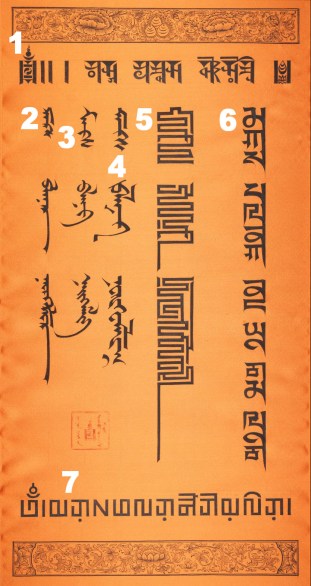 1. Ancient Mongolian Soyombo & Horizontal square script– devised in 1686 by the first Mongolian Buddhist Leader – Bogd Zhivzundamba on the basis of ancient Brahman Indian writing. The letters were created for recording the words of the three ‘holy’ written languages of that period: Mongolian, Tibetan and Sanskrit.
2. Mongol Script type (Uigarzhin-Mongol script) – used in the preclassical period. The earliest known example of the type is on the “Chingis’ stone inscription”.
3. Classical Mongol script – speculated to have when Uigur culture was at its peak. The system was later transcribed into the Mongolian script called ali-kali by Ayush-gush in 1587. Amongst all the Mongolian scripts, old Mongolian type is widely used today.
4. Tod or Clear Script – devised in 1648 by a Mongolian Buddhist scholar – Zaya Bandida on the basis of the old Mongolian script, eliminating the homographs in the Mongolian and bringing the written language closer to the oral.
5. Ornamental Mongol Script – spread among the book printing culture.
6. Square Script – also know as Mongolian international alphabet of the 13th century, it was devised in 1269 by Phags-pa lama Lodoizhalcan at the order of Kublai Khaan. The script was used throughout the Mongol Yuan Dynasty for recording entire texts in Chinese, Tibetan, Sanskrit and Turkish.
7. Ornamental Script – used in Buddhist texts for decorative purposes.
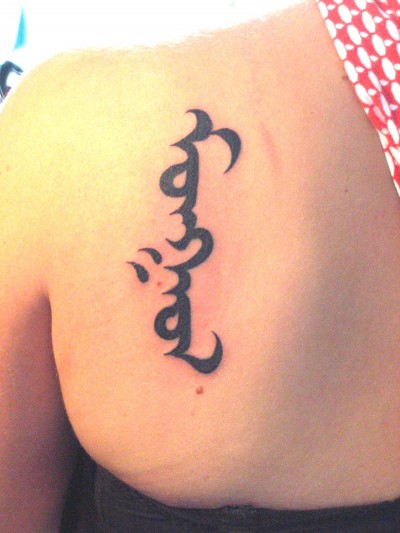
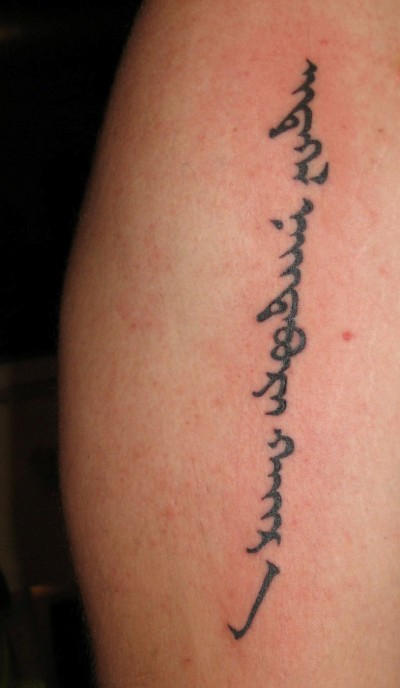
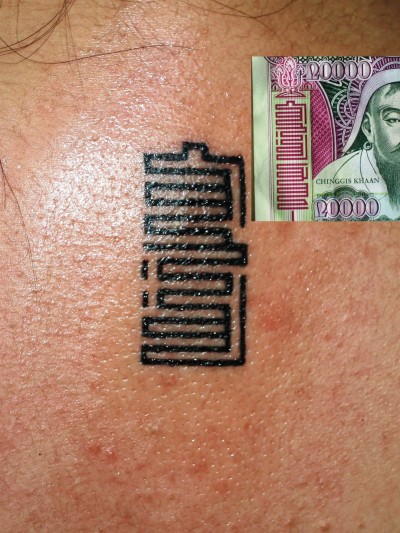
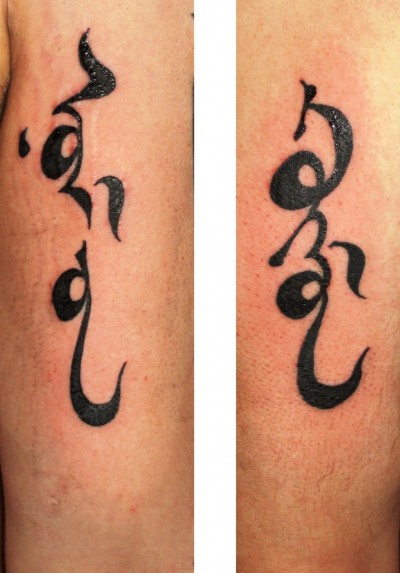
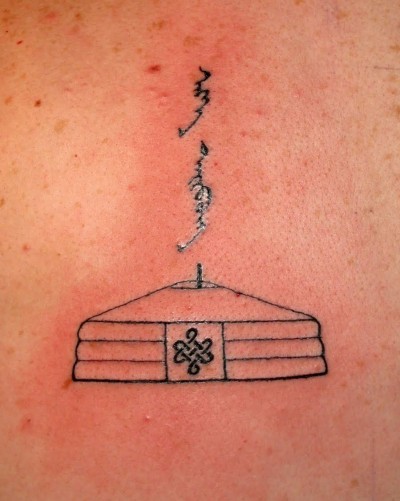
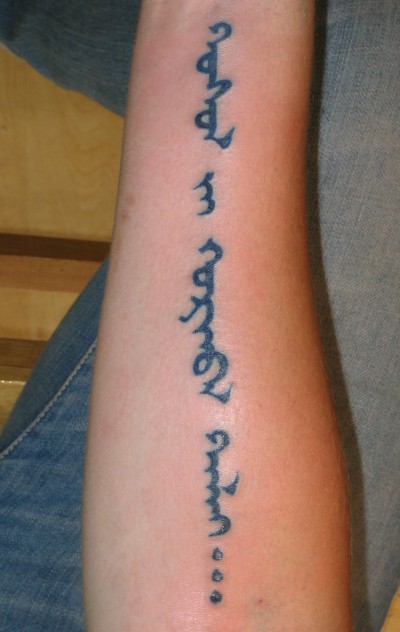
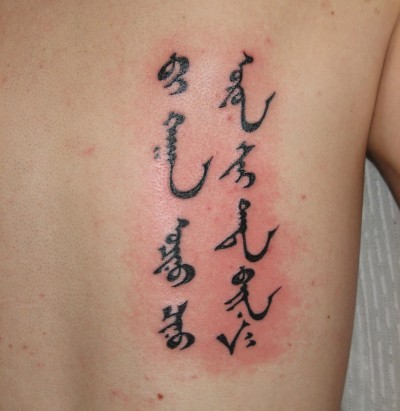
Today, a wave of tattoo trend has emerged in Mongolia with many who use the ancient script styles as modern tattoo designs with personal meaning, reviving the past through the beauty of calligraphy. The tattoos featured below are done by Mongolian tattoo artist ARA, photo credits via MONGOLtattoo.


 hilitehead
Leave a reply to gallery Cancel reply