
Ask a Mongolian
Will Mongolia be used as the worlds nuclear waste site? how did this all come to be?
How is the nation responding to the matter?
What actions are being taken by the Mongolian government and public in response to this horror?
What can I do to help?
and to this I answer…
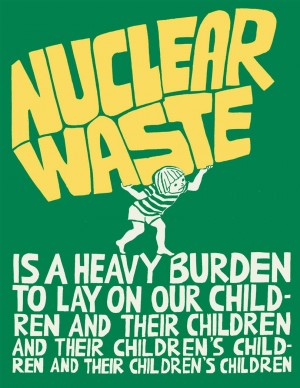 The idea of ‘Nuclear waste’ is a scary thought. But the prospect of such hazardous waste being buried under ones own backyard becomes the real horror. I was not completely up to date on this topic until recently when Mongolian websites all over have started to hype the issue. In May, local media reported a speculated “draft agreement” that was made between Mongolia, the United States and Japan on nuclear fuel production and nuclear waste disposal, in which Mongolia would export uranium fuel to other countries and take the waste in return. “The press in Japan and the US has reported that Mongolia is negotiating with these countries to serve as a regional depository for spent nuclear fuel. The proposed plan would permit geographically constrained countries in the region, such as Japan, South Korea and Taiwan, to dispose of their spent fuel in the spacious Central Asian state.”(see UB Post, July 26, 2011)
 TRUE ORIGINS
But the subject at hand travels back afar to when the story first broke out in March when U.S. Energy Department officials were engaged in informal discussions with Mongolian about the possibility of building an international repository but without any determination to proceed with a formal negotiation on the idea. Richard Stratford, Washington’s lead envoy for nuclear trade pacts, had commented that “a spent-fuel depot in the region could be of particular value to Taiwan and South Korea, and if Mongolia were to accept the offer, it would be a very positive step forward in terms of internationalizing spent-fuel storage.” But for Mongolia to accept and store U.S.-origin spent fuel or from any other nations would initially require Washington to negotiate a nuclear trade agreement with Ulaanbaatar. Apparently, Stratford never saw Mongolia as a potential dump until a colleague mentioned to him about the prospects of a [nuclear] alliance, to which he replied, “I will add Mongolia to my [planning] list and then watch what happens.” (see GSN, March 9, 2010)
According to Mark Hibbs, a senior associate with the Nuclear Policy Program at the Carnegie Endowment for International Peace – Energy Department officials traveled to Mongolia back in fall of 2010 for meetings on the matter. At the time, the U.S. government was reportedly unable to settle on a solution following the Obama administration decision in 2010 to formally abandon concepts for entombing spent fuel and other atomic waste at the Yucca Mountain in Nevada (see GSN, March 14). But what the politicians always forget to mention are the long-term disposal of even domestically produced nuclear waste which has proven problematic around the world, with publics deeply wary of the potential health hazards associated with storing radioactive or toxic materials. In most nations, the idea of accepting foreign spent fuel has been a great abomination. Take for example when Prime Minister Vladimir Putin had advocated for Russia to take on a similar role a few years ago, but the plan never got off the ground due to heavy domestic opposition. Well this is exactly whats happening in Mongolia currently, with a growing opposition party that continues to express concerns to President Tsakhia Elbegdorj over recent national reports that Mongolia has “agreed” to accept nuclear waste, in which case the security of the Mongolian people would be greatly endangered. However, Mongolian government officials have repeatedly denied such reports.
ENVIRONMENTAL HAZARDS
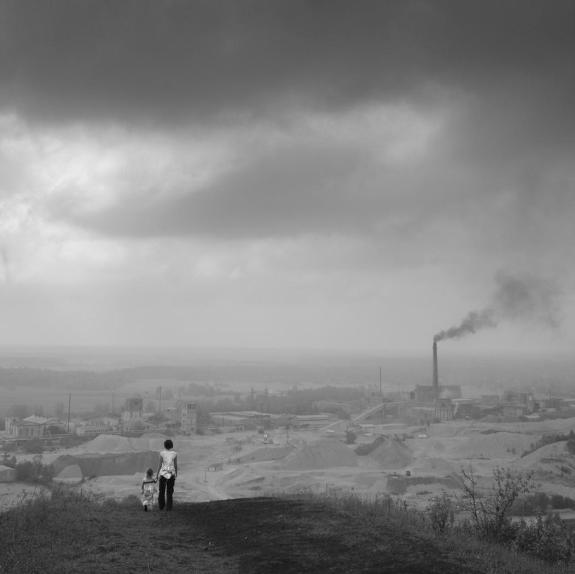
In a note sent to the president, the Green Party said the Mongolian government rejected the view that nuclear waste posed no greater threat than coal ash produced by a thermal plant. But lets examine the real scientific facts, any means of producing electricity involves some wastes and environmental hazard period. “The 1,000 MWe coal-fired power station produces about 7 million tonnes of carbon dioxide each year, plus perhaps 200,000 tonnes of sulfur dioxide which in many cases remains a major source of atmospheric pollution.” Nuclear energy today saves the emission of about 2.6 billion tonnes of carbon dioxide each year, it is an energy-producing industry that meets the full cost of its management, and theoretically its wastes, but there is no method known to man, at present day, that can cancel out the highly radioactive waste and nuclear radiation, and convert the raw plutonium and uranium back into non-radioactive elements in sound time. Even though such a science does exist, the powers to be don’t want to consider it as it takes more than a 1,000 years for most of the radioactivity to decay, if the waste is buried properly. Even Japan and the United States, who have highly developed nuclear power structures, have yet to establish such a system. Therefore coal burning may be an expensive and environmentally unfriendly energy source, but so is the nuclear fuel energy, which has an even greater genealogical health hazard to humans. (see world-nuclear)
A POLITICAL GAME
In March, the Mongolian Foreign Ministry was quick to dismiss the notion that Mongolia would host Asia’s nuclear waste. The statement went on to declare that Mongolia’s constitution prohibits the “import of dangerous waste to Mongolian territory”. But the truth of these reports is still unknown. However, the suggestion of burying spent nuclear fuel in Mongolia has risen again following Japan’s Mainichi Daily News, which reports that a draft Japanese-US-Mongolian agreement has been ‘finalized’ over the creation of a nuclear fuel production and spent fuel disposal cycle referring to Mongolia as its destination. The draft agreement mentions the role of the International Atomic Energy Agency, to potentially provide technical support to Mongolia in developing used fuel storage facilities, with several private sector firms from US and Japan who have shown interest in the initiative. Its difficult to believe that Mongolia would find it profitable to enter a field that has been dominated for decades by established nuclear energy powers such as Russia and France. The director of the East Asia Nonproliferation Program at the Monterey Institute of International Studies argues, “I don’t understand why Mongolia wants to be involved in the fuel-cycle business to begin with, if I were running Mongolia, I could think of a bunch of other things to spend that kind of industrial investment on before it came down to fuel-cycle services.” As a small country sandwiched between two powerful nations, Mongolia is desperately trying to carve a niche out for itself economically. The whole thing really becomes a big political game and an opportunity for the few in suits to leverage their bank accounts. The UB Post extends on the matter:
“The Japanese and US companies are eager to capitalise on the initiative as they market nuclear power infrastructure to countries interested in adopting nuclear power.The draft agreement notes the importance of developing ‘multilateral approaches’ to the nuclear fuel cycle and possibly creating mechanisms for assuring nuclear fuel supply to such countries. The document also says the three countries should meet regularly to develop ‘commercial arrangements to provide comprehensive fuel services at the front and back-end of the fuel cycle in a safe, secure, responsible and peaceful manner.’
In Japan, the initiative was led by the Economy, Trade and Industry Ministry. The ministry aimed to have the agreement, drafted by the United States, signed last February, but the move was postponed after the Foreign Ministry lodged an objection, Japanese sources said. An internal document at the industry ministry’s Agency for Natural Resources and Energy, which was created in February and later obtained by Kyodo, noted that the Japanese ministry and Toshiba Corp. were engaging in behind-the-scenes talks with the US Department of Energy and the Mongolian government over the initiative. The document went on to say Mongolia had already begun contacting the United Arab Emirates over the possible supply of Mongolian uranium fuel and acceptance of the fuel after its use.” (UB Post, July 26, 2011)
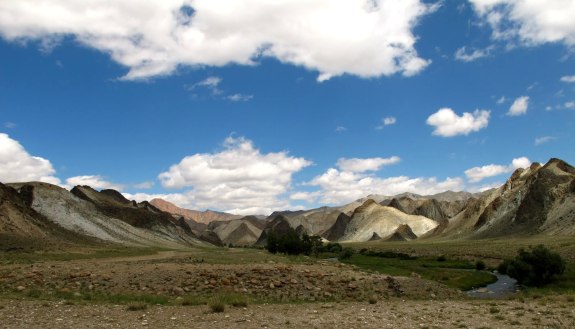
Even on a solely ethical basis, its hard for me to fathom the thought that the Mongolian government could have agreed to such a pact and be content with their decisions to harm the many generations to come. How can they so easily sell their homeland, when the issue at hand is not only their own to decide, how can they fail to make an ethical judgement. Mongolia contains some of the largest expanses of unspoiled nature on Earth, and this is the element that makes the country a rare beauty. To litter its pristine environment with toxic, radioactive waste would be the worst crime known to the environment. The world has already had several major nuclear power plant mishaps also known as meltdowns such as the 3 Mile Island, Chernobyl, and the recent disaster at the Fukushima Daiichi nuclear power plant in Japan. Most of us are unaware of the full extent of these disasters or even how it feels to experience such devastation. But the consequences have always been negative, as million of people and entire cities had to be evacuated, leaving behind nothing but ghost towns, genetic mutations, and massive deaths.
EFFORTS OF RESISTANCE
According to the UB Post, Mongolians overseas have created a Facebook group, with a current standing of over a thousand supporters who are against burying spent nuclear waste in Mongolia. The group aims to collect information about Mongolia and sends it to Green Party members worldwide as well as address inquiries to Mongolian authorities, who have yet to answer. Pursuant to the latest Japanese report, the Mongolian Green Coalition has appealed to President Ts.Elbegdorj. The following is an interview with L.Selenge, the head of the Green party:
UBP – Where did you receive the information about the plan to dispose of spent nuclear waste in Mongolia?
LS – From the Japanese Mainichi newspaper which has recently verified the truth of the rumour which started last March. Mongolia’s destiny was probably decided during Naadam by corrupt Mongolian authorities. If the spent nuclear waste is buried on Mongolian soil, our country will soon become the world’s dumping ground. Green Party members call it a ‘dead point’- this is only a short-term solution.|
UBP – This information is based on newspaper reports but have you obtained information from any other sources?
LS – We formally inquired about the credibility of their statement from the Mainichi newspaper authorities. They gave an official response confirming their honesty and will take full responsibility for the report, which we are inclined to accept because Mainichi is one of the most prestigious newspapers in Japan. Moreover, we are communicating with international Green Parties and according to this information, we suspect that the Mongolian authorities have given up their native land for a price. The government of Mongolia has denied the Mainichi account but if it is in fact fictitious, the Mongolian government has full rights to sue Mainichi for libel to rescue their reputation. Yet they have made no such move and have not even attempted to answer the letter demanding an explanation.
UBP – Whom on the Mongolian side do you suspect of planning to sign the draft?
LS – The Ministry of Foreign Affairs is in charge of this issue. The ambassador A.Undraa, who is responsible for nuclear concerns, has lived in the USA for many years and owns a green card. We suspect that a person who has resided in the States for a long time is culpable.
UBP – Have you asked the Ministry of Foreign Affairs for clarification? Do you have any further information?
LS – The Ministry of Foreign Affairs has not responded. The draft is highly confidential and thus impossible to research further.
UBP – When it started to explore this matter the Green Coalition submitted an inquiry to the State Great Khural. Was an answer ever given?
LS – An answer was never given. To clear themselves the Mongolian government must provide an answer officially and prove the falsity of the newspaper. But their silence continues. Consequently, we demanded that the President of Mongolia give an official response to the public on behalf of the government.
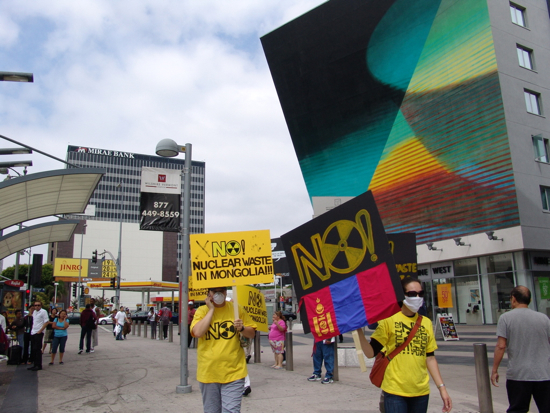
The resistance against the nuclear war continues on both sides of the fence. Last week, a small group of 12 enthusiastic Mongolian activists from the Facebook group – Anti Nuclear Movement Mongolia – held their first protest in Los Angeles. The group marched with bright yellow protest signs from Korea-Town into the heart of Los Angeles downtown and onto the doorsteps of the Japanese Consulate. The group plans to protest in front of the US Department of State Office of Foreign Missions this week in hopes of accumulating a strong following against ending the nuclear horror in Mongolia. (see LAM, August 12, 2011)
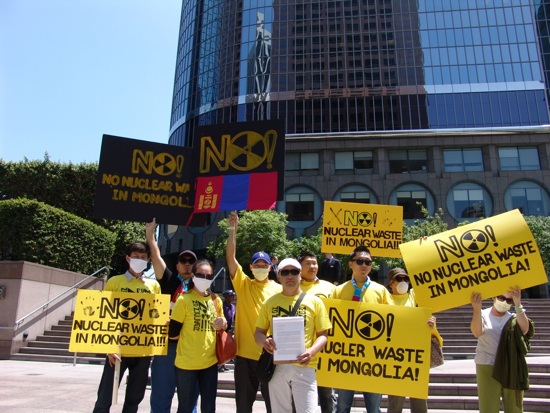
You can never believe everything you hear in newspapers, but judging from the compelling evidence gathered by world press, there is strong speculation that Mongolia will be used as a nuclear waste site. In time, the truth will reveal, but as of now, Mongolia’s future seems fragile and gray.
SUPPORT
Help put an end to this horror. Please show your support and visit the link below for more information:
learn about the Anti Nuclear Movement Mongolia here
learn about the Care2 Online Petition here
If you have any questions about anything Mongolia related, ask a Mongolian and send your questions to erdensyren@yahoo.com!

 hilitehead
Leave a reply to harts Cancel reply