
This has been a post most deferred, but one I am eager to share. Back in the later half of 2011, I was on a cinema voyage of some sorts for about three months during the time I had stopped blogging, and I had watched so many amazing films back to back but never got around to writing their reviews. So in an attempt to broaden everybody’s cinema watchlist, I have decided to write a basic overview on all the best titles I saw with short reflections, and in some cases, excerpts from the film monologues. Each one of these films are considered key pieces in both classic and contemporary world cinema, and they come highly recommended. All of them have undoubtedly left lasting impressions on my life; imprints of wisdom, insight, and fortitude. I hope you will gain as much out of them as I did.
If you expect something innate out of the glorious art of cinema, something real and grainy, then be sure to check out the Hi.Lite.Head IMDB recommended film watchlists!
1. A Seperation (2011)
directed by Asghar Farhadi
Perfection.
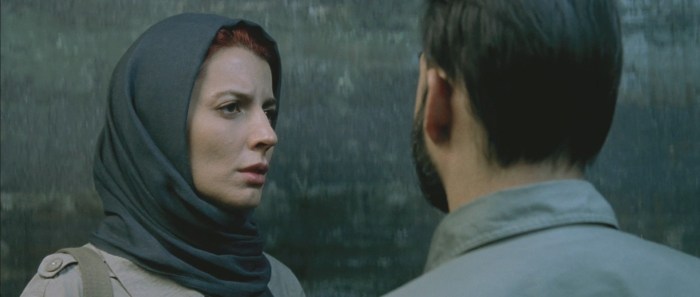
Thanks to A Seperation, I’m officially in complete admiration with director and genius Asghar Farhadi. Needless to say, I came across this film quite accidentally, fully unprepared for its greatness. I hadn’t been swept off my feet like this in a while, but this Iranian Hitchcockian drama had the power to suck me into its every second of the 123 minute long viewing.
The plot is complex as the film centers on various themes all wrapped up into a single piece of micro thriller – presenting us with a dazzlingly layered mystery, a piercing depiction of divorce, an observation of the justice system, a slicing view on family loyalty (more than love), and the oppression/folly of religion and pride. The staggering Farhadi screenplay is given fiery weight by a uniformly brilliant ensemble packed with rich, humane characters. Above all, it’s simply a benchmark of top-notch storytelling, masterfully plotted and thematically realized.
The genius of Asghar Farhadi’s story is that it piles on the tension and drama without resorting to fireworks, trickery or shock and awe plot effects. It also manages to perfectly balance the plights of several protagonists. Suffice to say, A Seperation could simply be best described by the director in his own words on filmmaking, ” I feel it’s important to talk about the complex issues affecting us. I think it’s insulting to an audience to make them sit and watch a film and then give them a message in one sentence.”
2. About Elly (2009)
directed by Asghar Farhadi
“A bitter ending is better than an endless bitterness.”
Yet another Fahardi film, an earlier piece from that of A Seperation but just as important in content matter. The film starts with a simple plot, and ends with much more simplicity.
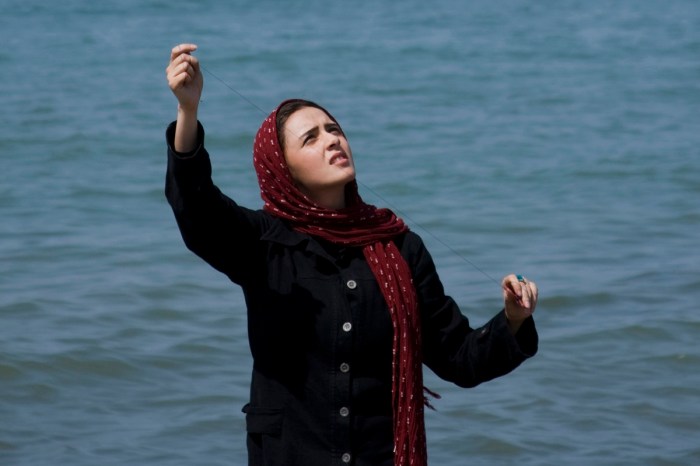
11 people (4 man, 4 women, 3 kids) from Tehran drives to a seaside resort for a 3-day holiday. The only single people in the group are Ahmad (Shahab Hosseini) who has recently separated from his German wife and Elly (Taraneh Alidoosti) who is a nursery teacher to Sepideh’s child. Sepideh has organized the whole trip, as well as playing matchmaker to Ahmad and Elly. The film really takes off when, in an apparent attempt to rescue one of the children from drowning, Elly disappears. Was she drowned? Did she just leave because she was embarrassed by the group’s snide remarks about her and Ahmad? The group soon come to realize how little they know of Elly and the questions keep surfacing: who was Elly and why did she agree to accompany a group of relative strangers for a few days in another town?
Farhadi examines the consequences of lies and deceptions. He shows that even mundane lies of convenience, if piled on top of one another, can lead to unforeseen events. There is no convoluted plots, credibility-stretching events and the likes of such that flood Hollywood movies. Everything that happens, as well as the people’s reactions are easily relatable to our ordinary experience in real life. The power of the film is derived from the way in which some of the facts unfold to the audience as well as to the characters in the film. There are also many pristine moments of beautiful cinematography throughout the film, and to this day, I still wonder about Elly’s kite.
3. The Skin I Live In (2011)
directed by Pedro Almodóvar

“The things the love of a mad man can do.”
The legendary filmmaking of director Almodovar should about sum up the entirety of this film, but The Skin I Live In differ from his usual storytelling as it takes a qualitative jump into new philosophical depths.
A plastic surgeon (Antonio Banderas) belongs to family straight out of Pasolini’s Salo. He keeps a beautiful woman (Elena Anaya) as a guinea pig as he tries to create artificial skin that will be impervious to burns and insect bites. But Anaya’s character, in what seems the major metaphor of the film, preserves her inner persona intact regardless of what happens to her body in physical transformation. As in most of Almodovar’s films the layers become more complex as the film evolves ending with a most anticipated plot twist that only Freud could have come up with.
Without spoilers I would like to point out that the director seems to use horror as a channel to explore the violation of every moral code embodied by the characters. With a magnificent score by Alberto Iglesias and and Almodóvar’s always incredible cinematography and art direction. The film is unpredictable in it’s pace and it is hugely intriguing because of this.
Food for thought, in fact enough food to last you days and feed other people, as you are left with wondering questions about the sexual, spiritual and corporeal identities of humans set in this tale of voyeurism and a cruel act of revenge.
4. Blind Mountain
directed by Yang Li
Stark Realities
As we go down this list, the films only seem to get more dark and depressing, but I promise you will gain much more out of viewing the actual films!
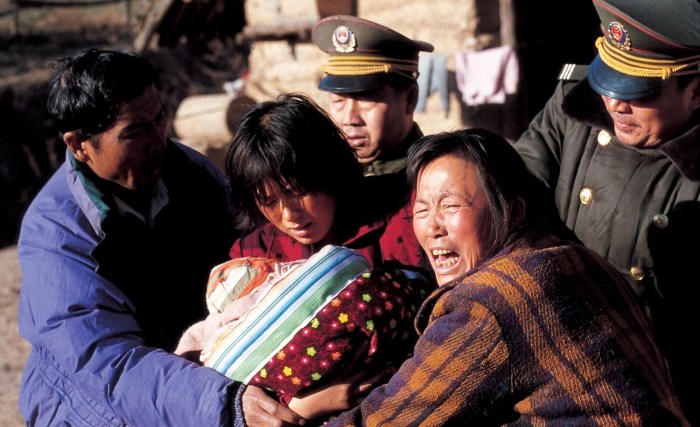
Blind Mountain is an excellent film about the fate of a young woman who accepts a job offer in the countryside and finds she has been sold as a bride to a family in a remote village in modern day China. Although the film as a good social point to make, it’s not preaching or forcing the issues on you but rather asking you to examine the situation. To the villagers, this is just life and it’s always been this way, to observers they seem inhumane. The plot sounds trite but Yang Li’s excellent direction and the crisp editing along with superb performances make this film a worthwhile watch.
5. The Edge of Heaven
directed by Fatih Akin
Complex and Thought-Provoking
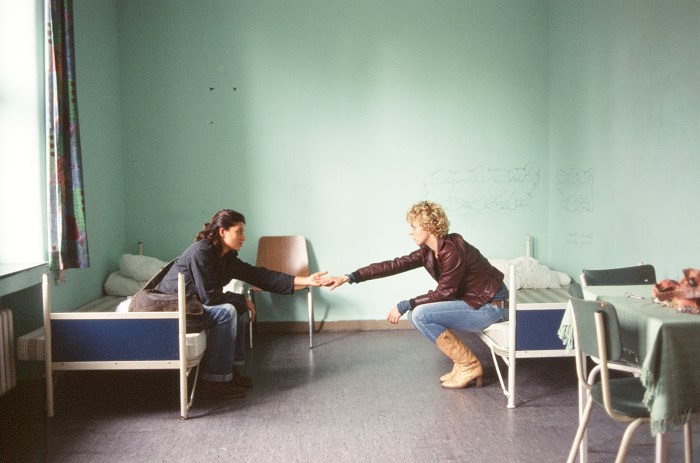
The Edge of Heaven is a story about the Turkish-German community, about the two developments of parallel narratives that ultimately overlap and intertwine until they become one.
The plot focuses on three families who are all connected in some way to find peace and happiness in their lives. Director Akin manages to avoid the many pitfalls which can lead to clichés as the characters remain ordinary people with genuine emotions and problems.
The myriad political and social themes dealt in The Edge of Heaven are only a setting to a much more personal story. The opening of one’s soul, the crossing of inner walls that separate us from those who love us. This story is repeated three times, in different context, for the three characters who remain alive to cross ‘to the other side’: the German mother who accepts her daughter’s ideals, the German-Turkish son who forgives his father, the Kurdish girl who takes the love of her friends over her revolutionary commitment. However, the director allows no one of them to consume their redemption within the film’s running time.
In both a heartbreaking and uplifting way, director Akin’s film shows us how to make it to the other side, beyond anger and towards understanding and forgiveness even amid the many loss we face in life.
6. Incendies
directed by Denis Villeneuve
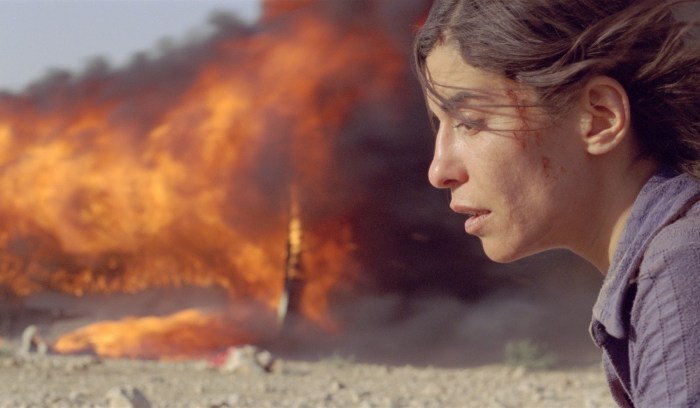
“One plus one, does it make one? ”
Incendies is a true bona fide masterpiece. The film centers on a Canadain-Lebanese woman who dies in Canada and in her will she leaves two letters to her twin son & daughter. One is to be delivered to their brother (whom they did not know existed) and the other to their father (whom they had presumed dead). To find these people they have to travel to Lebanon to unravel the mysterious past of their deceased mother. As we follow their search, flash backs slowly reveal to us key moments in the life of their mother.
The Belgian actress Lubna Azabal’s heroic performance brings Nawal to awe-inspiring Brechtian life. Undefeated by each dehumanizing blow, she stoically navigates a war-crazed world devoid of any sense, her driving force is the need to reunite with her son. Mélissa Désormeaux-Poulin and Maxim Gaudette do excellent work as the siblings who gradually begin to understand their mother.
Denis Villeneuve’s film honors the stories of these people by rigorously avoiding directorial excesses. Events and stories this powerful do not require embellishment, and Villeneuve’s spare, dispassionate directorial style maximizes this impact. There are extremely powerful and unforgettable cinematography in Incendies. Suffice to say that even if you have no interest in the history of the Middle East, this film will capture your attention from the start and grips you until the very end.

 hilitehead
Leave a reply to Mark Armstrong Cancel reply