I first heard about The Immigrant Artist Biennial [TIAB] last year but missed it which kept it on my radar to attend this year. TIAB interests me as a Mongolian immigrant artist myself and the timing feels especially charged with the midterm elections arriving in November amid the politically fraught times we are currently living through. A platform centering immigrant voices feels especially timely and urgent.
Art has always been an anarchist form of resistance and individual cultural expression so to see all of that accumulate into what is now its third edition, really a triennial with editions in 2020, 2023 and 2026, led me by curiosity to understand what TIAB is, its programming, the curators and artists.
The Catalogue
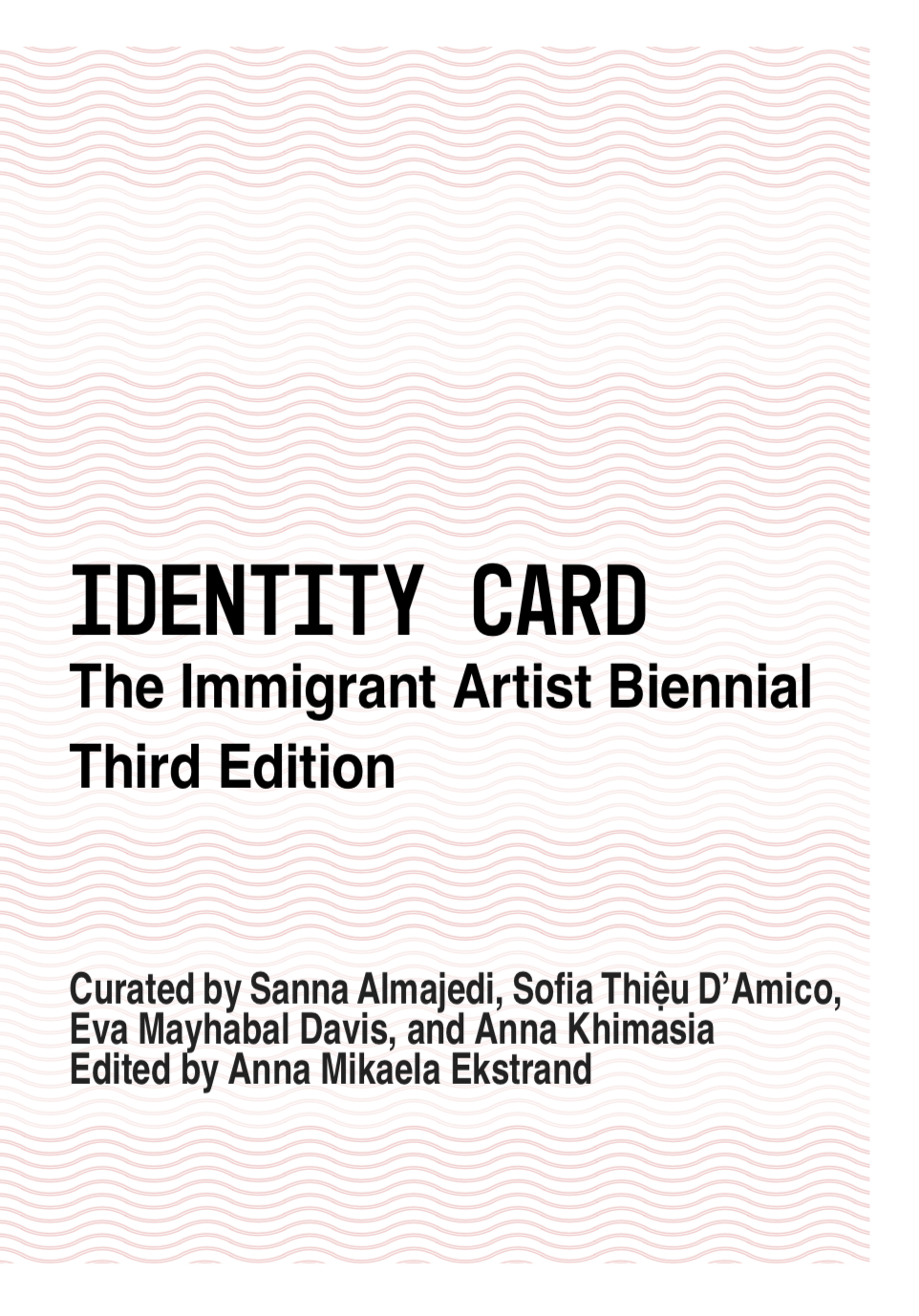
The biennial produced an amazing little catalogue titled Identity Card (Accent Editions, supported by The Here & There Co.) that grounds the project in rigorous conceptual discourse. In the foreword, directors Katya Grokhovsky and Anna Mikaela Ekstrand center the edition on a core question: Who am I allowed to be? Conceived amid escalating ICE raids, xenophobia, and war, the volume pairs their framing with a curatorial essay on migration rights, Judith Butler’s “Bodies in Alliance,” and key contributions from Rebecca Ruth Gould, Sarah Rifky, Natalie Diaz, Summer Kim Lee, Ivana Dama, and the National Coalition Against Censorship.
The Biennial
Katya Grokhovsky founded The Immigrant Artist Biennial in 2019 and it has since shown more than 175 artists as a nomadic platform presenting immigrant artists through exhibitions, public programs and publishing. The 2026 edition takes the form of a programmatic framework across New York City this fall led by four curators: Sanna Almajedi, Sofia Thiệu D’Amico, Eva Mayhabal Davis and Anna Khimasia. Grokhovsky and Ekstrand selected them for their expertise in curating performance, sound and video art along with their sustained commitment to immigrant artists. Eighteen artists and one organization take part through public facing events such as screenings, panels, talks and performances that Grokhovsky describes as spaces for gathering, mutual support and social interaction at a time when they are most needed. Shiva Gallery at John Jay College of Criminal Justice (CUNY) joins as host partner, marking the biennial’s first partnership with an academic institution.
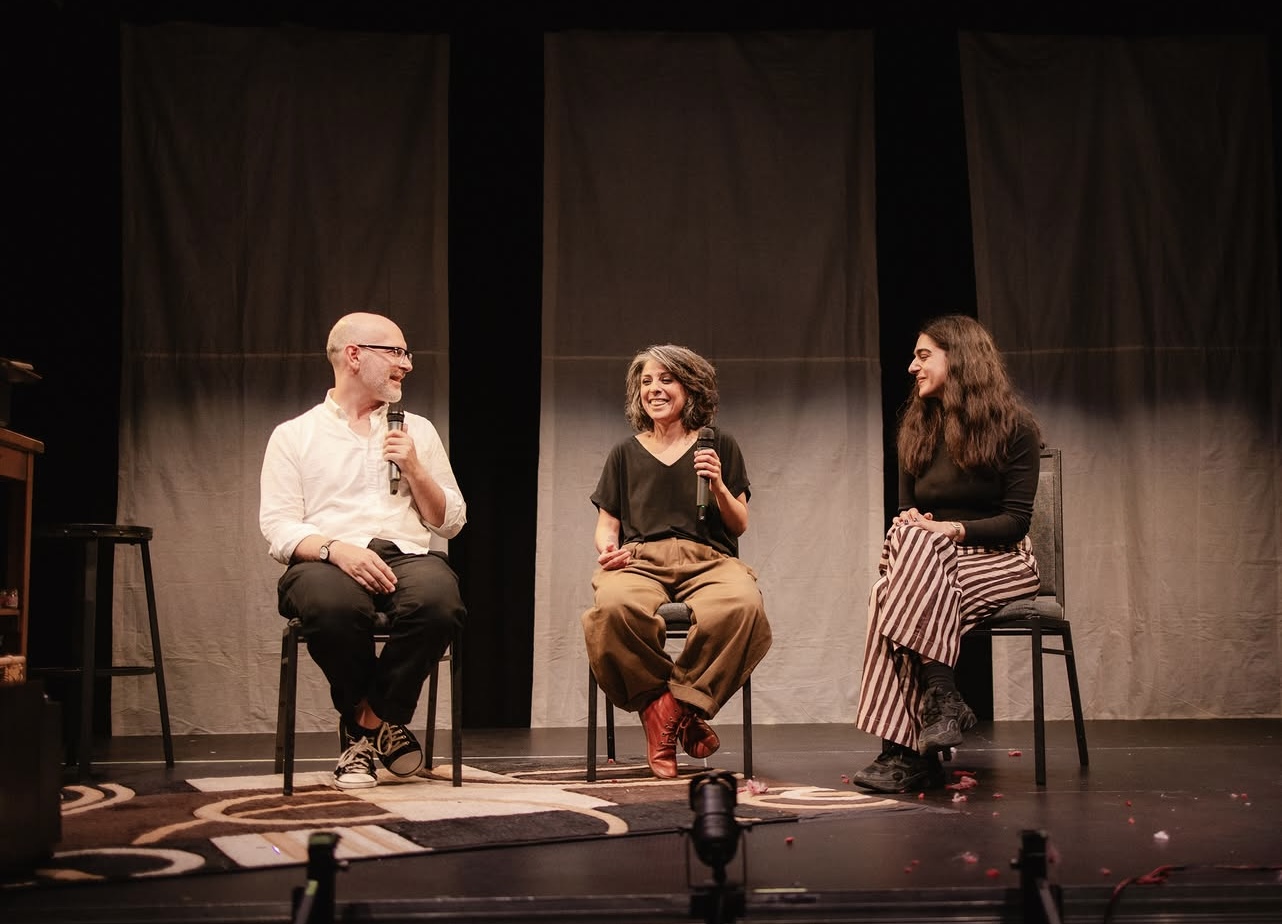
Seven events unfold between October 8th and November 11th across Brooklyn and Manhattan. The Opening Celebration x El Salón: Text as Territorytook place on October 10th at Nguyen Wahed in the East Village. The event took the form of a PechaKucha style presentation where Lucía Reissig, Layqa Nuna Yawar and the National Coalition Against Censorship discussed how literary references and philosophy shape their practices and how censorship has stifled their voices, followed by a roundtable and a potluck curated by Eva Mayhabal Davis. To kick off my coverage, I examine three events, beginning with artist Rawya El Chab’s perspective on her theatrical production that I missed followed by two programs I experienced in person.
October 8 | Rawya El Chab, The Immortals: Three stories. One unfinished history
Performance and Artist Talk co-presented by ArteEast at Brooklyn Art Haus, 24 Marcy Ave, Brooklyn.
I did not attend this performance so I reached out to Rawya El Chab who answered three questions by email. El Chab is a New York City based theater maker who weaves archival research, poetry and audiovisual technology to amplify voices from history’s margins. Her recent productions include Crossing the Water at The Brick Theater (2025) and Lula 19/85 & the Pearl of Bekaa at La MaMa (2024).
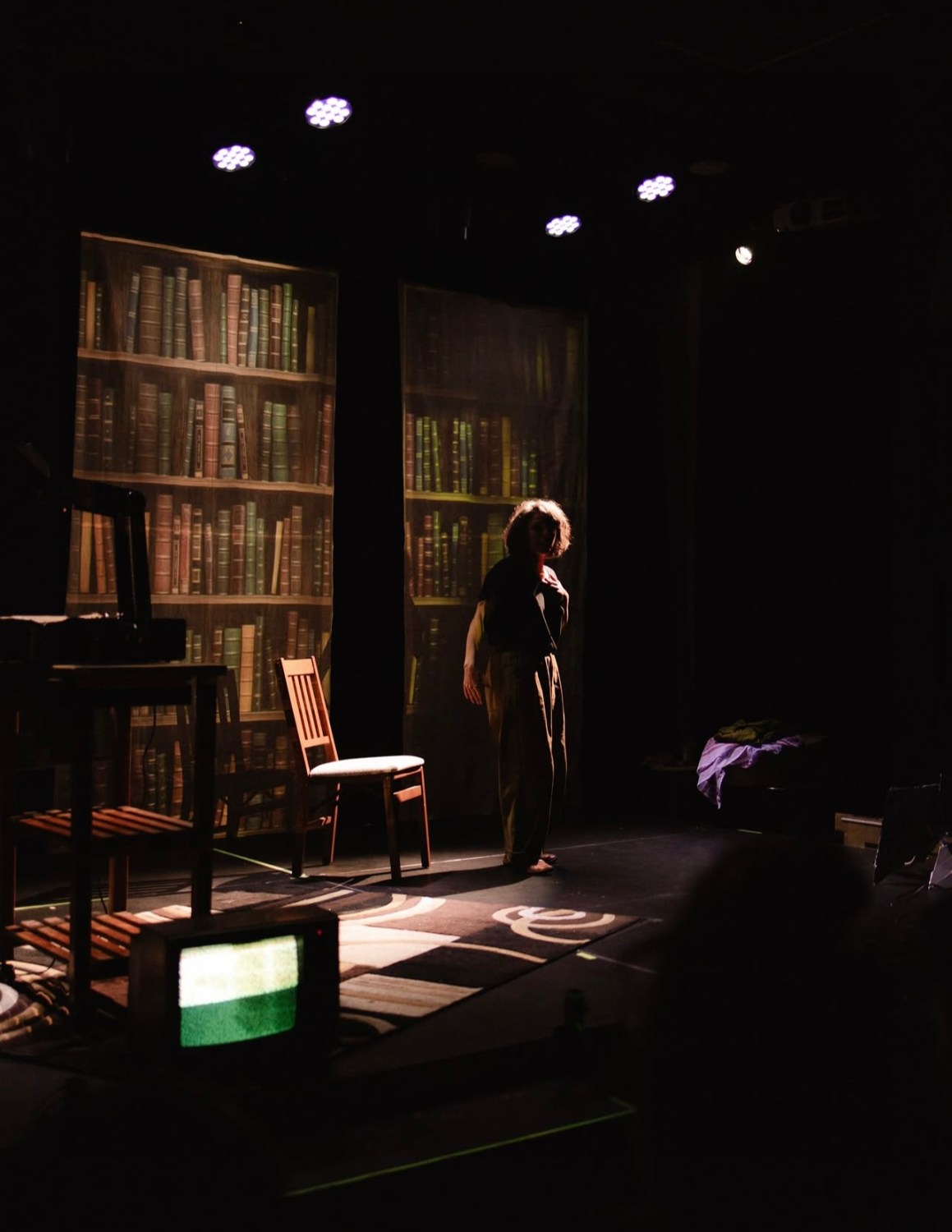
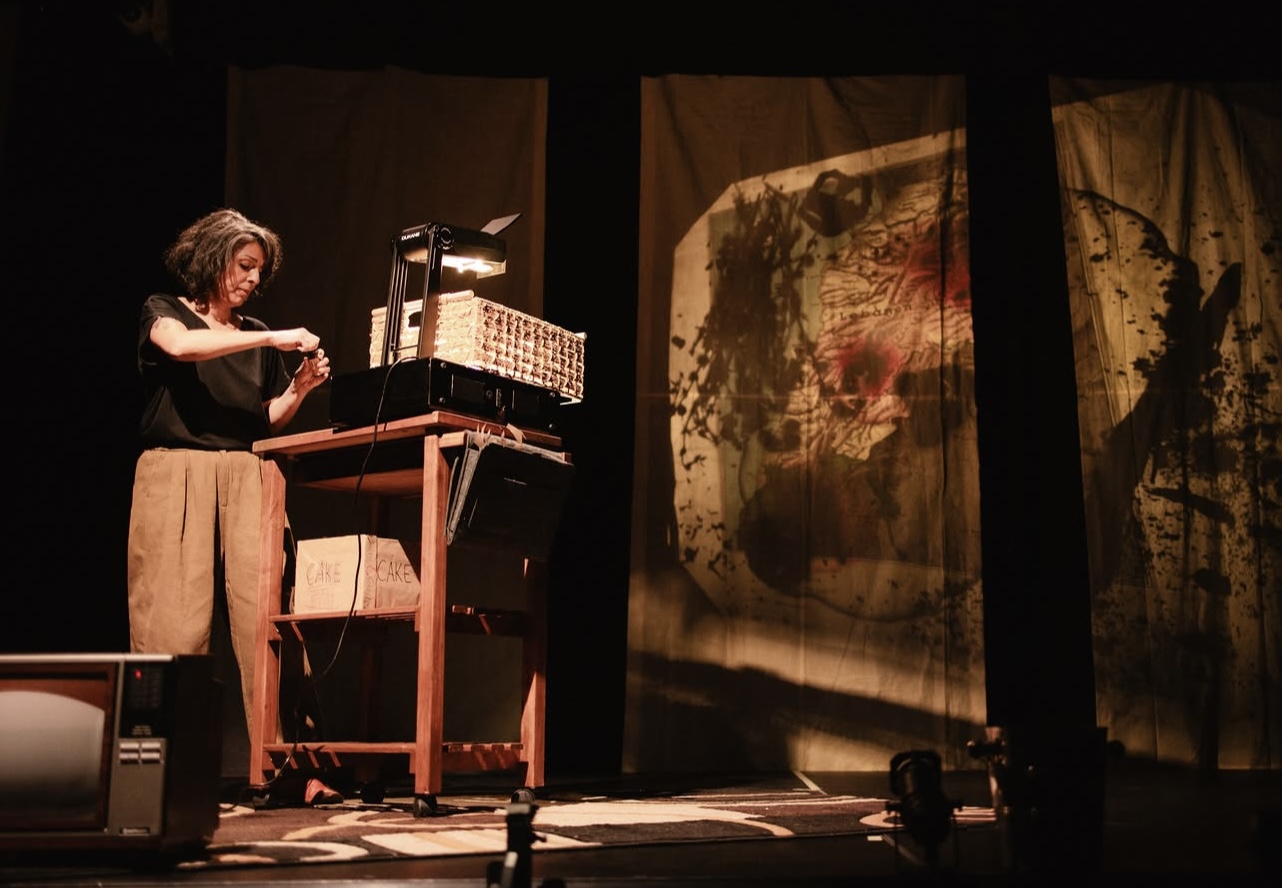
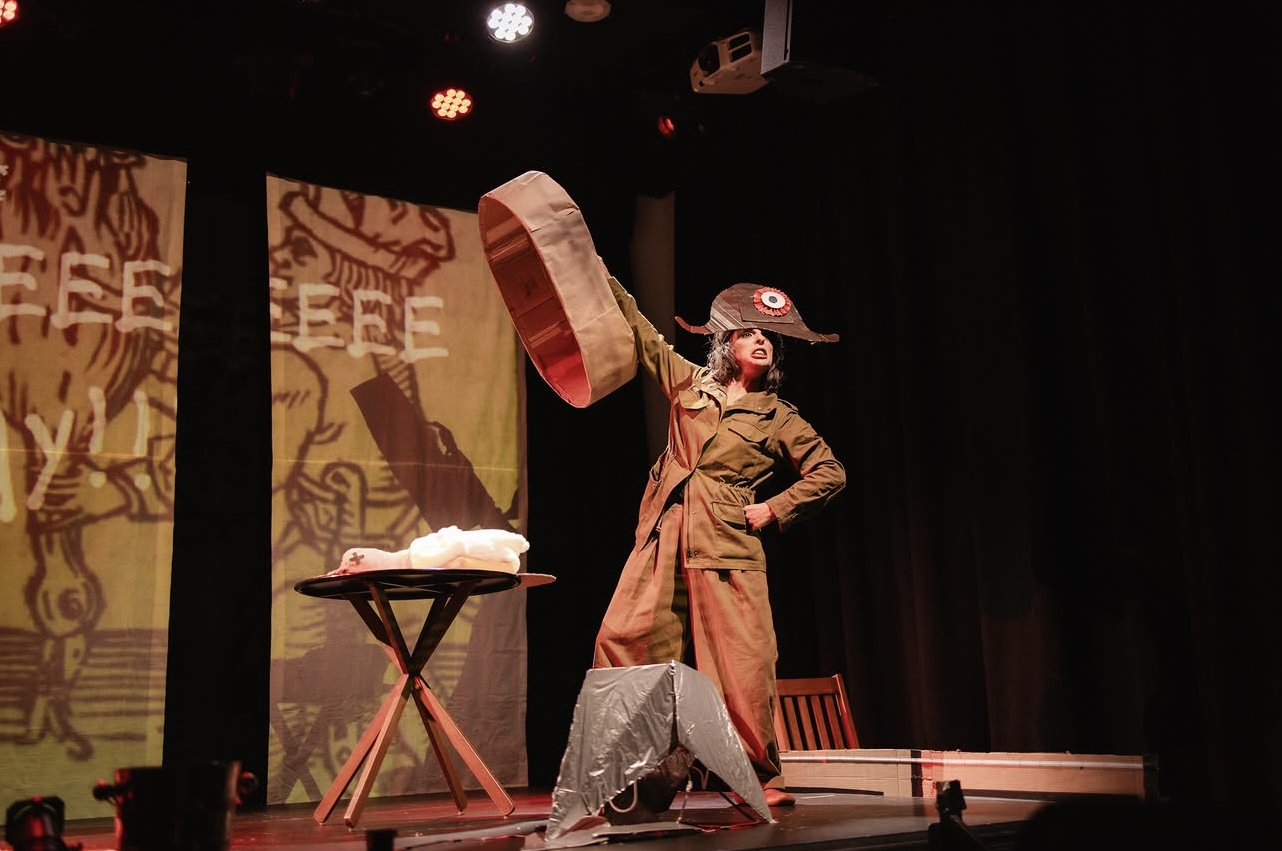
The Immortals is a 45 minute work in progress set across pivotal moments in modern Lebanese history that traces through the experiences of one family the hopes, contradictions and eventual collapse of the Lebanese left. Two allegorical vignettes, one drawn from the past and the other imagined from the future, interrupt the family stories while shadow puppetry, archival material, projection and spatial sound carry the storytelling. Presented as part of HIKAYAT, the performance series ArteEast launched in 2024 to gather the SWANA diaspora through storytelling and live performance. It weaves material from Lula 19/85, Crossing the Water and Immortal into a new composition created for the biennial and marks the first public iteration of a theatrical cycle that will ultimately unite the three works.
1. The Immortals traces the hopes, contradictions and eventual collapse of the Lebanese left through one family. What drew you to tell this history, and why through a family’s story? Where would you like the piece to go next?
(Rawya El Chab) I grew up in a leftist family, and I have clear memories of the moment we began to lose faith in the Left. Contrary to the rigid ideals of the Right, which I perceived as imagining a world that should remain unchanged, I understood the Left as a political movement that embraced differences and diversity while grounding us in a shared material reality. At the end of the day, we all have to pay rent and worry about our financial future! This is an experience shared by the vast majority of people on this planet.
By retracing the collapse of the Lebanese Left and placing my family’s experience in the foreground, I wanted to focus on the human toll of that history. People’s memories and personal accounts of an event may contradict the archives and the official record here and there. I am interested in what those memories can tell me that the archive cannot. What remains in people’s recollections that never makes it into the historical record?
I am currently working on the third installment of the trilogy and it will take place at the Brick theater in May 2027. As for where I want to take the work next, I would like to bring the three installments together into a long-form performance, inviting audiences on a listening journey that I hope will be transformative. At the same time, I want to develop a shorter, touring version of the stories.
Beyond this project, I want to continue exploring how people orally recount major historical catastrophes, comparing their accounts with the narratives circulated by the media and other institutions of power. Ultimately, I want to test this method with stories that do not belong to my family or even to my own culture.
2. The performance is interrupted by two allegorical vignettes, one drawn from the past and one imagined from the future. What did you want that dialogue between memory, myth and political imagination to do for an audience?
(Rawya El Chab) The main thing I ask the audience to do is question what is presented to them as the final truth.
In the first vignette, I wear shiny cardboard armor with light coming out of it… while lip-syncing to a recording of a poem written by Loula Abboud (a martyr from the communist party). In the second vignette, I appear as Napoleon, wearing a cardboard bicorne hat and trousers, while lip-syncing to a recording of a letter attributed to him and force-feeding a goose…
By taking these historical texts out of their familiar contexts and placing them in absurd theatrical situations, I want to disturb the authority we tend to grant them.
3. What does it mean to you to share this work as part of a biennial centered on immigrant artists in the 2026 political climate?
(Rawya El Chab) These are difficult times for many of us. There is so much uncertainty and precarity surrounding our status, on top of the financial pressure brought on by cuts to funding for programs and institutions that many of us have relied on.
In this climate, an event like the Immigrant Artist Biennial has even more reason to exist. Beyond the opportunity to present my work, it gives me a chance to meet other artists with diverse experiences, exchange ideas, and be in community with them. It also allows me to share my stories and discover how they might resonate with people whose histories and experiences are different from my own.
For me, this is particularly meaningful because The Immortals explores the collapse of a collective political dream and the human consequences of that collapse. Being able to share this work in a space that brings people together, especially at a time when so many of us are experiencing uncertainty, feels important. It is an opportunity to listen to one another and perhaps recognize something of our own experiences in each other’s stories.
October 22 | LuLu Meng, Pinch of Us with Amanda Phingbodhipakkiya and Rujuta Rao
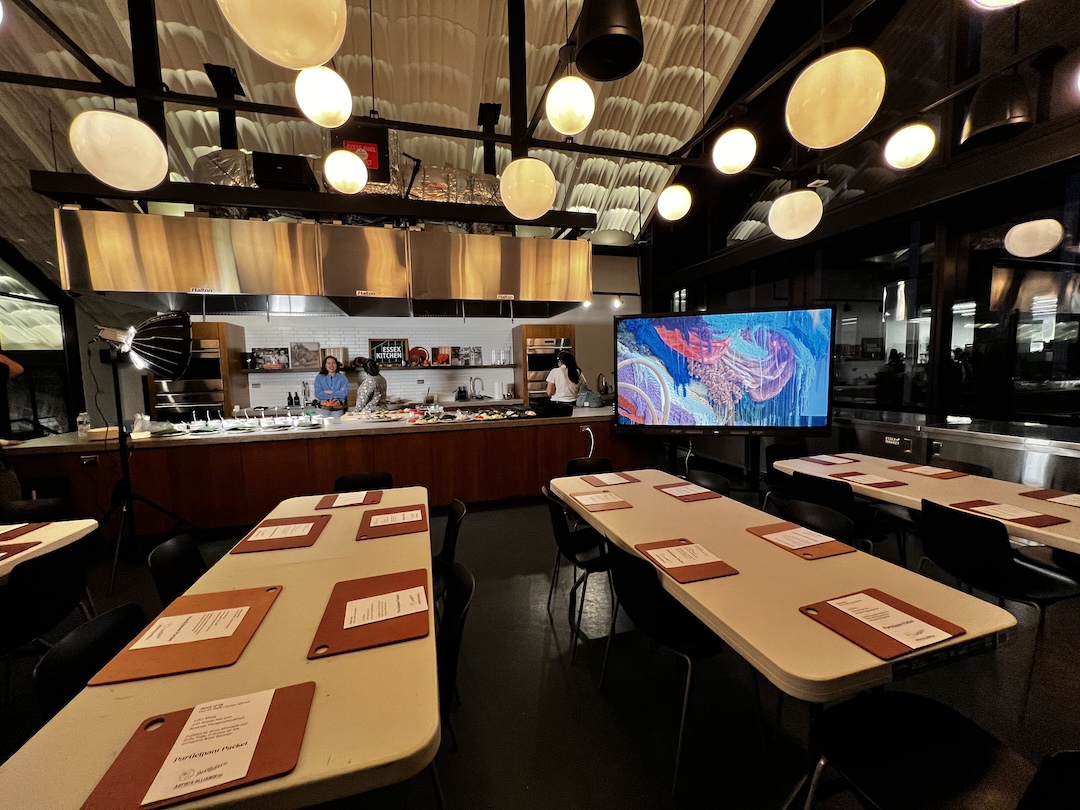
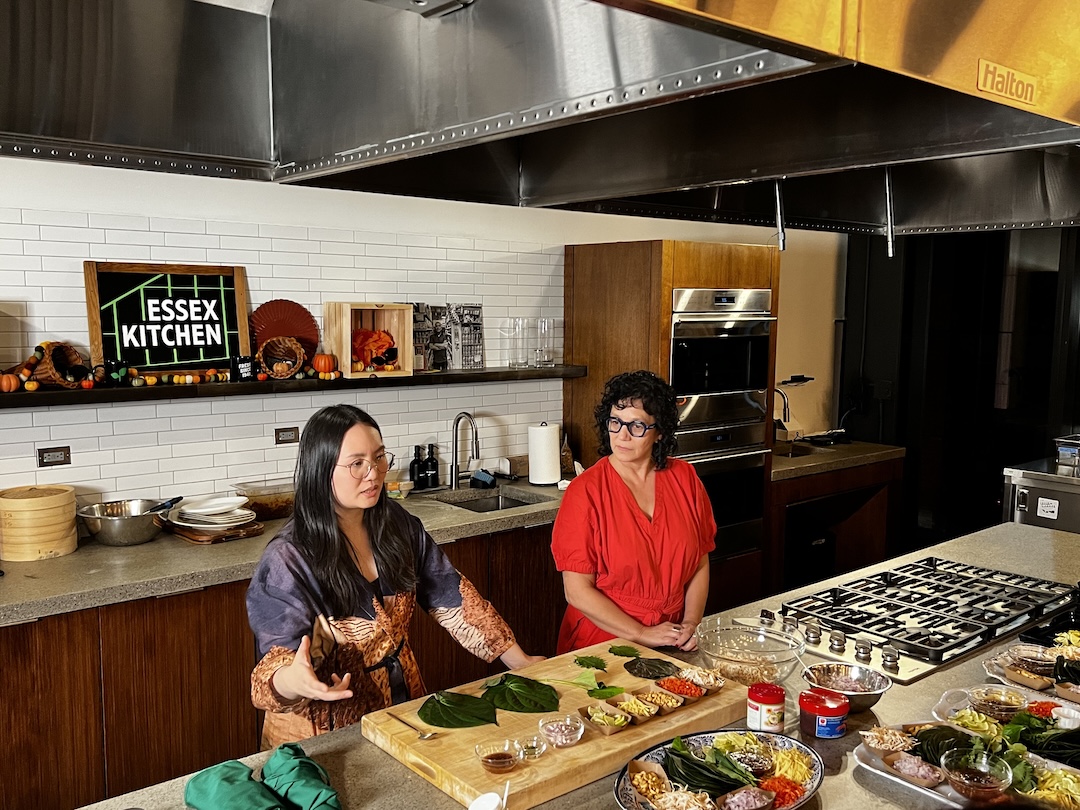
Dumpling Making Workshop co-presented by Artists Alliance Inc. at Essex Kitchen, 88 Essex St, New York.
Sofia Thiệu D’Amico, the Lesley Bodzy co-curator, and Anna Khimasia, the Cynthia Wu co-curator, curated the workshop. D’Amico is a curator, writer and researcher based in New York who co-directs the Brooklyn curatorial initiative Transmitter and previously served as assistant curator at Canal Projects; her work examines migration, ritual, labor and place. Khimasia is an independent curator and lecturer at Rutgers University who co-founded International Arrivals, a NYFA sponsored project supporting artists from countries in conflict.
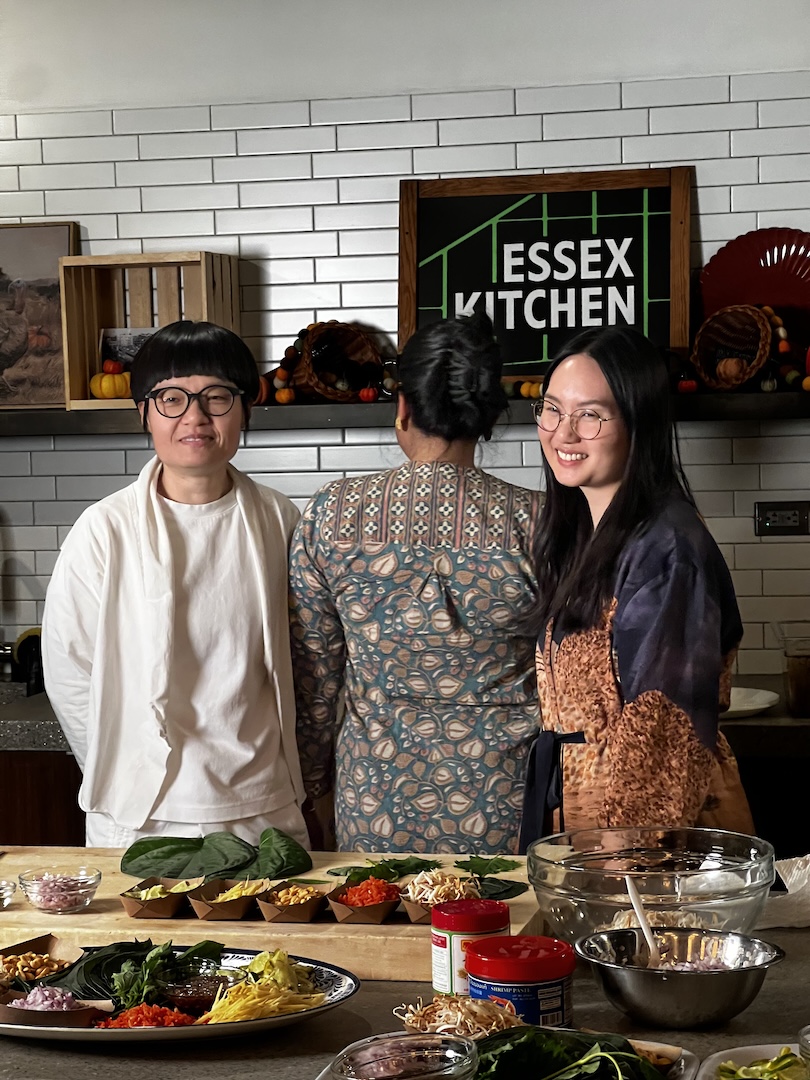
LuLu Meng was born in Taipei and moved through chemical engineering and costume design before arriving at an art practice that works across media to explore the interplay between oneself, others and the broader environment. Pinch of Us draws on Meng’s Taiwanese roots and family tradition of gathering on New Year’s Eve to make dumplings. Meng invited participants to imagine the dumpling as a person with its own shape, texture and hidden interior so that the domestic ritual becomes a playful and communal artistic experience and a way to explore the idea of the multicultural self. For this edition the curators invited two artists to share their own dumpling making traditions with distinct folding techniques, flavors and histories.
I attended the workshop at Essex Kitchen excited by the prospect of making dumplings, a tradition deeply familiar to me from growing up in a Mongolian household. Meng opened the evening by framing community cooking as an act of joy, a Taiwanese New Year tradition repurposed for a world torn by war and racial strife. For Meng, dumplings offer the ultimate metaphor of diverse cultures mixed together and folded into a single unified casing.
Amanda Phingbodhipakkiya gave the first demonstration. Born in Atlanta to Thai and Indonesian Chinese immigrant parents, she studied neuroscience at Columbia University before becoming a sculptor and installation artist based in Brooklyn whose work has been exhibited at MoMA, the Brooklyn Museum, the Bangkok Art and Culture Centre and the Victoria and Albert Museum. In 2020 her public art series I Still Believe in Our City appeared across New York. At the workshop she spoke about a Thai dumpling recipe from her family made with fresh ingredients wrapped in a blanched leaf.
Rujuta Rao gave the second demonstration. Born in Goa, India, she holds an MFA in Interdisciplinary Art from Parsons School of Design and a BFA in Sculpture from Maharaja Sayajirao University of Baroda with a practice spanning sculpture, installation, book art, beverage and social practice. Her ongoing BAR series centers on feni, a Goan spirit. This year she is a member at NEW INC, the New Museum’s cultural incubator, and a dual resident at Dieu Donné and Artists Alliance Inc. At the workshop she spoke about a steamed vegetarian Indian dumpling as a metaphor for layers of folded heritage, pairing the dish with a hand bound dumpling shaped book of poetry.
I stayed through the introduction and the food demonstrations but had to leave early just as attendees were separated into groups by table to begin making their own dumplings.
October 30 | Anh Vo, Phoenix Forever
Guerrilla performance at West Side Highway / Pier 40, New York.
Anh Vo is a Vietnamese choreographer and writer based in Brooklyn and Hanoi whose work emerges from the convergence of Downtown New York experimental dance, Hanoi performance art and Vietnamese folk shamanism. Sofia Thiệu D’Amico curated Phoenix Forever in partnership with The Here and There Co. Attendees received the location by email with a meeting time of 5:45pm and the program offered only a single line about what would unfold: “something happens at the river.”
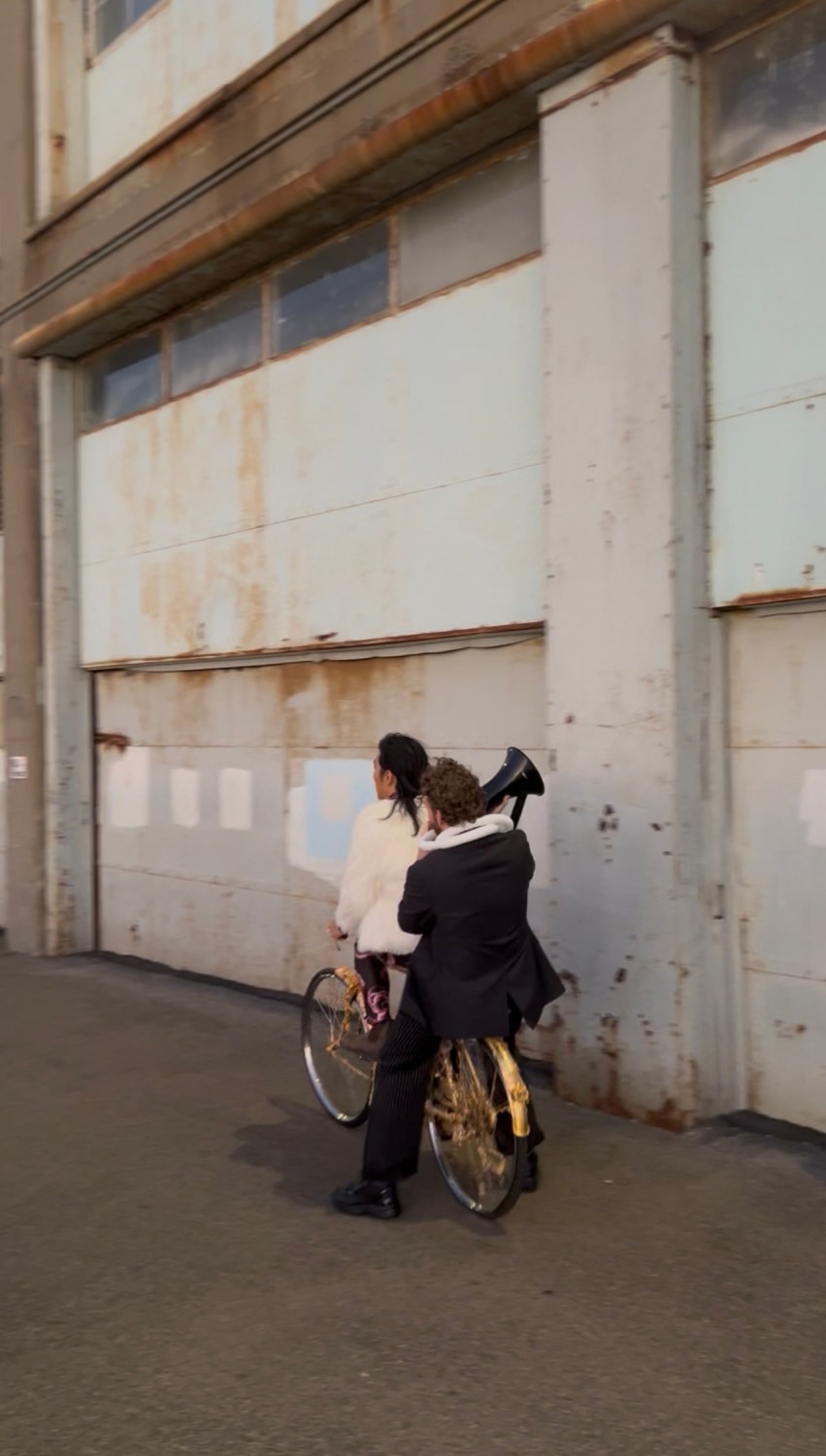
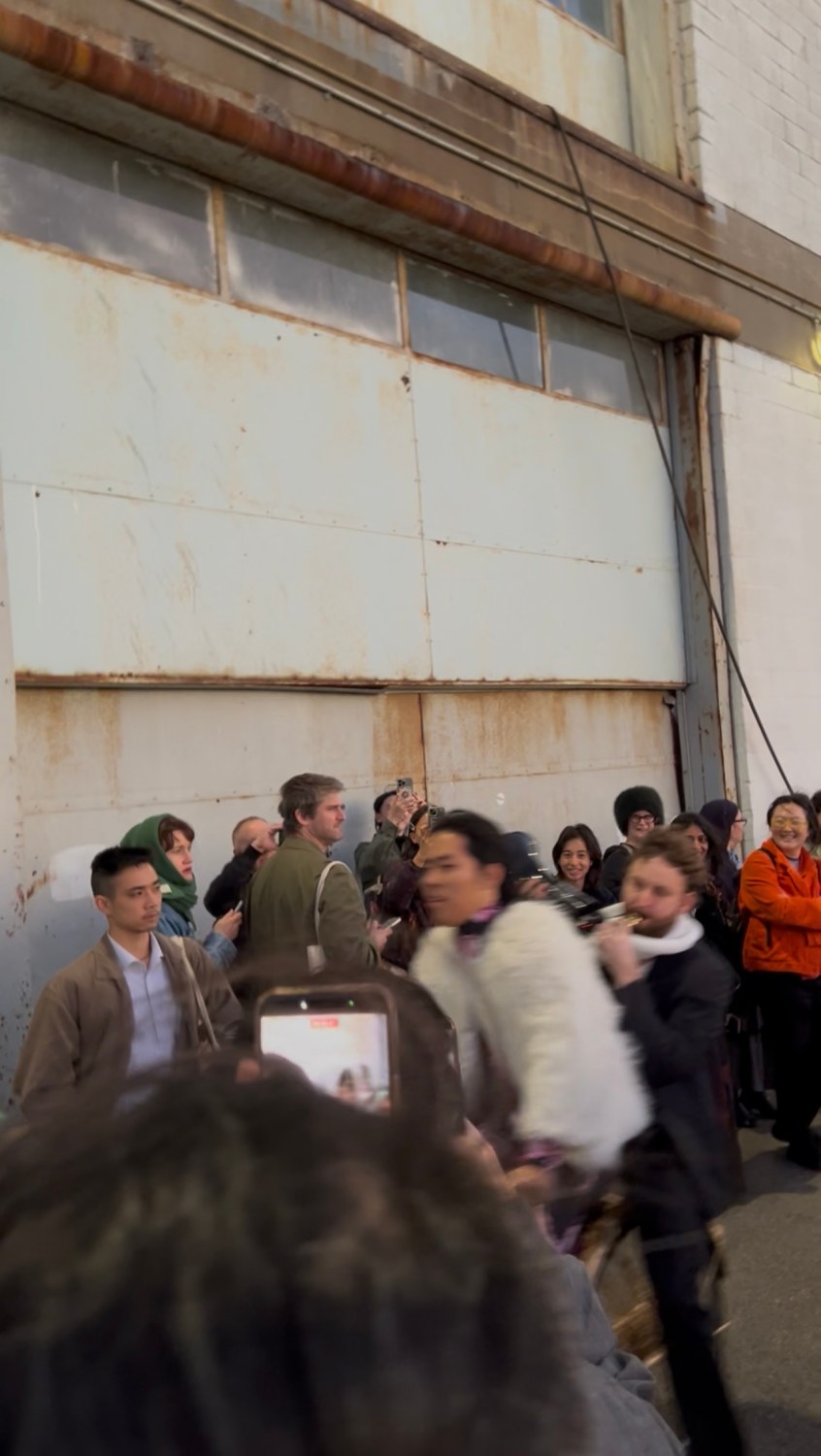
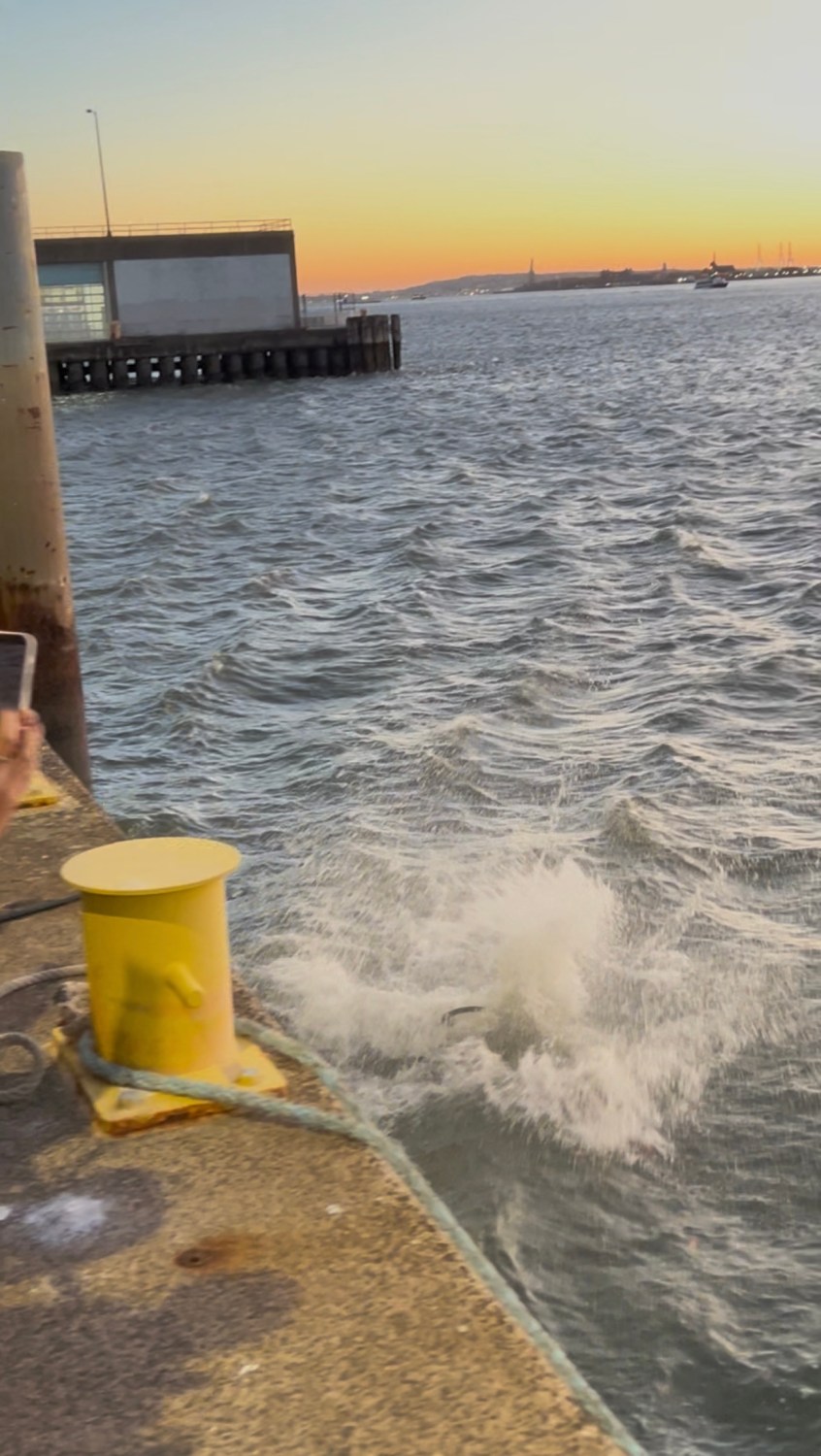
I attended on October 30th. The secret location turned out to be Pier 40 in Manhattan where a crowd of around thirty to forty people had gathered by 6:30pm, everyone slightly confused about whether we were in the correct place. The first person I spotted was New York performance artist Crackhead Barney and Friends so I knew this was going to be a good one. The setting contributed its own elements; the sun setting in golden hour light behind a cinematic skyline, an intense October cold just before Halloween with wind whirling through my hair, runners passing by and a football team playing a match on top of the pier. The performance took place alongside a boat named FREEDOM.
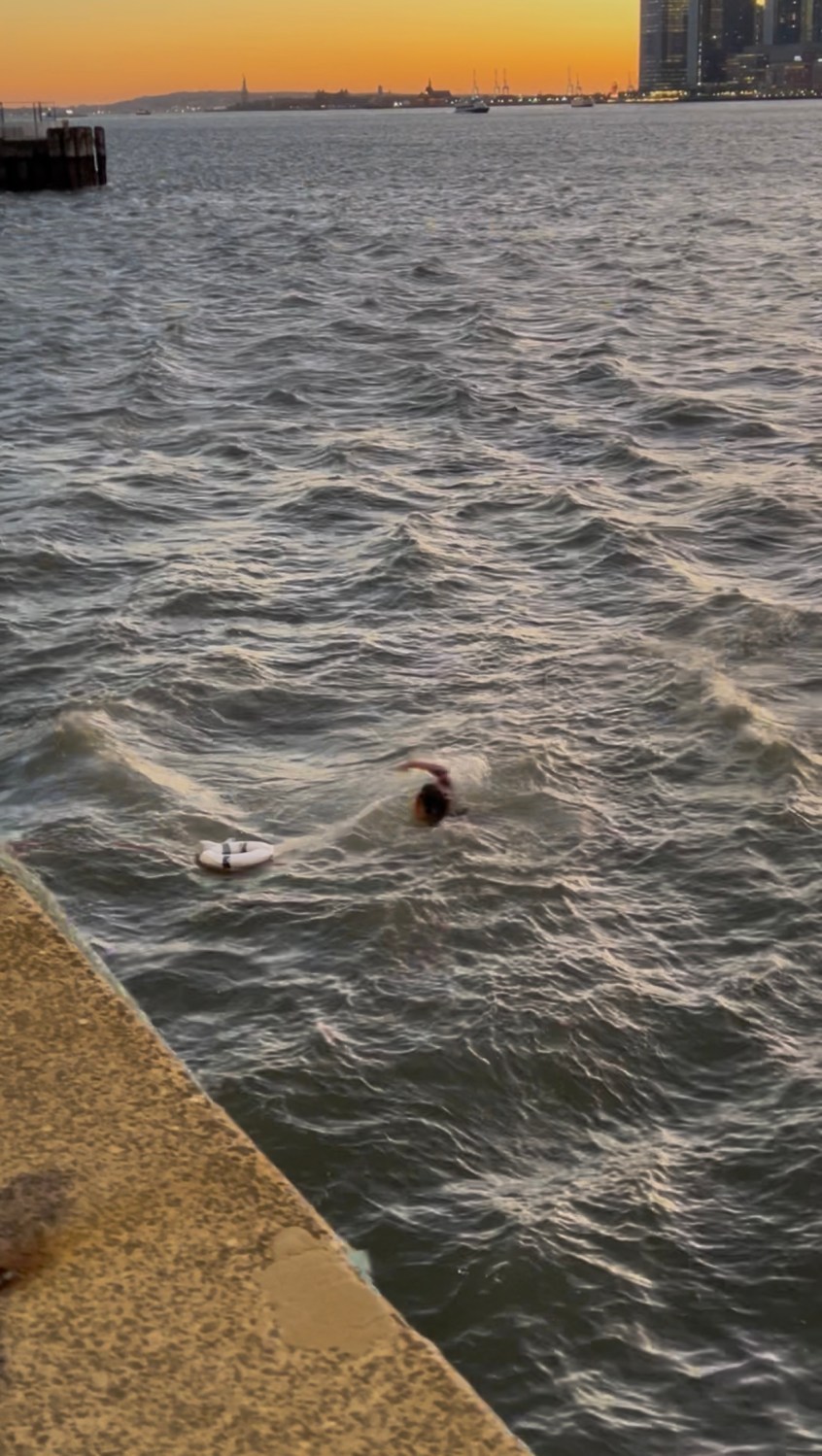
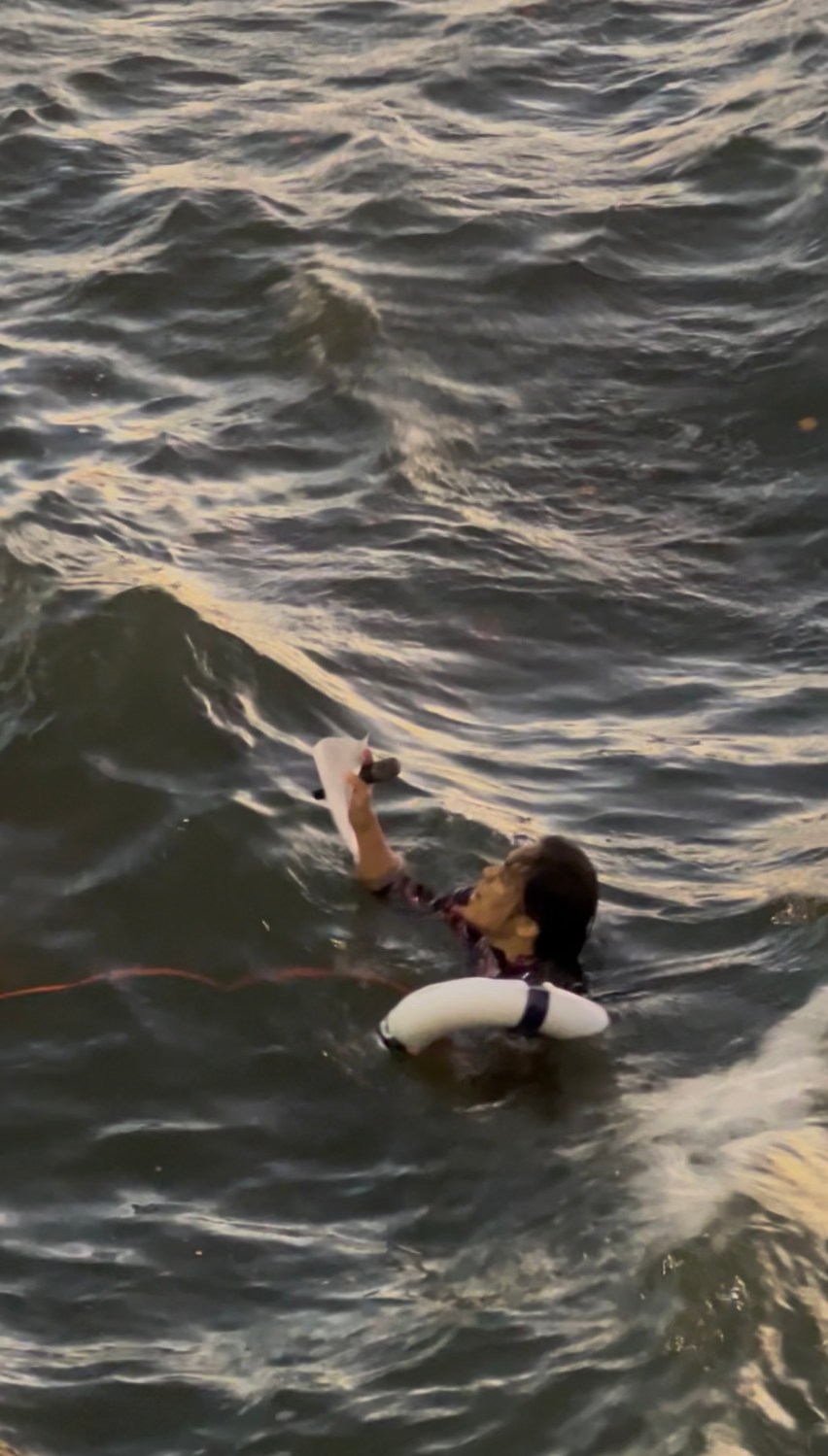
Vo first came through on a golden bicycle in a glamorous purple swimsuit with white fur while a man in Hasidic suit sat behind them playing a trumpet and a bullhorn. They crossed the crowd and made a u-turn at which point the man stepped off the bicycle and continued to play the instrument. Vo made another turn at the opposite end of the crowd then plummeted directly into the freezing Hudson River. A ring buoy was thrown in immediately followed by a microphone. As Vo swam toward the dock they spoke into the microphone reading from a paper script. I could not fully make out all the words but caught parts of what sounded like a declaration of self identity and the Hudson River.
The gesture sits inside a lineage the program lays out. Vo’s title refers to the Chinese Phoenix brand bicycle and to Vietnamese artist Vũ Đức Toàn’s 2002 performance Phoenix Forever, in which spectators boarded a small boat on the Red River in Hanoi before Toàn unannounced then rode his bicycle off a high embankment. Vo also references Dutch artist Bas Jan Ader’s Fall 2 (1970), in which Ader rode his bicycle into a canal in Amsterdam. Both connect to a tradition of “sneaky” guerrilla performances in Vietnam that traces back to Sneaky Week in 2007, often considered the country’s first public performance art event, where artists performed in public space under governmental surveillance and censorship. In the program Vo describes Western ideals of freedom, democracy and individual expression as “values that once promised an escape from tightly surveilled social orders.”
Placing the body in ritual and risk within public settings runs through Vo’s practice. Babylift, presented in 2021 through the Leslie-Lohman Museum, was a solo performance for no audience named after the 1975 airlift of South Vietnamese orphans. In 2025 Possessed by Capital treated the Apple Store in Downtown Brooklyn as a site of worship while Untitled (Break Fast) at Asian Arts Initiative in Philadelphia centered on a possession style speech delivered over steaming pho broth. This year Participant Inc. in New York presented Vo’s solo exhibition Song and Sex: Before the Revolution.
Performance does not always have to make sense. It was the very eclectic nature of the evening, the crowd and the elements that made it exquisite. These are the moments that make life worth living and the very happenstance reasons I moved to New York City.
Reflections
October at TIAB was wonderfully eclectic spanning a theatrical performance, an opening celebration, a culinary workshop, and a guerrilla action. Each event probed the foreword’s core prompt through its own medium: El Chab’s family stories excavated memory, Meng’s dumplings forged a communal table, and Vo’s cold plunge asserted presence in the Hudson. Across stage, kitchen and open air, identity became something to be heard, tasted and witnessed.
Watch the video highlights from October’s events
Stepping into these rooms with the midterm elections days away, this biennial showed why we must gather in physical space. As artists from Lebanon, Taiwan, Thailand, India, and Vietnam shared what they carry, strangers found themselves in each other’s stories leaving the room more connected than they entered.
The biennial continues through November with three programs: Plant Ecologies and Migration (November 5, Residency Unlimited), Memories of Disruption (November 7, BRIC), and What We Carry (November 11, Shiva Gallery at John Jay College). Stay tuned for Part II of my coverage.



elaborate?