
Part I of my coverage followed the biennial through October. The third edition of The Immigrant Artist Biennial [TIAB] closed on November 11th after three final programs that moved from a panel on plants and migration at Residency Unlimited to an evening of sound and new media at BRIC to a screening and performance at Shiva Gallery.
November 5 | Plant Ecologies and Migration
Panel Discussion at Residency Unlimited, 360 Court St, Brooklyn
Curator Anna Khimasia organized and moderated the panel discussion featuring three artists at Residency Unlimited (RU). She is the Cynthia Wu co-curator of TIAB and an independent curator whose collaborative practice foregrounds underrepresented voices and histories across Canada and the United States. A former AIRspace Curator in Residence at Abrons Arts Center (2023–24), she co-founded NYFA sponsored International Arrivals, supporting artists from countries in conflict, and hosts its podcast exploring displacement, migration, and transnational belonging. She holds a PhD from Carleton University and currently lectures at Rutgers University.
The panel considered how immigrant and diasporic artists turn to plants and gardens both as stand-ins for place and as a working vocabulary for migration; transplantation, adaptation, rooting and preservation. Many crops and plants traveled along the same colonial networks of trade, empire and labor that displaced people and reshaped ecologies which makes botanical history inseparable from the history of migration and extraction. The discussion also looked at how the labels native, non native and invasive echo the language used to regulate the movement of people and to decide who belongs.
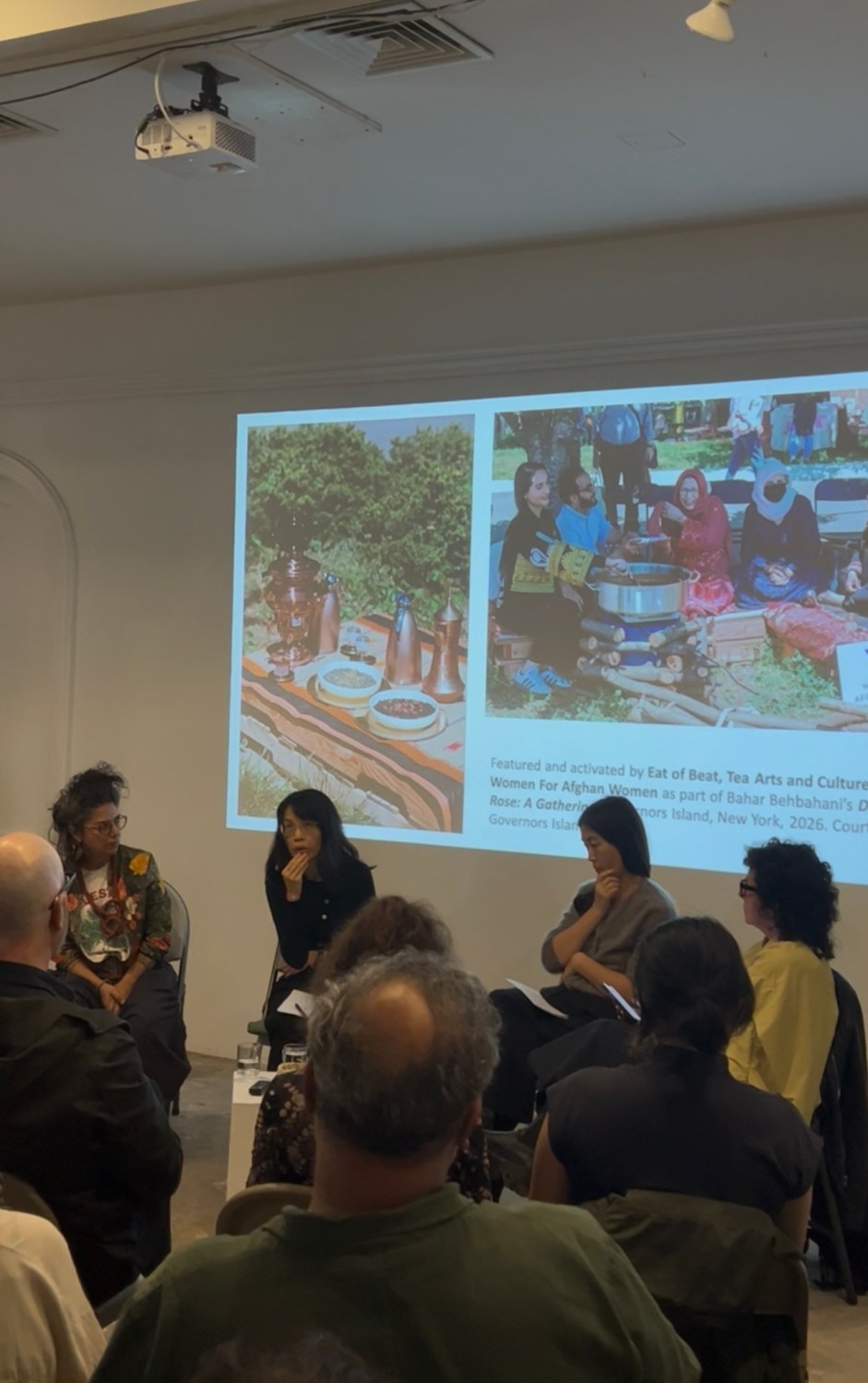
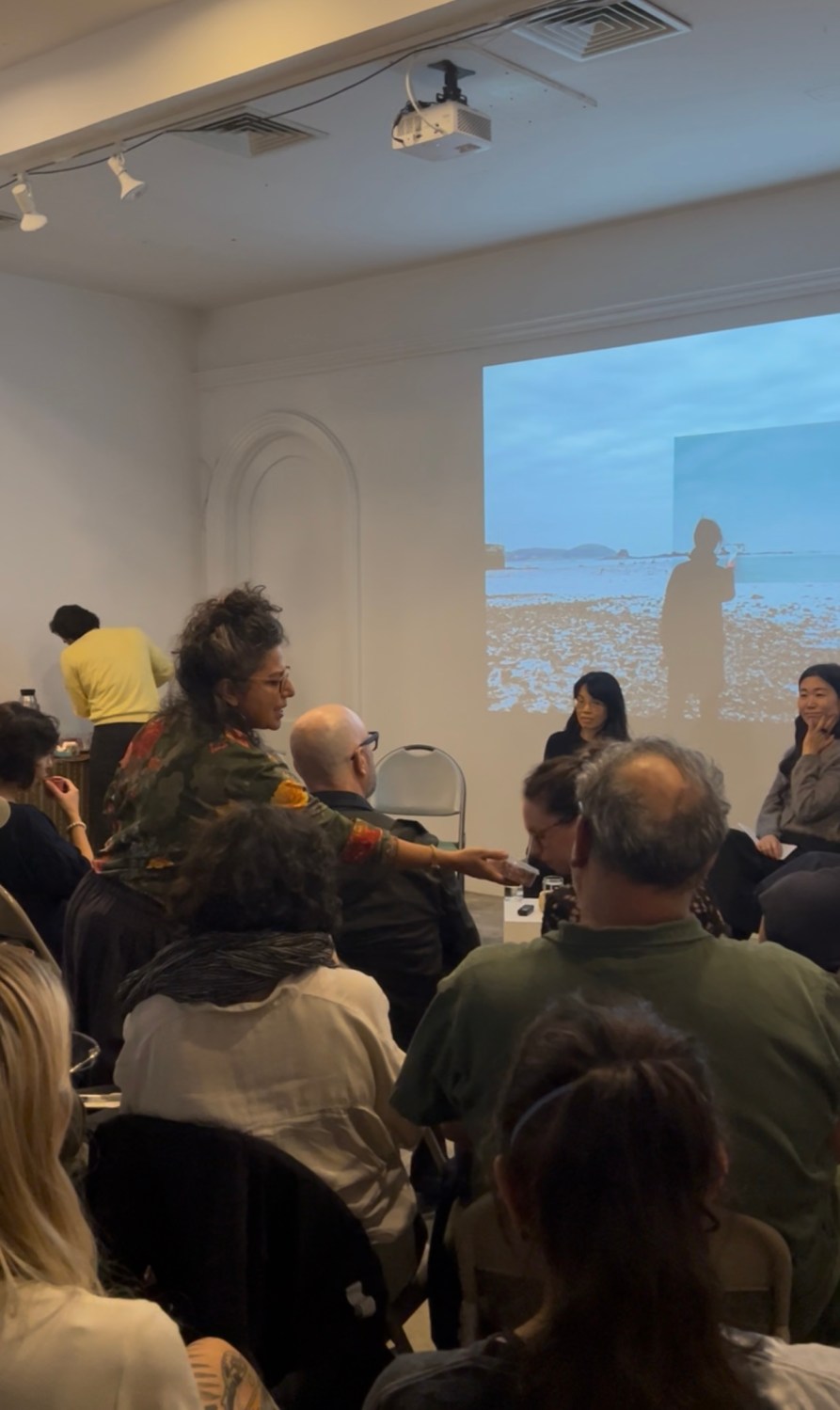
Three artists presented: Bahar Behbahani, Rachelle Dang and Sujin Lim. Several themes surfaced across all three talks including invasiveness, migration, seeds, memory, colonialism and the binary of native and non native. Plants and ecology became metaphors for the immigrant experience.
Bahar Behbahani | @baharbehbahani
Born in Tehran and based in Brooklyn, Behbahani is an interdisciplinary artist whose research based practice explores landscape as a metaphor for politics and poetics through painting, video, installation and performance. For over a decade, the Persian garden has served as a framework for examining personal history, power, and climate. A 2019 Creative Capital Award recipient for Ispahan Flowers Only Once, her work has been featured in Sharjah Biennial 15 and the 2nd Lahore Biennale.
She opened with a live tea demonstration, serving saffron tea rooted in her Iranian heritage, before discussing Damask Rose: A Gathering, her Governors Island Arts installation exploring migration and hospitality through the symbolism of the damask rose. She shared how her mother and friends in Iran helped weave the work, continuing despite the outbreak of war between Iran and the United States. Her mother, now back in the United States, was in the audience that evening.
Hosting anchored her talk, drawing on her community based practice of serving tea as a gesture of cultural connection. She reflected on the paradox of hospitality as an immigrant, often perceived as a foreigner yet continually engaged in placemaking, belonging, and becoming part of a new land.
Rachelle Dang | @rachelledangstudio
Born in Honolulu and based in New York, Dang is an MFA graduate of Hunter College whose ceramic practice explores diasporic identity through plant life, care, and cultivation. Her ongoing series Breadfruit (ʻUlu), begun in 2016, comprises 300 castings exploring ripeness and decay and is held in the permanent collection of the Hawaiʻi State Foundation on Culture and the Arts.
She traced the breadfruit tree’s history from its Pacific origins to its colonial transportation to the Caribbean by British expeditions, including HMS Bounty, to feed enslaved laborers on sugar plantations. Her installation Botanical Cage and Perimeter Wall (2018) reconstructs an 18th-century sapling carrier, surrounded by ceramic breadfruit in various stages of decay, examining the intertwined legacies of slavery, labor, violence, and colonial ecology.
Breadfruit also carries tenderness in Hawaiʻi. Native Hawaiian proverbs speak of Lahaina sheltered in the shade of breadfruit trees as a bond of love and care and Dang notes that viewers in Hawaiʻi may read her ceramic fruit as a symbol of restoring and replanting the earth after fire. Listening to her I wondered if she herself is the breadfruit tree of this world; born of Pacific soil, carried across oceans by forces larger than any one life and rooted in new ground where she now gives shade.
Sujin Lim | @_sujinlim
Lim spoke last. Born in Seoul and based in Brooklyn she works through site specific installation, sculpture and video that reimagine landscapes as surreal and metaphorical spaces. Her research based practice traces personal memories embedded in a place outward into ecological and geopolitical shifts. She has exhibited at the Brooklyn Museum and the Seoul Museum of Art and presented solo exhibitions at the International Studio & Curatorial Program (ISCP) and Wave Hill. She is a recipient of the Anonymous Was a Woman Environmental Arts Grant.
Her talk explored Yeongheung Island (영흥도), where her father was born and she spent childhood summers, tracing how tourism and infrastructure development transformed its coastline and erased its tidal flats. She translated this ecological and cultural loss into The Land, Dark and Muddy (2024), using local mud as pigment, and Mud Museum, a temporary pavilion featuring clay sculptures, community workshops, and residents’ recollections of the island.
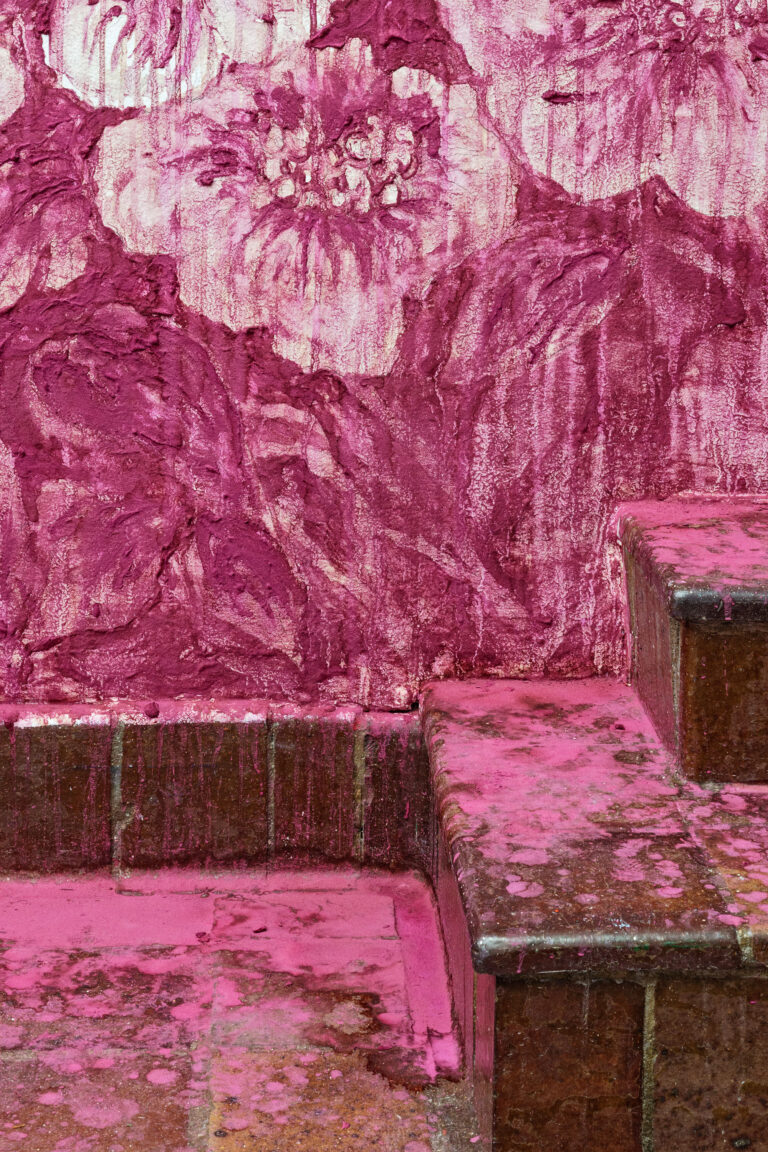
Central to her presentation was the rugosa rose (Rosa rugosa), once abundant along Yeongheung Island’s shores before disappearing with coastal development. For Memories in Red, she extracted its pigment to paint an immersive installation at Wave Hill (May–June 2026). The fading pigment connects the plant’s disappearance in Korea to its introduction along the Hudson River in the 19th century to combat erosion.
Upon arriving in New York, she encountered rugosa roses on Long Island, where the species is classified as invasive. A flower disappearing from her ancestral landscape flourishes as an ecological intruder in her adopted home, exposing how belonging, value, and perception shift across cultural and geographic contexts.
November 7 | Memories of Disruption
Performance and New Media at BRIC, 47 Fulton St, Brooklyn
Memories of Disruption was curated by Sanna Almajedi and Sofia Thiệu D’Amico. Almajedi/the Iana Safina co-curator, is a curator and writer based in New York and Performance Curator at e-flux. She served as Performance Curator for the 13th Seoul Mediacity Biennale, Séance: Technology of the Spirit (2025) and co-curated Publishing Against the Grain for Independent Curators International which toured institutions including Zeitz MOCAA and CCA Lagos. D’Amico, introduced in Part I, holds an MA from the Center for Curatorial Studies at Bard College and has written for Hyperallergic, Artforum and Office. Her research will appear in Borders of Art: Migration, Mobility and Artistic Practice (American University in Cairo Press, 2026).
The evening brought five emerging new media and performance artists to BRIC to explore sonic, visual and geopolitical disruptions and the lingering effects of colonialism on bodies, landscapes and collective memory. Performances and screenings by Ivana Dama, Andrew Yong Hoon Lee, Maya Jeffereis, Simon Liu and Charlie Perez-Tlatenchi and Lita Vinueza spanned sound, migration, archival histories, experimental film and political resistance.
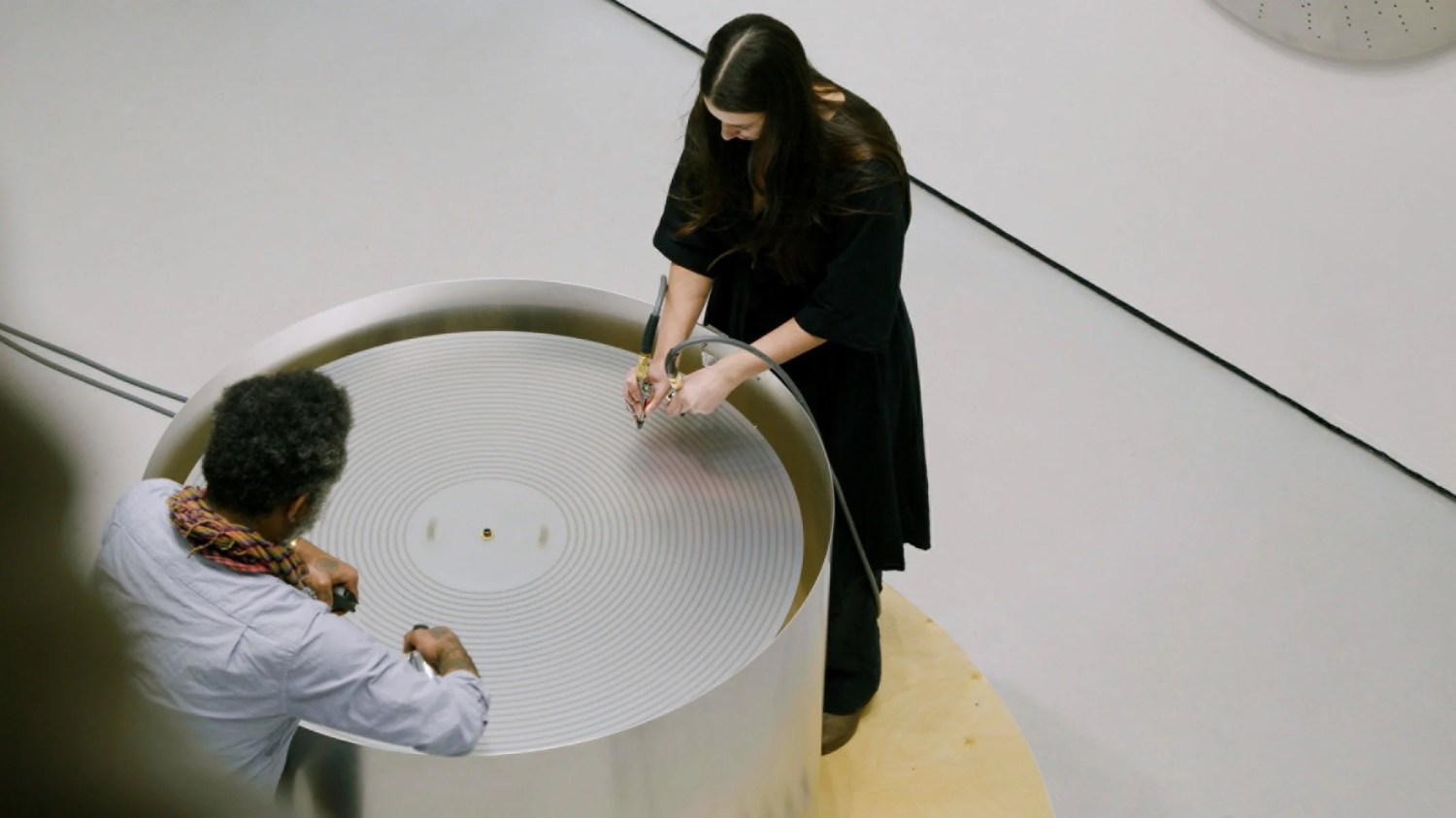
Dama is an artist and researcher whose work explores the nonverbal expression of experiences shaped by social and political conflict through sound studies and sonic memory. She holds an MFA in Sculpture from Yale University and graduated from UCLA’s School of Arts and Architecture. Her practice spans audio/video installation, robotics, web projects and music performance. Her conversation with Almajedi, “Biting on the Railing,” appears in the biennial catalogue.
1. How did the performance go and what was the work you presented? Where would you like to take it next?
The performance honestly went above and beyond my expectations! The event was completely sold out, and I received so much wonderful feedback from the audience. It was also really special to have the exhibition catalog distributed, especially because my conversation with curator Sanna Almajedi was such a great introduction to this project I’ve been developing for several years.
The work explores sirens as early warning systems and how the same technology can be used to draw attention to both social and environmental urgencies. I started creating a series of siren disks by inviting collaborators to share what they felt was the most urgent issue facing us today. Their responses then became the conceptual framework for designing each disk. In my performance, I activated one of the disks from my series, positioning it like a record on a record player.
The next exhibition will be in January at Tyler Art Gallery in Oswego, where I’m working with local Indigenous communities to create a new disk addressing issues important to the region, particularly water protection. Oswego comes from a Haudenosaunee word meaning “the pouring out place,” and I’m excited to explore how this project can also help bring attention and resources to local water protectors.
2. What does it mean to you to share this work as part of a biennial centered on immigrant artists in the 2026 political climate?
It feels especially meaningful right now. I grew up in Belgrade during the NATO bombings, and my earliest memories of sirens eventually became the starting point for this project. What began as something very personal has grown into a much larger conversation about warning systems, conflict, and collective responsibility.
As an immigrant artist, I’m also very aware of how difficult it can be to build a life and career in the US, especially in the current political climate. I really appreciate that the biennial creates space for immigrant artists to share their work and perspectives beyond just their immigration stories.
For me, the siren is ultimately a call to attention. I hope the work encourages people to think about what feels urgent today and how we might respond to those challenges together.
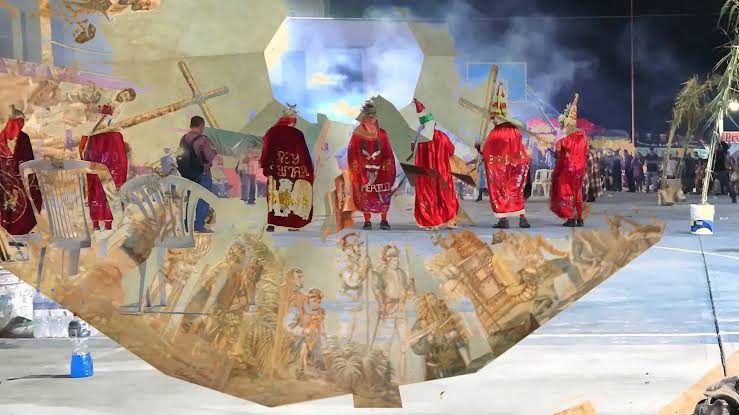
Simon Liu and Charlie Perez-Tlatenchi
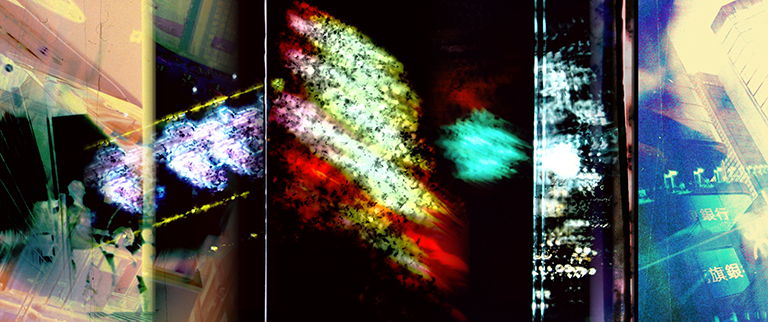
Liu is an artist filmmaker whose practice centers on the shifting psychological and sociopolitical climate of his homeland Hong Kong through material abstraction, speculative history and 16mm project ion performance. His work has been exhibited at the Whitney Museum of American Art, The Museum of Modern Art, The Shed and the M+ Museum in Hong Kong while his films have screened at Sundance, the Berlin International Film Festival and the Toronto International Film Festival. Perez-Tlatenchi works across photography, painting and printmaking and reflects on hidden histories operating under the shadows of globalization. He combines printing techniques to show how colonial histories recede into the background of everyday life. The two presented Ocean Terminal as a joint answer to my questions.
1. Could you tell me about the piece you presented for The Immigrant Artist Biennial and what you hoped to communicate through the work? Where would you like to take this piece next?
Simon and I presented the latest rendition of our ongoing collaboration “Ocean Terminal,” an audio-visual project that threads where our practices overlap as we each mine the psychic architecture and global undercurrents of our respective home cities of Hong Kong and New York. Our performance at BRIC was an expanded cinema set that actively fragmented and overlayed video footage from our archives that we set to live sound. We’re excited to develop this project further, and to implement some ideas that we’ve been wanting to experiment with since we started collaborating in 2025.
2. What does it mean to you to share this work as part of a biennial centered on immigrant artists in the 2026 political climate?
As dear friends, we feel honored to share this work that actively collapses the lines between the local and the global. It stands in living contrast to flawed logic that fuels the current wave of anti-globalization and neo-nationalism.
November 11 | What We Carry
Screening and Performance at Shiva Gallery, John Jay College, 11th Ave, New York
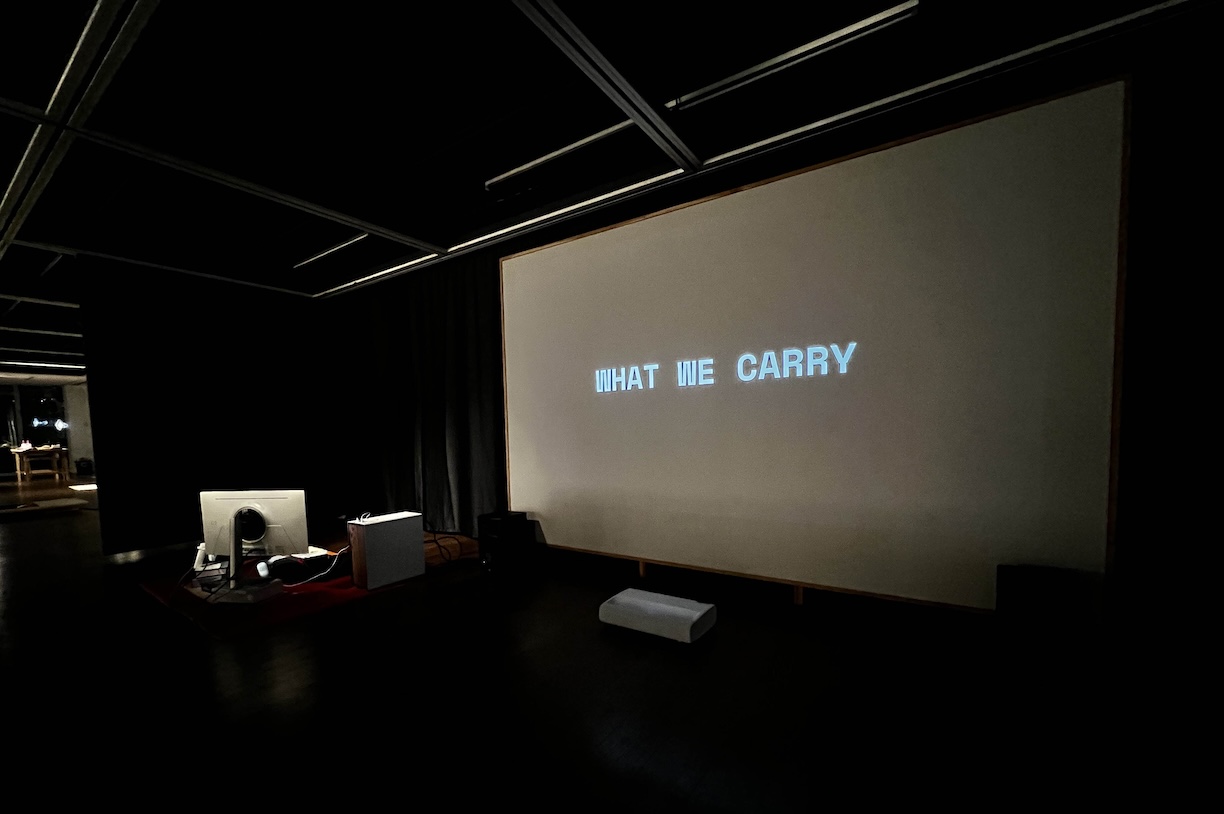
The final program of the biennial took place at the Anya and Andrew Shiva Gallery at John Jay College of Criminal Justice (CUNY) as part of Art Week NYC. Sofia Thiệu D’Amico and Anna Khimasia curated the evening. The program defined inheritance as the transmission of culture, memory, trauma and identity across generations and geographies. Three videos and a performance followed.
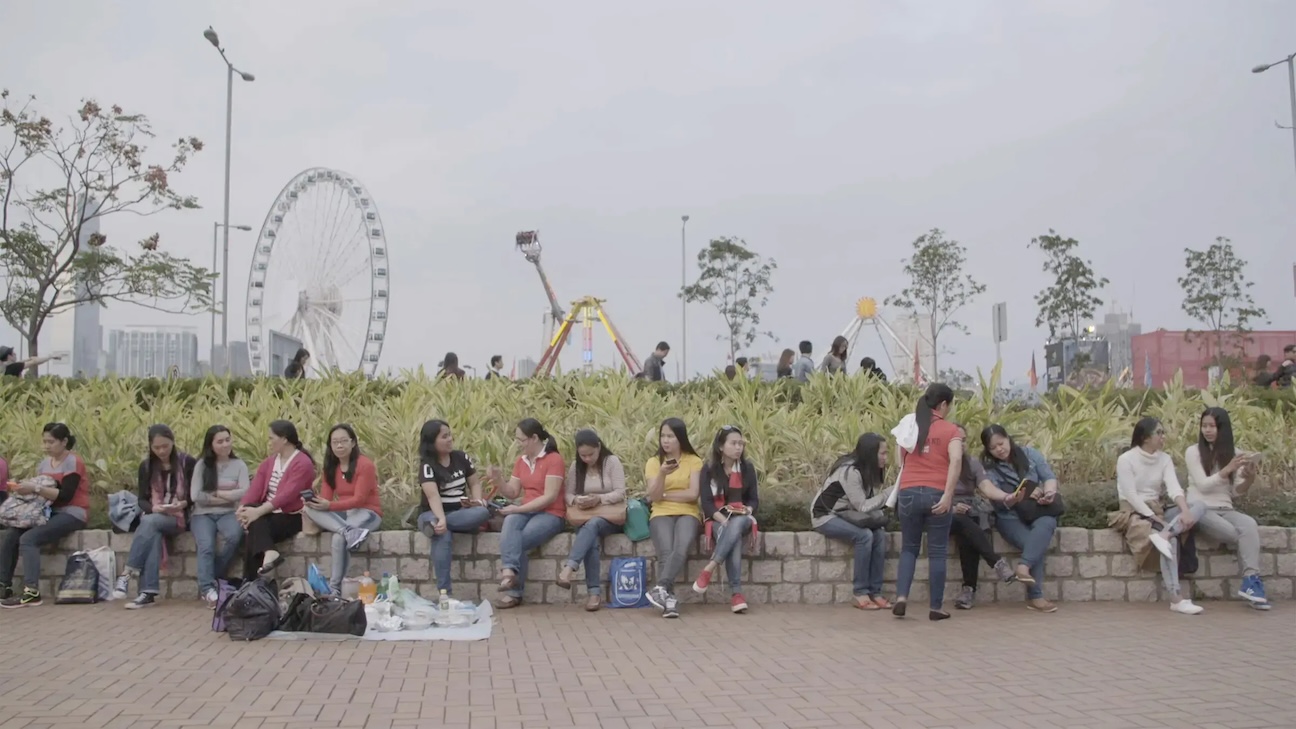
Stephanie Comilang, Lumapit Sa Akin, Paraiso (Come to Me Paradise), 2016
Comilang is a Filipina Canadian artist born in Toronto and based in Berlin who works in a genre she calls sci fi documentary. Her films consider mobility, capital and labor through multiple voices and points of view. This 26 minute film takes Hong Kong as its backdrop and follows the Filipina migrant workers who gather in Central on Sundays. The narrator is Paraiso, a ghost embodied by a drone who speaks of the isolation of being uprooted and thrown into a new place.
The film assembles analog clips, cell phone recordings, drone footage and moving shots into a topography of an urbanizing Hong Kong. It captures the vulnerability and the loves of the women through their daily rituals: putting on makeup before work, performing public gymnastics in synchronized choreography, painting nails at the market for side income. The raw unspoken struggle of industrial change sits underneath. Women huddle together eating in subway passages inside fortresses of cardboard; an image that recalled the urban labor portraits of the film Lost in Beijing by Li Yu. The film closes with three women simultaneously studying their own selfies on their phones.
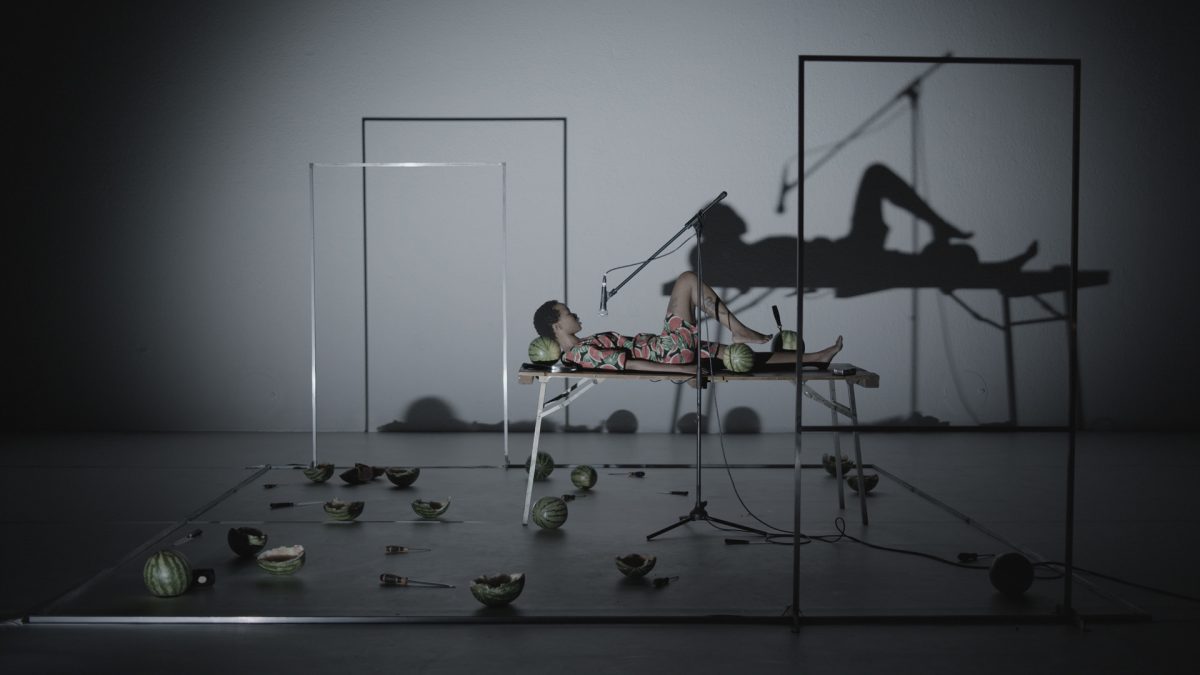
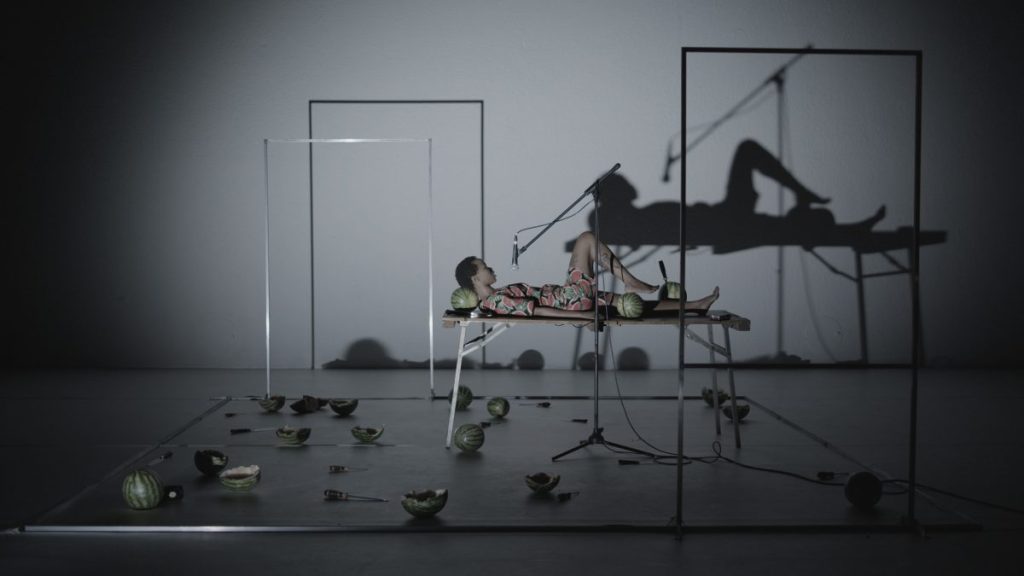
Mandla, as british as a watermelon, 2023
The second video was one of my favorites and highly effective. Mandla is a queer Zimbabwean writer, performer and curator based in the UK whose work engages Black identity, memory and spirituality through performance, moving image and installation. This 28 minute piece explores race and migration more directly through a personal journey from Zimbabwe to Britain shaped by a religious upbringing. It unfolds as unflinching autofiction that weaves poetry with storytelling and uses the watermelon as a metaphor for out of placeness, power and belonging.
Minimal in form yet rich in poetic writing and visual symbolism, the video unfolds within the outline of an invisible home reconstructed in a photography studio. Dressed in watermelon-print fabric recalling Zimbabwean traditional clothing, mandla uses the watermelon as an extended metaphor for the immigrant self: whole, vulnerable, cultivated, consumed, and transformed. Through playful and increasingly violent interactions with the fruit, the work interrogates immigrant identity, agency, sexuality, assimilation, and the possibility of remaining rooted while inevitably changing. Its central questions linger: Where do we come from, where are we going, and how much of that journey is ours to choose?
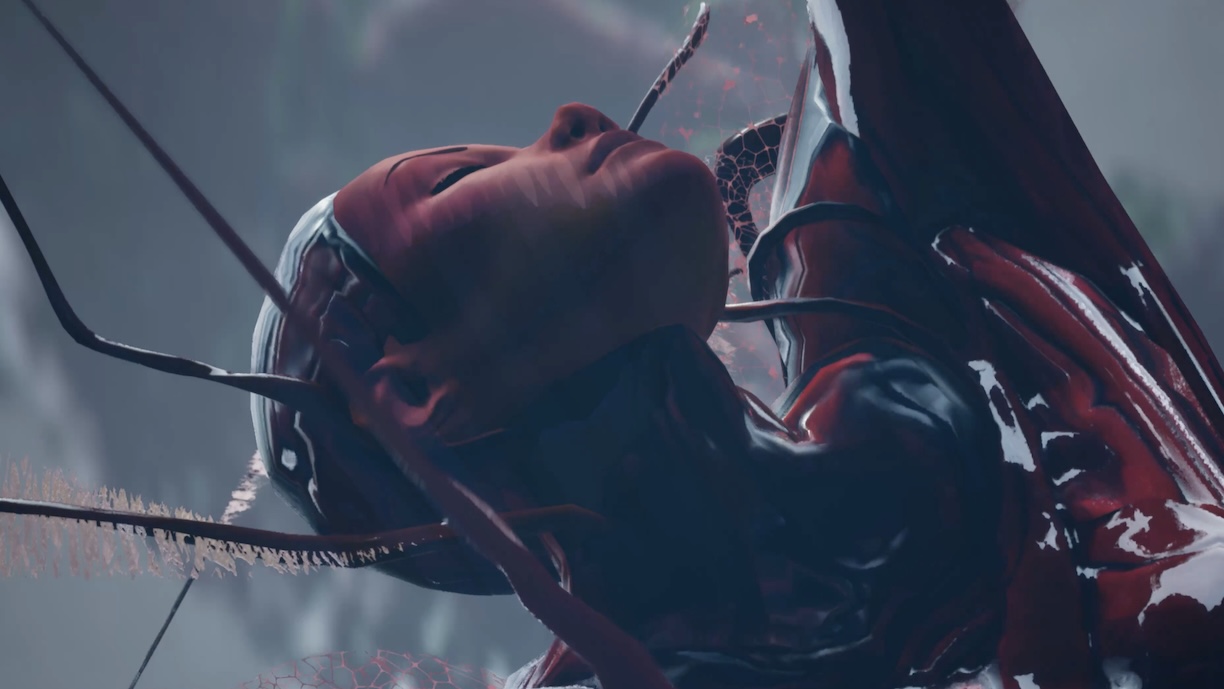
Pearlyn Lii, Infinite Mother series
Lii was born in Hong Kong and based in New York with roots in Los Angeles. She constructs speculative mythologies that build alternative worlds as subversive countermodels drawing on ancestral memory, cosmotechnics, the erosion of filial piety and shifting notions of personhood. Her work spans video game animation, sculpture and embodied performance. She is an alumna of NEW INC and a selectee of the Art+Code track with Rhizome and has presented at New York Live Arts and MoMA. She holds a BFA from ArtCenter College of Design and is an MFA candidate in Moving Image at Bard College.
The Infinite Mother series consists of interactive animated cutscenes that examine the mother wound through odes to ancient mythology inside a video game world. It imagines a digital haven for collective ancestral healing and revisionist matrilineal histories. The second episode, InfiniteMother_v2.0 (2025), follows a persevering cyborgian daughter through a verdant hellscape modeled on Chinese mountain water landscapes. She and her ancient mother circle the Fetal Peach, a fruit like fetus and illusory mirror of their fractured ideals of care and reconciliation until both dissolve into the grotto walls. The work blends classical Chinese landscape painting, mythic imagery and the visual grammar of video games to merge ancestral myth with digital memory.
As an artist exploring the convergence of the metaverse and emergent media art, I found Lii’s work compelling for its synthesis of gaming culture, simulated identities and emerging technologies. Two fairytale like creatures perform intense choreography around a plant like pod, whose interior reveals pulsating flesh colored veins. Blending uterine and feminine symbolism with alien hybridity, cyborg aesthetics, dance and technological spirituality, the video evokes possible futures of art and identity.
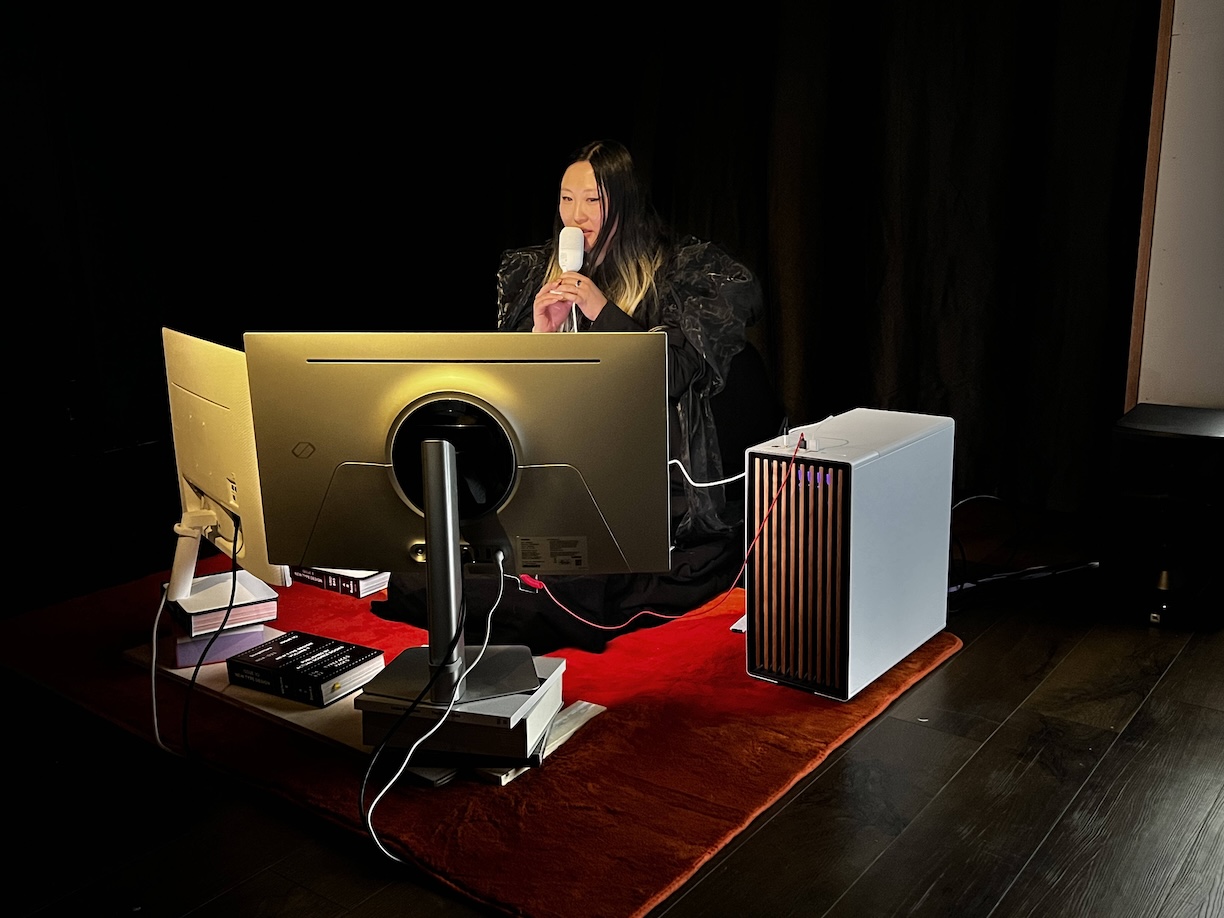
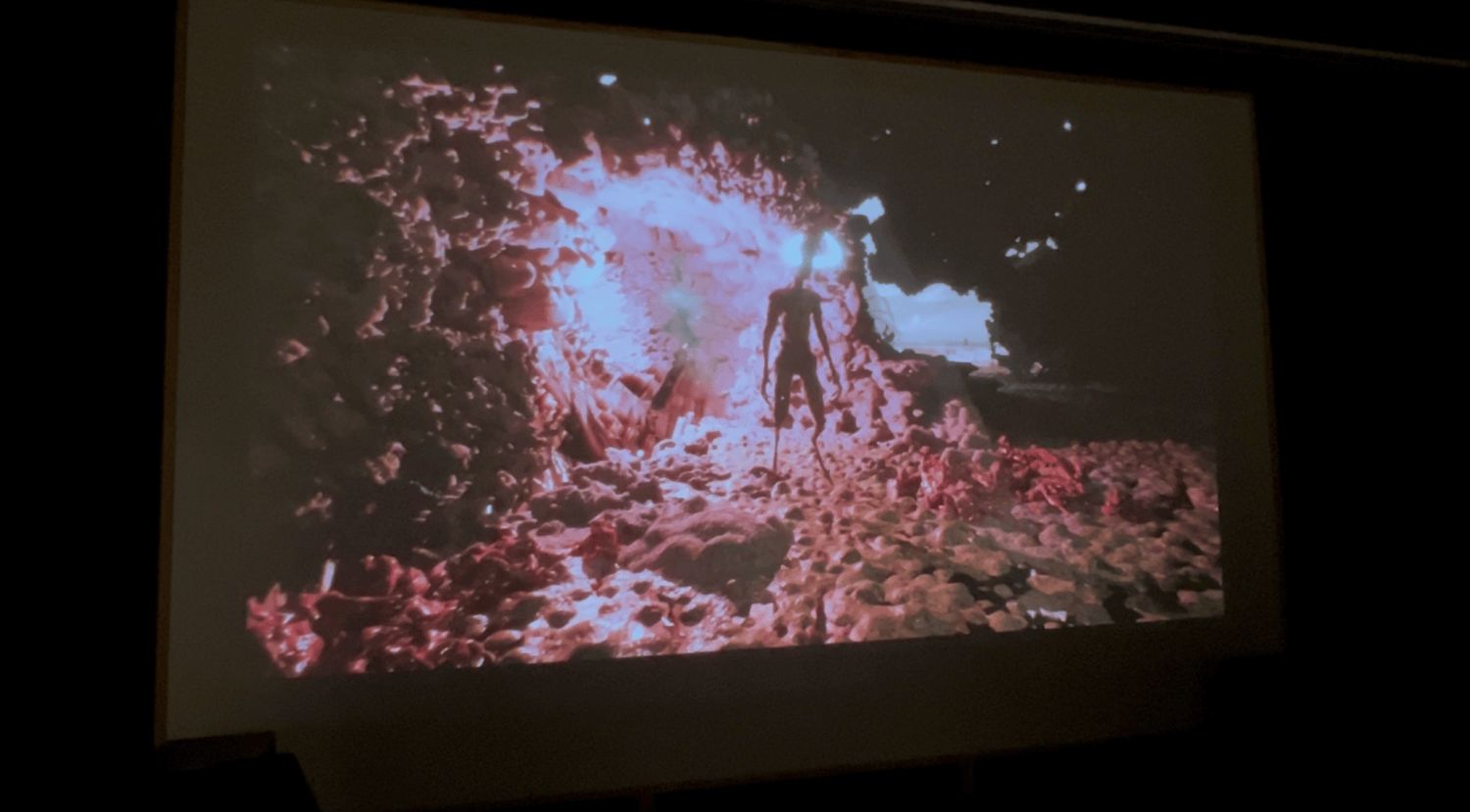
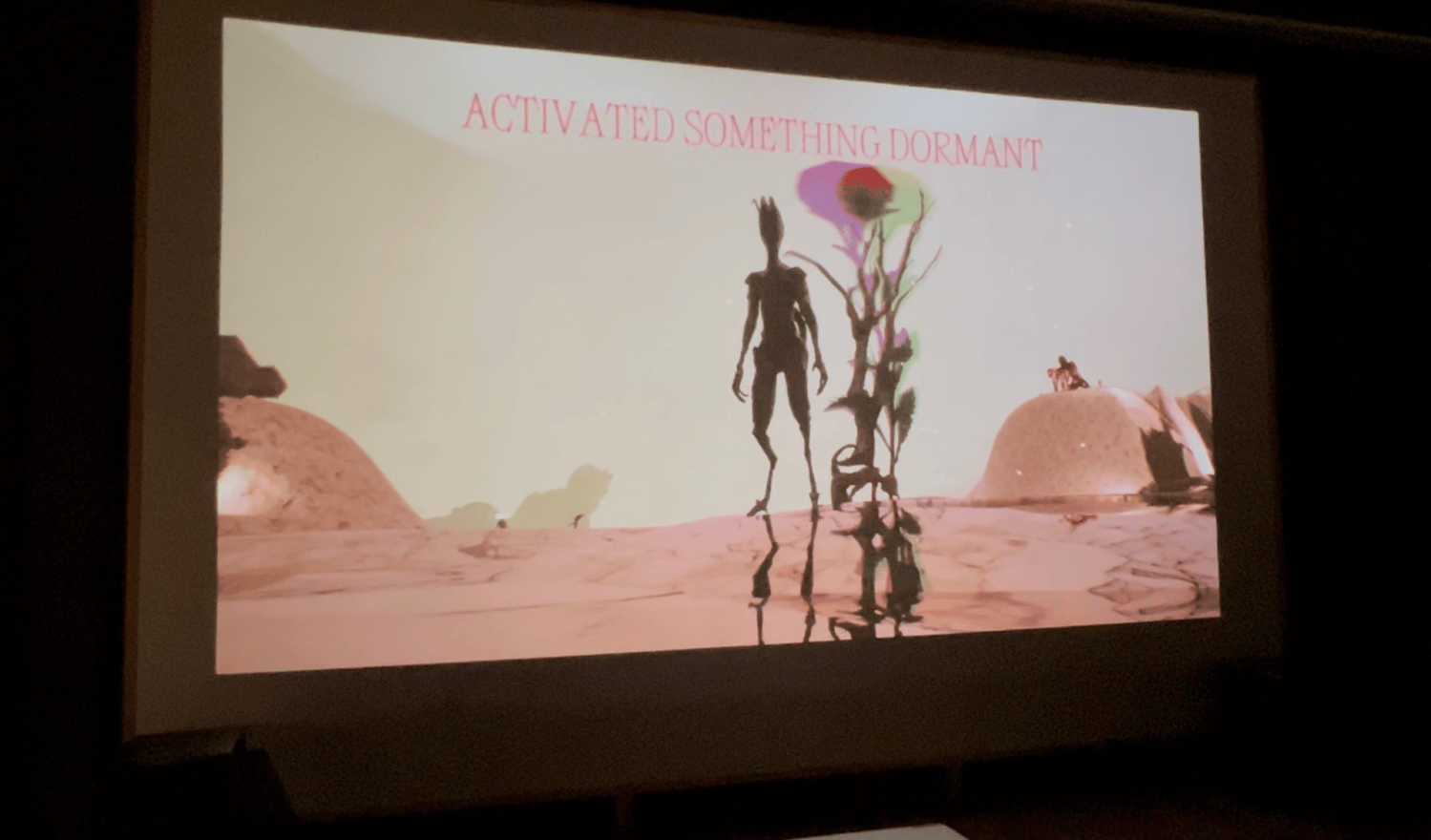
The live performance extended the screening into an interactive digital altar verse where Lii embodied a mythical scorpion tailed creature within a self designed virtual landscape. Using a voice modulated microphone, she recited mantras while moding the animated creature through shifting environments where it continually transformed its skin suit to mirror the surrounding it touched.
Founder Katya Grokhovsky delivered the closing remarks that officially concluded the biennial. She announced that TIAB is now a nonprofit sponsored by NYFA and that the next edition will take place in 2029.
Reflections
Through the biennial in October and November, I have also been taking part of The Legalization Project, an organization that mobilizes support and resources for immigrants pursuing lawful status. A common thread runs between those sessions and the rooms of TIAB. I came to the spaces as a quiet observer living both inside the immigrant experience and outside of it.
Being an immigrant; an outlier means inhabiting a position that is often defined by others. It can make you an outlier by circumstance, by perception and sometimes by choice, particularly in a society where belonging is so closely tied to national identity. I resist being reduced to the political rhetoric surrounding the term while recognizing that I am inseparable from the realities it describes. After all, time and memory itself are inherently temporal and such is the nature of an immigrant often described as living in a state of “in-betweenness” or liminality. The immigrant experience is integral to my identity, as it is to the collective identities of countless others, and I have come to understand it as one of my greatest sources of strength.
The experience itself is neither singular nor universal. Its meaning shifts across individuals, histories, cultures and political conditions particularly within the American landscape of 2026. Yet beneath these distinctions exists a shared human condition, a common ground that precedes the categories through which we organize belonging and difference. Our diversity, disparities and cultural nuances don’t weaken our common ground they give it depth, complexity and soul. The label may travel with us but what we make of the experience and what we allow it to cultivate within us, ultimately belongs to us.
Thank you to the artists, curators and organizers of The Immigrant Artist Biennial: Identity Card.
Watch the video highlights from Novembers’s events
VISIT PAGE 2 for Mongolian language version of this article.


elaborate?